Breathwork for Stress: What Actually Works When You Are Overwhelmed
When you are overwhelmed, your thinking brain goes offline.
Breathwork works for stress because it bypasses your thinking brain, which goes offline exactly when you are overwhelmed. That is why journaling, lists, and walks fail in the moment. An extended exhale, longer than the inhale, stimulates the vagus nerve, drops your heart rate, clears cortisol, and brings your prefrontal cortex back online so you can think clearly again.
Not metaphorically. The prefrontal cortex, the part of your brain responsible for planning, perspective, and clear decision making, gets progressively bypassed as your stress response escalates. The more overwhelmed you are, the less access you have to the part of your brain that could help you think through the problem.
This is why everything that makes logical sense as stress relief fails in the moment. Journaling. Making a list. Going for a walk. Calling someone. All of those require a level of cognitive function that gets crowded out exactly when you need it most.
Breathwork works for a different reason. It does not require your thinking brain. It works directly at the level of the nervous system, bypassing cognition entirely.
Why Being Overwhelmed Feels the Way It Does
Your body does not distinguish between stressors. A work crisis, a difficult relationship, financial pressure, an overloaded schedule: from the body's perspective, these all register the same way. Threat detected. Mobilise resources. Prepare for action.
Cortisol and adrenaline flood your system. Your heart rate increases. Your breathing becomes shallow and fast. Blood redirects from your digestive and immune systems toward your muscles. Your thinking narrows to the immediate threat and away from everything else.
This response evolved for physical survival. You were meant to run from something or fight it. The physical action would burn through the stress hormones, and your system would return to baseline once the threat had passed.
The problem is that modern stress does not resolve through physical action. The threat does not pass. The pressure is sustained. You sit at a desk, processing the same cortisol load your ancestors used to outrun predators, but without the release valve.
The result is a nervous system stuck in a state it was never designed to maintain. That is what chronic overwhelm actually is. Not a thinking problem. A physiology problem. The nervous system assessment can show you where your system is right now in under two minutes.
How Breathwork Changes the Physiology
Your breath is the one function that sits at the intersection of voluntary and involuntary control.
Heart rate, blood pressure, hormonal responses: you cannot directly choose to change these. But they all respond to how you breathe. Your breathing pattern is the lever.
Specifically, the exhale activates your parasympathetic nervous system, the branch responsible for rest, recovery, and clear thinking. An extended exhale, longer than the inhale, directly stimulates the vagus nerve and shifts your autonomic state. Your heart rate drops. Cortisol starts to clear. The prefrontal cortex comes back online.
You are not thinking your way out of stress. You are breathing your way into a state where you can think clearly again.
This is why breathwork works when other stress tools do not. It does not require cognitive effort. It does not require you to believe anything or sit with difficult thoughts. It operates at the level of the body, which is where the problem is.
Three Techniques That Actually Work Under Stress
Not all breathing techniques are useful when you are overwhelmed. Some breathwork practices generate energy and intensity. The techniques below are specifically for downregulating: moving from activated to regulated.
The Extended Exhale
This is the simplest and the most immediately effective.
Breathe in for four counts. Breathe out for six to eight counts. That is the entire technique.
The extended exhale directly activates the vagus nerve. You do not need to do anything else. Ten repetitions will produce a noticeable shift in how you feel. Twenty repetitions and the physiological change is significant.
Use this in any situation where you need to come down quickly. Before a difficult conversation. After receiving bad news. In the middle of a tense meeting. You can do it silently and no one will notice.
Box Breathing
Four counts in. Hold for four. Four counts out. Hold for four. Repeat.
Box breathing is slightly more cognitively demanding because of the holds, which is why it works better when you are moderately stressed rather than at peak overwhelm. The structure gives your attention something neutral to anchor to, which interrupts the thought loop that amplifies stress.
Navy SEALs use this for a reason. Not because it sounds good, but because it reliably interrupts the stress response in high pressure situations where you still need to function.
The Physiological Sigh
A double inhale through the nose, a long exhale through the mouth.
Inhale fully, then at the top of the inhale, take a small additional sniff to reinflate any collapsed alveoli in your lungs. Then release the longest exhale you can manage.
This pattern deflates the carbon dioxide buildup that makes overwhelm feel physically suffocating. One or two repetitions produce an almost immediate sense of release. This is what your body does spontaneously when it is trying to recover from crying or acute panic. You can do it deliberately without waiting for the body to do it on its own.
How to Know Which One to Use
Under acute, sudden stress: physiological sigh, two to three repetitions, then extended exhale for five to ten cycles.
Under sustained, chronic pressure where you need to stay functional: box breathing for three to five minutes.
Before sleep, when the day will not leave you alone: extended exhale for ten to fifteen minutes.
In a social or work situation where you need to regulate without drawing attention: extended exhale, four counts in, six to eight counts out, invisible from the outside.
The simplest rule: if you cannot remember any of this when you are overwhelmed, just make your exhale longer than your inhale. That one principle is behind all three techniques. You can practice any of these patterns using the guided breath pacer. If you want a daily practice that builds on this, the morning breathwork routine gives you a structured 10 minute protocol.
What Breathwork Cannot Do
Breathwork can shift your physiological state. It cannot solve the thing that is causing the stress.
If you are overwhelmed because your workload exceeds your capacity, regulated breathing will give you clearer access to your problem solving ability. It will not reduce your workload.
This distinction matters because breathwork sometimes gets sold as a cure for stress, which sets up a specific kind of disappointment. The honest version is this: breathwork gives you back access to yourself. What you do with that access is still up to you.
That said, most people who are overwhelmed are not failing to think clearly because the problem is unsolvable. They are failing to think clearly because their nervous system is so activated that genuine cognitive function is not available. Breathwork addresses that gap. In most cases, that is enough to shift things.
Why Guided Breathwork Is Different
You can do these techniques on your own and get results. I would still encourage you to experience guided breathwork at least once before deciding you understand what it is.
There is a significant difference between using a breathing technique and being in a 60 to 90 minute session where someone is holding the space and guiding the depth and timing of the practice.
In a solo technique, you are controlling the practice. In a guided session, you can let go of control and go deeper than self-regulation allows. The nervous system responds differently when it knows someone skilled is present. People move through things in a single session that they have been sitting on for months.
This is what I see consistently in the hundreds of sessions I have facilitated. The technique is a tool. The container is what makes the difference.
What This Looks Like in Practice
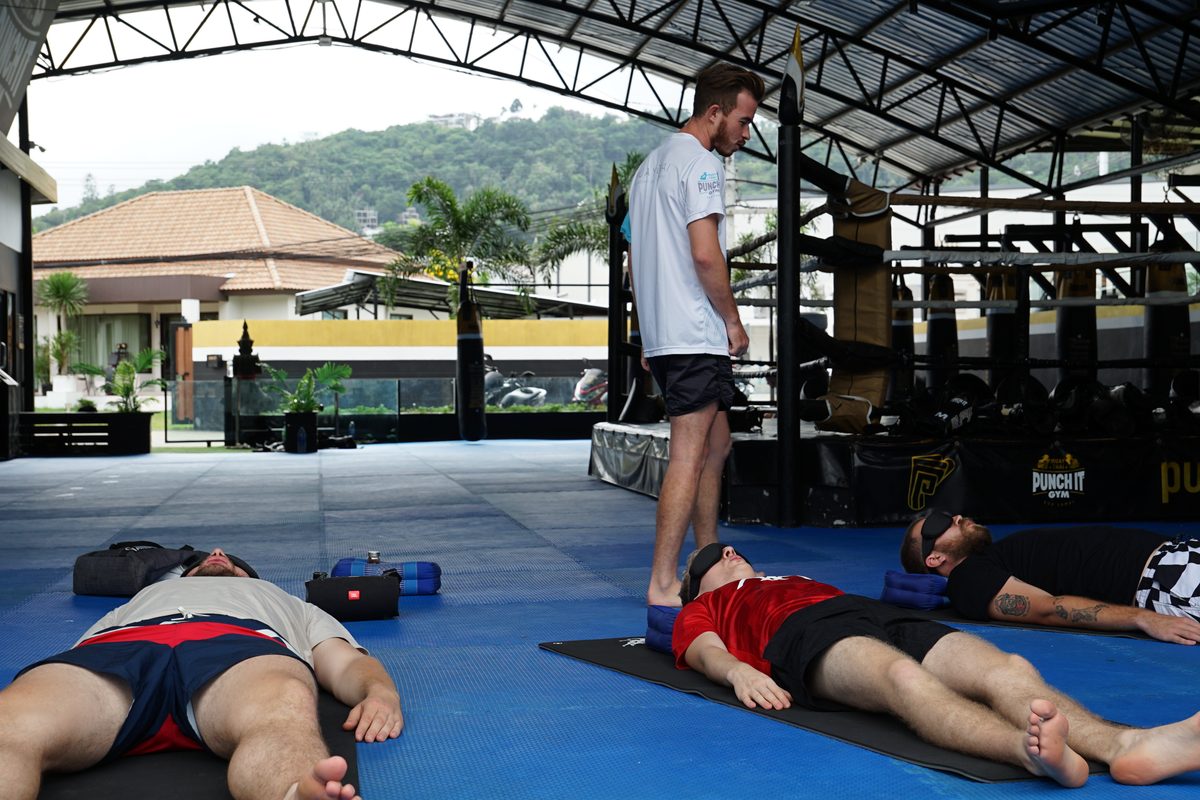
If you are on Koh Samui and want to experience this directly, UNTAMED is the full day format. A long breathwork session, ice bath, time in the jungle, honest conversation, a meal together. The design is intentional: breathwork opens the nervous system, cold exposure trains regulation under stress, the afternoon gives your system time to integrate.
People come for different reasons. Some come at a point of acute overwhelm and want something that works faster than talking about it. Some come because they are operating at a high level and want to understand their own nervous system well enough to stop running on adrenaline. Both are the right reason.
If you are here with a team, a private workshop runs two hours at your venue. Breathwork, ice bath, debrief. For groups of 4 to 16.
Overwhelm is not a character flaw. It is a physiological state, and physiological states are changeable. The breath is the fastest tool you have. For guided sessions that go deeper than self-practice, the weekly Practice on Koh Samui is open to all levels.
To book an UNTAMED session or a team workshop, reach out via WhatsApp from the contact page. No experience needed.
Keep Reading
Frequently asked questions
Why does breathwork work for stress when journaling or a walk does not?
When you are overwhelmed, your prefrontal cortex goes offline, so anything that needs clear thinking fails in the moment. Breathwork works for a different reason. It does not require your thinking brain. It operates directly at the level of the nervous system, bypassing cognition entirely. It does not require you to believe anything or sit with difficult thoughts.
What is the fastest breathing technique to calm down when overwhelmed?
The physiological sigh. A double inhale through the nose, then the longest exhale you can manage through the mouth. The second small sniff reinflates collapsed alveoli, and the long exhale clears the carbon dioxide buildup that makes overwhelm feel suffocating. One or two repetitions produce an almost immediate sense of release. It is what your body does spontaneously when recovering from crying or panic.
Which breathing technique should I use for which kind of stress?
Under acute, sudden stress, do a physiological sigh two or three times, then extended exhale for five to ten cycles. Under sustained pressure where you need to stay functional, box breathing for three to five minutes. Before sleep, extended exhale for ten to fifteen minutes. If you cannot remember any of it, just make your exhale longer than your inhale.
Can breathwork actually solve what is stressing me out?
No, and I want to be honest about that. Breathwork can shift your physiological state, but it cannot solve the thing causing the stress. If your workload exceeds your capacity, regulated breathing gives you clearer access to your problem solving ability. It will not reduce your workload. Breathwork gives you back access to yourself. What you do with that access is still up to you.
Is a guided session different from doing breathing techniques on my own?
Yes. You can do the techniques alone and get results, but there is a real difference between using a breathing technique and being in a 60 to 90 minute session where someone holds the space and guides the depth and timing. In a solo technique you control the practice. In a guided session you can let go of control and go deeper than self regulation allows.
Stay in the loop.
Occasional dispatches when sessions open or new writing drops. No spam.
About Diego Pauel
I have lived in Koh Samui for 15 years. I discovered breathwork through freediving, which I have trained in for over a decade. When COVID hit and the island emptied out, I started offering breathwork and ice baths for free to help the local community feel better in their bodies. I was the first to offer this work on the island. Five years later, I have facilitated countless sessions for people from all over the world. No guru energy. No mystical language. Just the work.
Full story →