Breathwork and the Vagus Nerve: What Is Actually Happening Inside You
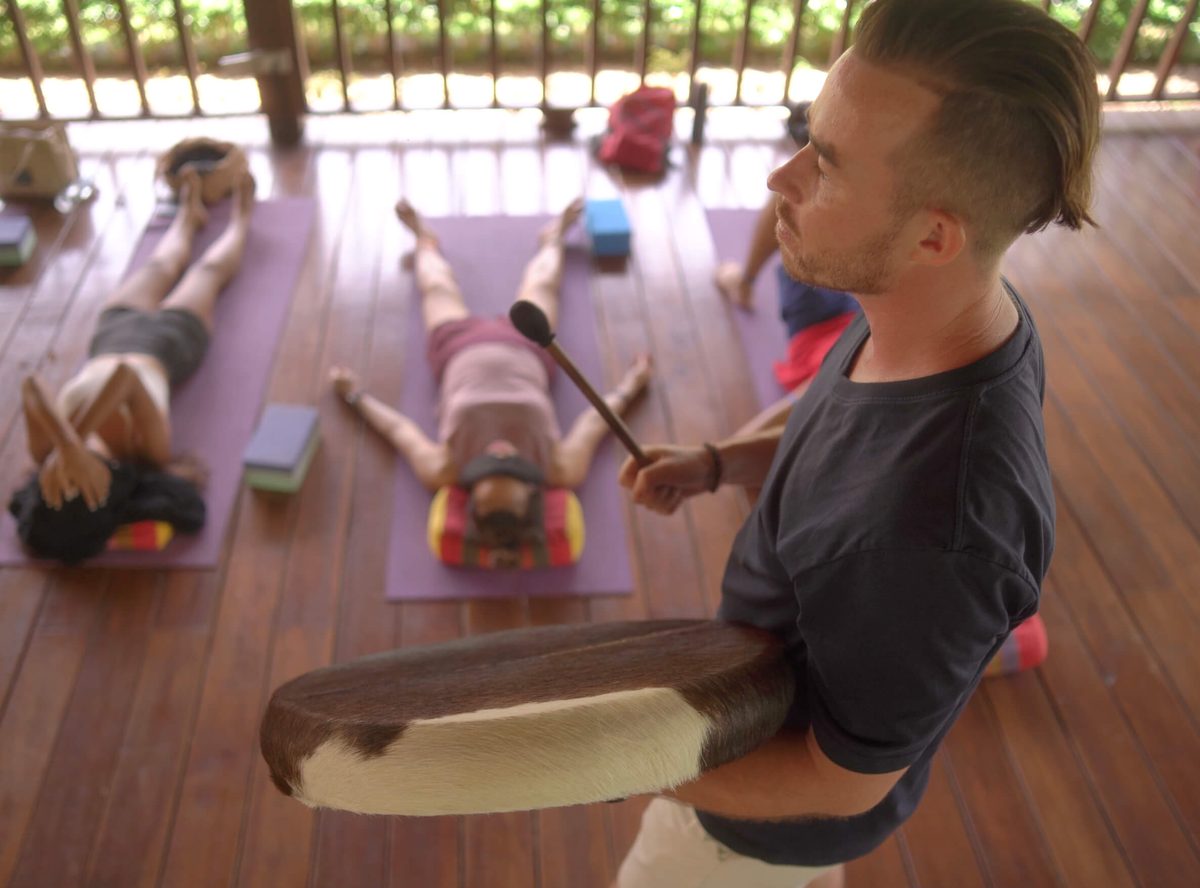
People come to breathwork because they feel stuck. Tense. Wired. Unable to switch off. And after 30 to 40 minutes of guided breathing, something shifts. The tension drops. The chest opens. The mind quiets in a way that feels different from sleep or meditation. Something physical happened, not just mental.
The vagus nerve is the main pathway of the parasympathetic nervous system, and it is the mechanism most often named for why slow breathing feels calming. The honest version is narrower than the popular one. A long exhale and slow diaphragmatic breathing do slow the heart, and cold water on the face produces a genuine, fast drop in heart rate through the trigeminal nerve. But the claim that breathwork raises vagal tone is weaker than it sounds: much of the heart rate variability rise at slow breathing rates is a mechanical consequence of breathing slowly, not proof of a lasting change. What you can count on is the immediate effect. Heart rate slows, the chest opens, the shoulders drop.
That something is largely the vagus nerve. It is the longest cranial nerve in your body, running from your brainstem down through your neck, chest, and abdomen. It touches your heart, lungs, gut, and most of your major organs. And it is the primary channel through which your nervous system decides whether you are safe or under threat.
When people ask me why breathwork works, the vagus nerve is the honest answer. Not energy. Not chakras. Not vibes. A nerve. One you can measure, stimulate, and train. Here is how it works and why it matters.
What the Vagus Nerve Does
Your autonomic nervous system has two main modes. The sympathetic branch handles threat response: increased heart rate, shallow breathing, muscle tension, heightened alertness. This is your fight or flight system. The parasympathetic branch handles rest, repair, digestion, and recovery. This is your body returning to baseline after the threat passes.
The vagus nerve is the main pathway of the parasympathetic system. When it fires strongly, your heart rate slows, your breathing deepens, your digestion activates, and your muscles release tension. Your body reads these signals as safety. And when your body feels safe, your mind follows.
The strength of this response is called vagal tone. It is a useful description and a poor target. Higher vagal tone travels with being able to shift efficiently between stress and recovery, and lower vagal tone travels with getting stuck. Travels with, not causes, and it is measured in ways that are easy to move without changing anything underneath. Treat it as a description of a state you recognise rather than a dial you turn. The state itself is real enough: you feel wired but tired. Alert but unable to focus. Exhausted but unable to sleep. Sound familiar? That pattern is what most people describe when they arrive at a breathwork session. The nervous system terrain map shows you where this pattern sits in the broader picture of your autonomic state.
How Breathwork Activates the Vagus Nerve
The vagus nerve responds to specific signals from your body: breathing pattern and intrathoracic pressure, both of which breathwork engages directly, and the dive response, which it mostly does not. That last one matters because it is widely misattributed. The dive response is triggered by cold on the face, and it is largely absent when you are lying warm and dry on a mat. If you want it, you need cold water on your face, not a breathing round.
Extended Exhale
When you exhale, your heart rate naturally decreases. This is called respiratory sinus arrhythmia and it is mediated by the vagus nerve. The longer your exhale relative to your inhale, the stronger the vagal activation. This is why every calming breathwork technique emphasizes the exhale. It is not a psychological trick. It is a direct mechanical input to the vagus nerve via pressure changes in the chest cavity.
In a guided session, I often use a ratio where the exhale is twice as long as the inhale. Four seconds in, eight seconds out. Or six in, twelve out. Within two to three minutes, most people feel their shoulders drop and their jaw unclench. That is not relaxation in the abstract. That is the vagus nerve activating the parasympathetic system in real time.
Deep Diaphragmatic Breathing
The vagus nerve passes through the diaphragm on its way from the brainstem to the organs. When you breathe deeply into the belly, the diaphragm moves through its full range of motion, physically stimulating the vagus nerve with each breath. Shallow chest breathing barely moves the diaphragm and provides minimal vagal stimulation.
This is one reason why most people breathe poorly under stress. Stress triggers shallow, rapid breathing, and shallow rapid breathing keeps the body in a stressed pattern. The cycle feeds itself. Deep diaphragmatic breathing breaks it by changing the mechanical input, which is something you can do deliberately in about ten seconds. I would not put a number on what that does to your vagal tone, because the honest answer is that nobody has shown a lasting one.
The Dive Reflex and Cold Exposure
This is where my background in freediving connects directly to breathwork. When cold water contacts your face, your body triggers the mammalian dive response. Heart rate drops. Blood vessels in the extremities constrict. Blood is redirected toward the brain and vital organs. The heart rate part of that is vagally mediated and it is fast. One correction worth making, because I used to blur it: the strong version of this needs cold water on the face. Breath holding alone, lying warm and dry indoors, produces a much weaker version, and most of what happens in a dry breathwork session is not the dive response at all.
When we combine breathwork with ice bath exposure in UNTAMED, we are stacking two of the most powerful vagal stimuli. The breathwork activates the parasympathetic system from the inside. The cold activates it from the outside. The combination produces a depth of nervous system reset that neither practice achieves alone. I wrote more about the physical mechanics in the science of cold exposure.
What You Actually Feel When the Vagus Nerve Activates
Vagal activation is not a concept. It is a sensation. Here is what most people report during a breathwork session as the vagus nerve engagement deepens.
In the first few minutes, the jaw relaxes. The shoulders drop away from the ears. You might feel warmth spreading through your chest or abdomen. Your breathing naturally deepens without effort.
Around the ten minute mark, you may notice your gut making sounds. This is your digestive system reactivating as the parasympathetic system takes over. Many people are surprised by this. It is completely normal and actually a positive sign that the vagus nerve is doing its job.
Between fifteen and thirty minutes, the emotional layer often opens. Tears come for reasons you cannot quite name. Or laughter. Or a wave of something that feels like relief mixed with sadness. This is not weakness or drama. The vagus nerve connects to the emotional processing centers of the brain. When it activates deeply, stored emotional material can surface and release. I covered why this happens in detail in why somatic breathwork makes you cry.
After the session, most people describe feeling lighter. Like something was physically put down. Sleep that night is typically deeper than usual. Digestion improves. The mental chatter quiets. These are all downstream effects of sustained vagal activation.
Is Vagal Tone Trainable? Less Than You Have Been Told
You will read everywhere that vagal tone is like a muscle and breathwork trains it. I have said it myself. It is shakier than it sounds and I would rather tell you why.
The usual evidence is that breathing practices raise heart rate variability, and HRV is described as the gold standard measure of vagal tone. The problem is that breathing slowly mechanically increases heart rate variability whether or not anything has changed in your nervous system. Your heart rate naturally rises and falls with each breath, so making each breath longer makes that swing bigger. Some of the HRV increase people point to is that effect, not evidence of a strengthened pathway. And when one of the better controlled trials measured it directly across four different breathing practices, it found no change in heart rate variability or resting heart rate in any of them, even while people reported feeling better.
So what can you actually count on? The immediate effect is real. A long exhale slows your heart while you are doing it. In people with raised blood pressure, slow paced breathing takes a few points off, and that has held up across a meta-analysis. Most people feel calmer within minutes. What has not been shown is that a daily practice permanently shifts your baseline, or that it beats a well matched comparison practice on stress and anxiety.
That is still a reason to practise. It is safe, it is free, it takes ten minutes, and the thing that most reliably predicts whether breathwork helps someone is simply whether they keep doing it. Just do it for the immediate effect, not because you are building a number. I put together a simple routine for this in a morning breathwork routine you can do in 10 minutes.
Why This Matters More Than You Think
Most of the chronic issues that bring people to wellness practices (anxiety, insomnia, digestive problems, emotional reactivity, brain fog, burnout) share a common root: a nervous system stuck in sympathetic dominance. The body is running a threat response when there is no threat. And it has been running it for so long that it forgot how to stop.
Talking about the problem does not fix it because the problem is not cognitive. It lives below thinking, in the autonomic nervous system. Medication can suppress the symptoms but does not retrain the system. Meditation helps but can be difficult to access when your nervous system is already activated.
Breathwork works because it speaks the language the nervous system actually understands: pressure, rhythm, chemistry, and physical sensation. The vagus nerve does not care about your to do list or your therapy insights. It responds to how you breathe. Change the breath, and you change the signal. Change the signal for long enough, and you change the baseline.
That is not a philosophy. That is physiology.
Experience It in Koh Samui
If you want to feel what deep vagal activation actually feels like, rather than just reading about it, UNTAMED is a full day experience that combines breathwork, ice bath, jungle, and waterfall in Koh Samui. The combination of breath and cold stacks the most powerful vagal stimuli into a single day. Hotel pickup and lunch included. 3,500 THB per person.
For groups of 4 to 16, I bring the full setup to your location anywhere on the island. Details on private workshops.
And if you want to feel the immediate effect right now, try the breathing guide or the breath pacer on the site. Set it to extended exhale and give it five minutes.
Keep Reading
Frequently asked questions
How does breathwork activate the vagus nerve?
Two mechanisms are solid and one is usually overstated. An extended exhale slows heart rate through respiratory sinus arrhythmia, and you can measure that on yourself within a few breaths. Deep diaphragmatic breathing changes intrathoracic pressure as the diaphragm moves through its full range. Those are direct mechanical inputs, not psychological tricks. The third one you will hear, that breath holds trigger the mammalian dive response, is mostly wrong for breathwork: that response is driven by cold on the face, and it is largely absent when you are lying warm and dry. Note also that these are effects while you are breathing. The claim that they permanently raise your vagal tone is a separate and much weaker one.
What is vagal tone and why does it matter?
Vagal tone is the term for how strongly your vagus nerve influences your heart rate. Higher vagal tone travels with shifting efficiently between stress and recovery, and lower vagal tone travels with getting stuck there, feeling wired but tired, alert but unable to focus, exhausted but unable to sleep. Two honest caveats. It is an association, not a demonstrated cause. And it is usually measured through heart rate variability, which rises mechanically when you breathe slowly whether or not anything underneath has changed. The stuck pattern it describes is real and it is what most people arrive with. Treat vagal tone as a name for that state rather than a dial you can turn.
What does vagus nerve activation actually feel like?
In the first few minutes the jaw relaxes and the shoulders drop, often with warmth spreading through the chest. Around ten minutes your gut may make sounds as digestion reactivates, which is a positive sign. Between fifteen and thirty minutes the emotional layer often opens, with tears or laughter for reasons you cannot name. Afterward most people feel lighter, sleep deeper that night, and notice the mental chatter quiet.
Can you train your vagus nerve to work better?
Less clearly than you will read elsewhere, and I would rather say so. The usual argument is that breathing practices raise heart rate variability, and that HRV is the gold standard measure of vagal tone. The problem is that breathing slowly widens the beat to beat swing mechanically, so a rise during practice is not proof that a pathway has been strengthened. When one controlled trial measured it directly across four different breathing practices, it found no change in heart rate variability or resting heart rate at all, even though people reported feeling better. What is solid is the immediate effect: a long exhale slows your heart while you do it, and slow paced breathing takes a few points off blood pressure in people whose blood pressure is raised. Ten minutes each morning is still worth doing. Do it for that, not to build a number.
Why does breathwork work when talking about a problem does not?
Most chronic issues that bring people to wellness, anxiety, insomnia, digestive problems, brain fog, share a common root. A nervous system stuck in sympathetic dominance. Talking does not fix it because the problem is not cognitive. It lives below thinking, in the autonomic nervous system. Breathwork works because it speaks the language the nervous system understands, pressure, rhythm, chemistry, and physical sensation. Change the breath, and you change the signal.
Stay in the loop.
Occasional dispatches when sessions open or new writing drops. No spam.
About Diego Pauel
I have lived in Koh Samui for 15 years. I discovered breathwork through freediving, which I have trained in for over a decade. When COVID hit and the island emptied out, I started offering breathwork and ice baths for free to help the local community feel better in their bodies. I was the first to offer this work on the island. Five years later, I have facilitated countless sessions for people from all over the world. No guru energy. No mystical language. Just the work.
Full story →