How Cold Exposure Builds Mental Resilience
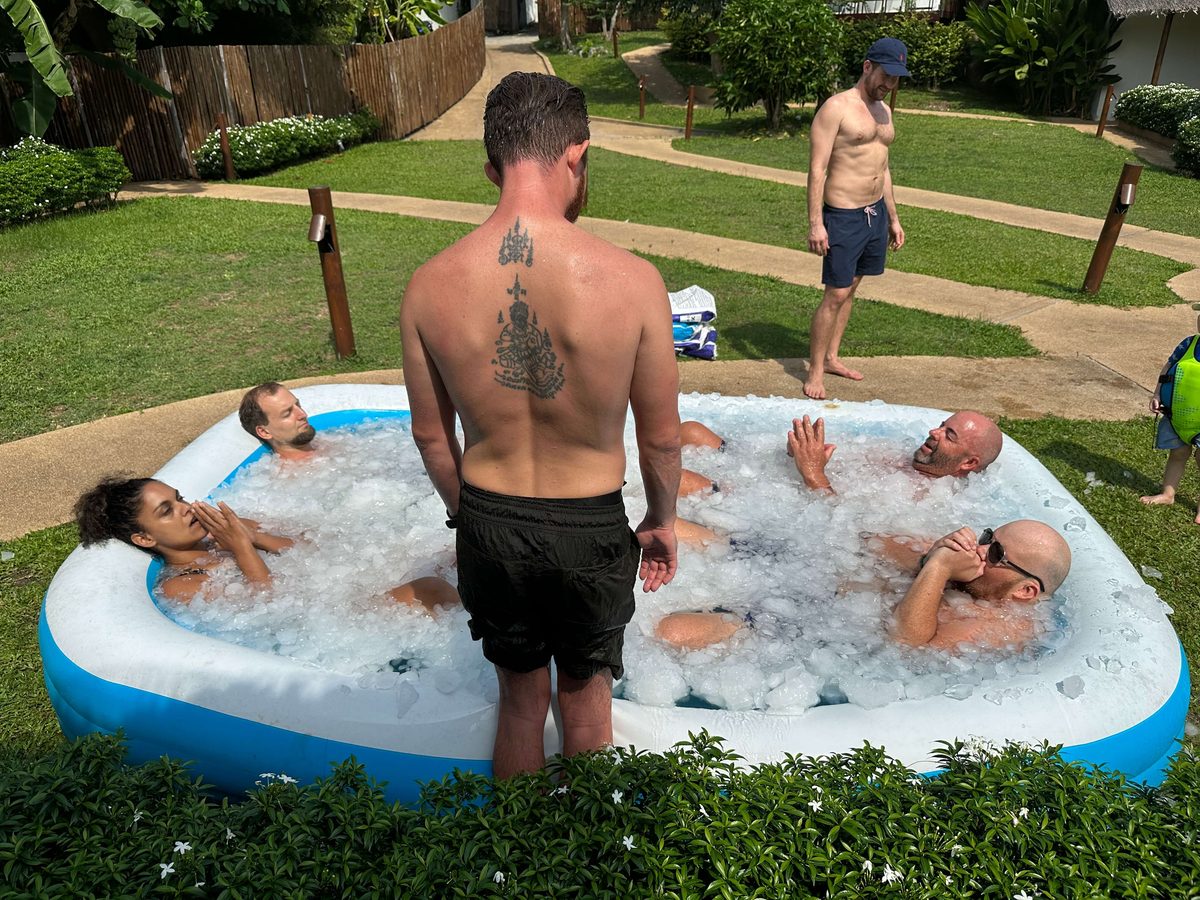
There is a moment in every ice bath when your body decides you are dying.
Cold exposure builds mental resilience by training your nervous system to stay regulated under stress. Resilience is not the absence of stress, it is how fast your system returns to baseline after a spike. An ice bath fires a real threat response in total safety, so you practice staying present without reacting. That speed transfers to hard calls.
Your skin screams. Your chest tightens. Your lungs want to do something frantic and unhelpful. Everything in you insists you get out immediately.
You do not need to be physically brave to stay in. You need to know that the sensation and the threat are two different things. Once you learn to stay present with the first without treating it as evidence of the second, you have learned something that transfers far outside the cold water.
That is what cold exposure actually trains. Not willpower. Not pain tolerance. The ability to stay regulated under conditions that would otherwise spike you into a reactive state.
The applications are obvious once you see it.
What Resilience Actually Is
Most conversations about mental toughness focus on pushing through. Grinding. Not stopping. This is a surface level description of something more specific happening underneath.
Resilience is not the absence of stress. It is the speed with which your nervous system returns to baseline after a stressor hits.
A resilient person still feels the spike when bad news lands. They still feel the pressure in a high stakes meeting. The difference is that their system recovers faster, without the spike triggering a cascade of reactive decisions that make things worse.
That recovery speed is trainable. It is not fixed by personality or genetics. It is a physiological skill, and like any skill it responds to practice.
Cold exposure is one of the most efficient ways to train it.
What Is Actually Happening in an Ice Bath
When you get into very cold water, your body initiates a threat response. Adrenaline spikes. Heart rate increases. Blood vessels constrict. The amygdala, the part of your brain that detects danger, starts driving.
This is identical, at the physiological level, to what happens when you are blindsided in a meeting, told your project is being cut, or have a conversation go sideways in front of people who are watching.
The mechanism is the same. Cold water just makes it visible and controllable in a way that workplace stress does not.
In an ice bath, the stressor is simple, clear, and temporary. You know exactly what is causing the discomfort. You know it will end. You are in complete physical safety. This creates a training environment where you can practice the skill of staying regulated under stress without the stakes of a real failure.
The neurochemistry is measurable. Cold water immersion at temperatures below 10 degrees produces norepinephrine increases of 200 to 300 percent. Norepinephrine is the neurotransmitter most directly involved in mood, focus, and stress resilience. That surge is why people feel sharp and clear for hours after an ice bath. It is also why regular cold exposure has a cumulative effect on baseline mood.
Each session is a repetition. You get into the water, the threat response fires, and you practice not being driven by it. Over time, your nervous system learns that intensity does not require reaction. The window between stimulus and response widens.
That wider window is what people call composure. Equanimity. Being hard to rattle. It is not a character trait. It is a trained nervous system response.
The Transfer Effect
The skill you build in cold water is not specific to cold water.
When your system learns to stay regulated under one form of stress, that regulation carries over to other forms. People who train cold exposure consistently report that their response to workplace pressure changes. Difficult conversations feel less threatening. The reactive spiral that follows a stressful email gets shorter. Sleep improves because the nervous system is not running high when it should be resting.
This is not anecdotal. Your autonomic nervous system does not distinguish between a cold stressor and a social stressor at the level of mechanism. If you have practiced staying regulated under cold, your system has more practice staying regulated in general.
I see this in workshops with corporate teams. The person who fights the ice bath hardest in the first five minutes is often the same person who admits afterward that they spend most of their workday fighting a version of the same fight. The ice bath just makes the pattern visible.
Once you see it, you can change it.
Breathwork Changes the Ice Bath
Most people try to survive an ice bath. They tense their muscles, hold their breath, and wait for it to be over. This is the wrong approach, and it makes the experience much harder than it needs to be.
The correct approach is to breathe.
Not frantically. Slowly, deliberately, and deeply. Nasal inhale. Extended exhale. The extended exhale activates your parasympathetic nervous system and directly counteracts the adrenaline response. Your heart rate comes down. Your muscles soften slightly. The perception of the cold shifts from threatening to intense but manageable.
This is why we always do breathwork before the ice bath in every session. A 60 to 90 minute breathwork session before cold exposure does two things. It regulates your nervous system, so you enter the water already in a better baseline state. And it teaches you the breathing pattern you need to stay regulated once you are in.
The ice bath becomes a place to apply what the breathing session just taught you. People who do cold exposure without the breathwork primer are working harder and learning less. The sequence matters.
Why This Works for Teams
Individual resilience training is straightforward. What happens in a team context is more interesting.
Shared adversity builds trust faster than shared success. When people face a difficult experience together, regulate their stress responses together, and come out the other side, they know something about each other that a workshop on communication styles cannot produce.
They have seen how each other handles pressure. They have helped each other breathe through something uncomfortable. They have done something real together.
I have run workshops for corporate teams from multinationals, tech companies, hospitality groups, and wellness businesses. The pattern is consistent. Within 30 minutes of the breathwork session, people who work together but do not actually know each other are doing something vulnerable in the same room. By the ice bath, they are coaching each other through it. By the time we are done, the dynamic in the room is different.
This is not a team building exercise. It is a shared physiological experience that produces a real shift in how people relate to each other and to pressure.
Two hours. Breathwork, ice bath, debrief. For groups of 4 to 16 anywhere on the island. The post on breathwork for teams covers more of what this looks like in practice.
The Practical Application
What you are building in cold exposure is a skill that works in the following situations.
A high pressure conversation where your default is to either shut down or react defensively. Cold exposure training widens the window so you can stay present instead.
The sustained grind of a demanding season at work where your nervous system runs chronically high. Regular cold exposure trains your system to return to baseline faster between stressors.
Sleep. Many people find that their nervous system does not know how to downregulate at the end of the day. It runs high through the night because it has not had any practice going low. Cold exposure training improves this directly. The post on breathwork for sleep covers related techniques.
Decision making under uncertainty. When you are practiced at staying regulated while your body is screaming at you to react, you make better decisions in ambiguous situations. The signal gets clearer when the noise is lower.
What This Looks Like Here
If you are on Koh Samui as an individual and want to build this skill directly, UNTAMED is the full day format. Breathwork, ice bath, jungle, honest conversation, time to integrate. The whole sequence in one day. Hotel pickup and return included.
If you are here with a team, a private workshop brings the full experience to your hotel, villa, or venue. Two hours. Everything included. Groups of 4 to 16.
Both formats include the breathwork primer before the cold exposure. The sequence is intentional. You will not get the same result from an ice bath alone.
The island contributes to the work. The heat creates real thermal contrast with the cold water, which amplifies the physiological response. The outdoor setting activates your parasympathetic system before you even start. The pace afterward gives your nervous system time to integrate what it just learned.
The science of cold exposure explains exactly what is happening in your body at each stage if you want the mechanism. What happens in your first ice bath covers what to expect if you have never done this before.
One safety point worth knowing. The most vulnerable moment in cold exposure is not while you are in the water. It is in the five to ten minutes after you get out. When you exit, your blood vessels dilate and cold blood from your extremities rushes to your core. Your core temperature can actually drop further after you leave the water than it was while you were in it. This is called the after-drop. It is why you should rewarm slowly, let your body generate its own heat, and never jump directly into a hot shower or sauna immediately after. The ice bath recovery article covers the full protocol for what to do after cold exposure.
You can build mental resilience in a gym or a cold shower at home. You can also do it in 30 degree air on a tropical island, guided by someone who has been through this sequence with hundreds of people, followed by time in the jungle and a meal together.
The choice is obvious.
To book a private workshop for your team or an individual UNTAMED session, reach out via WhatsApp from the contact page. No experience needed. All equipment provided.
Keep Reading
Frequently asked questions
How does cold exposure build mental resilience?
Resilience is not the absence of stress. It is the speed with which your nervous system returns to baseline after a stressor hits, and that recovery speed is trainable. In an ice bath the stressor is simple, clear, temporary, and physically safe, which lets you practise staying regulated under stress without the stakes of a real failure. Each session widens the window between stimulus and response.
What is actually happening in my body during an ice bath?
Your body initiates a threat response. Adrenaline spikes, heart rate increases, blood vessels constrict, and the amygdala starts driving. This is identical at the physiological level to being blindsided in a meeting. Cold water immersion below 10 degrees produces norepinephrine increases of 200 to 300 percent, the neurotransmitter tied to mood, focus, and stress resilience, which is why people feel sharp for hours after.
Does resilience trained in cold water transfer to real life?
Yes. The skill you build in cold water is not specific to cold water. Your autonomic nervous system does not distinguish between a cold stressor and a social stressor at the level of mechanism. People who train cold exposure consistently report that difficult conversations feel less threatening, the reactive spiral after a stressful email gets shorter, and sleep improves because the nervous system is not running high when it should rest.
Why do you do breathwork before the ice bath instead of just the cold?
Most people try to survive an ice bath by tensing and holding their breath, which makes it much harder. The correct approach is a slow nasal inhale with an extended exhale that activates your parasympathetic system and counteracts the adrenaline. A 60 to 90 minute breathwork session first regulates your baseline and teaches you that exact pattern. People who skip it work harder and learn less.
What is the after-drop and why does it matter?
The most vulnerable moment is not while you are in the water. It is the five to ten minutes after you get out. When you exit, your blood vessels dilate and cold blood from your extremities rushes to your core, so your core temperature can drop further than it was in the water. This is the after-drop. Rewarm slowly, let your body generate heat, and never jump straight into a hot shower or sauna.
Stay in the loop.
Occasional dispatches when sessions open or new writing drops. No spam.
About Diego Pauel
I have lived in Koh Samui for 15 years. I discovered breathwork through freediving, which I have trained in for over a decade. When COVID hit and the island emptied out, I started offering breathwork and ice baths for free to help the local community feel better in their bodies. I was the first to offer this work on the island. Five years later, I have facilitated countless sessions for people from all over the world. No guru energy. No mystical language. Just the work.
Full story →Want to feel the cold for yourself?
Experience UNTAMEDContinue Reading
All Cold & Ice Bath →