The Complete Guide to Breathwork: What It Is, How It Works, and What It Does to Your Body
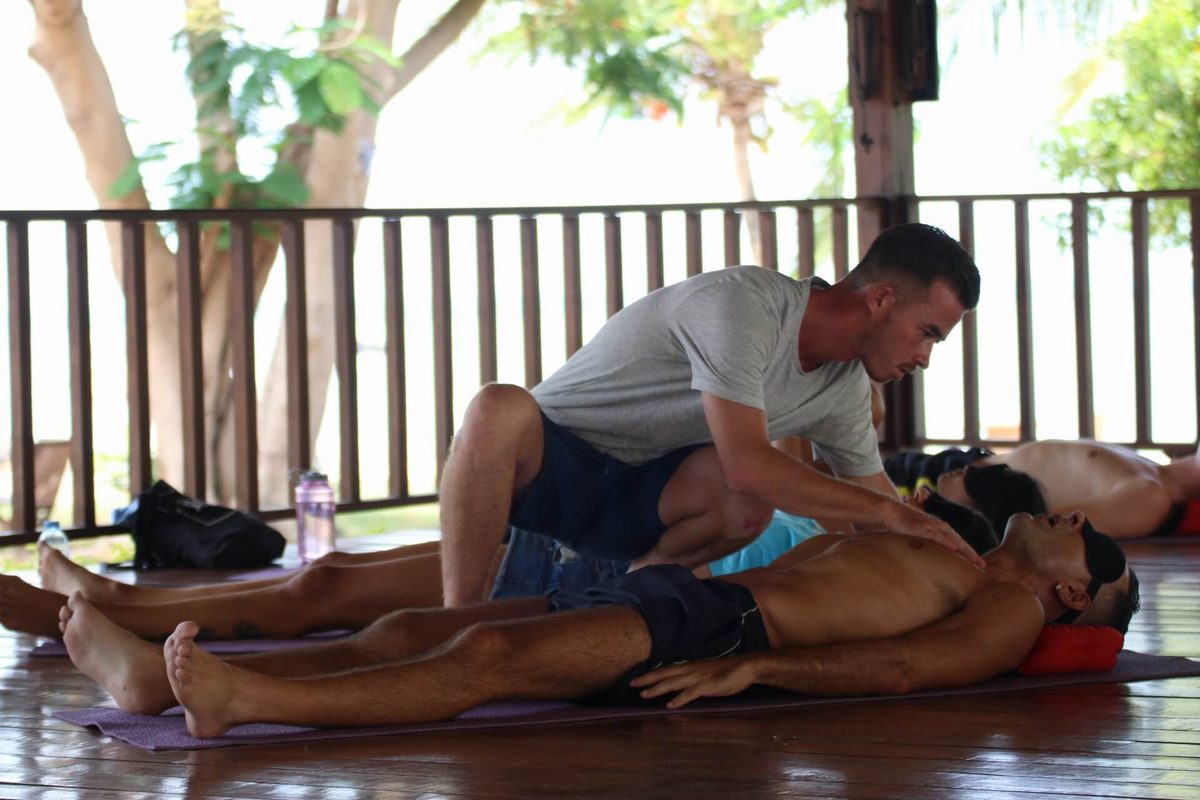
I have guided over 5,000 people through breathwork sessions since 2020. That includes yoga instructors, combat veterans, hedge fund managers, backpackers, couples on the edge of divorce, and a grandmother from New Zealand who told me she had not cried in 30 years. She cried. She thanked me for it.
Breathwork is the practice of using intentional breathing patterns to change how your body feels. You breathe a specific way on purpose and your nervous system responds. Humans are the only mammals who can take conscious control of the breath. After guiding 5,000 people, I describe it as grabbing the wheel, meditation for beginners.
Every one of those people walked in with the same question: what exactly am I about to do?
This is the answer. Everything I know about breathwork, distilled into one guide. Not the sanitized version you find on wellness blogs. The real version, from someone who has watched what this practice does to human bodies and human lives, up close, thousands of times.
What Is Breathwork
Breathwork is the practice of using intentional breathing patterns to change how your body feels. You breathe in a specific way, on purpose, and your nervous system responds. That is the whole concept.
But the definition does not capture what it actually looks like. So let me describe a room.
There are 12 people lying on mats with their eyes closed. Music is playing. The facilitator is guiding a breathing pattern, something rhythmic and continuous. Within three minutes, hands start tingling. Within ten minutes, someone is shaking. Within twenty, someone is crying. Not because anything sad happened. Because something that was stored in their body finally had space to move.
That is what breathwork looks like from the outside. From the inside, it is the experience of your thinking mind stepping aside and your body finally getting a chance to process what it has been holding.
People come to breathwork for different reasons. Some want to manage anxiety or sleep better. Some want to feel something after years of numbness. Some are curious because a friend told them about it and they cannot explain what happened but they looked different afterward. Some come because talk therapy hit a wall and they are looking for a way in that does not require finding the right words.
There is a phrase I use in my facilitator training: breathwork is meditation for beginners. Meditation asks you to sit still and observe your thoughts. For most people, that is incredibly difficult. Breathwork gives you something to do. You follow a pattern. Your body responds. Your mind quiets because it does not have bandwidth to breathe and narrate at the same time. You arrive at presence through action rather than stillness.
Humans are the only mammals that can both breathe unconsciously and consciously take over the machine. Every other animal breathes on autopilot. You can grab the steering wheel anytime you want. That is what breathwork is. Grabbing the wheel.
A Brief History of Breathwork
Conscious breathing is not new. Pranayama, the yogic science of breath control, has been practiced for thousands of years. The word itself comes from Sanskrit: prana meaning life force, and ayama meaning extension. Ancient yogic texts taught that you are born with a set number of breaths, and if you want a long life, you should take long, slow breaths.
In the 1960s, Leonard Orr developed rebirthing breathwork. He originally practiced it in a bathtub to recreate womb conditions, guiding people through continuous nose breathing to access deep emotional territory. Around the same time, Stanislav Grof, a psychotherapist who had been using LSD as a clinical tool, discovered that a specific breathing pattern could produce the same therapeutic effects without any drug. When LSD became illegal, he formalized this into holotropic breathwork, a practice built on continuous mouth breathing sustained for one to two hours that could produce profound altered states and emotional release.
The modern era of breathwork, roughly 2010 onward, shifted the focus toward the nervous system. Wim Hof brought controlled hyperventilation and cold exposure to a global audience with measurable results, including a landmark study where trained participants showed voluntary immune activation. Patrick McKeown popularized CO2 tolerance and nasal breathing through the Oxygen Advantage. Stephen Porges gave us polyvagal theory, which reframed the entire conversation around safety, connection, and the vagus nerve.
Today breathwork sits at the intersection of ancient practice and modern neuroscience. The techniques are old. The understanding of why they work is new.
How Breathwork Works: The Science
Your Autonomic Nervous System
Your autonomic nervous system runs everything you do not consciously control. Heart rate. Digestion. Pupil dilation. Blood pressure. Immune response. All of it, running in the background without your permission.
It has two main branches. The sympathetic branch is your gas pedal. Fight or flight. Heart pounds, muscles tighten, digestion shuts down, blood moves to your limbs. Your body is preparing to run or fight. The parasympathetic branch is your brake. Rest and digest. Heart rate drops, muscles relax, digestion turns back on, repair begins. This is where you actually feel like yourself.
These two branches are supposed to work together. Gas when you need it. Brake when you do not. The problem is that most people are stuck with the gas pedal pressed down all day. Notifications, deadlines, traffic, conversations. You are not in danger. But your nervous system does not know that. Over time, sympathetic dominance becomes your baseline. You forget what calm actually feels like. You think the tension in your shoulders is just how shoulders feel. You think waking up tired is normal.
It is common. It is not normal. If you want to see where your nervous system sits right now, the two minute terrain quiz gives you a clear read.
Here is the critical insight: the breath is the only autonomic function you can consciously control. You cannot decide to slow your heart rate directly. You cannot tell your digestion to turn on. But you can change your breathing pattern. And when you do, your nervous system listens. Change the breath, change the state. That is the entire mechanism.
The Vagus Nerve Connection
The vagus nerve is the longest nerve in your body. It starts at your brainstem and winds down through your throat, heart, lungs, and gut. It connects your brain to nearly every major organ. It is the main line of the parasympathetic system, and when it is activated, it tells your body that you are safe.
The vagus nerve responds directly to the rhythm, depth, and ratio of your breathing. When your exhale is longer than your inhale, the vagus nerve fires. Heart rate slows. Blood pressure drops. Cortisol production decreases. This is not metaphorical. It is measurable. This phenomenon has a name: respiratory sinus arrhythmia. Your heart rate literally changes with each breath cycle, speeding up on the inhale and slowing down on the exhale.
The mechanism works through the diaphragm. On an inhale, the diaphragm moves down, creating more space for the heart to expand. The heart sends a signal requesting more blood and heartbeat increases. On an exhale, the diaphragm moves up, the heart contracts, and heartbeat decreases. By extending the exhale, you spend more of each breath cycle in the parasympathetic phase. Do that for a few minutes and your entire system shifts.
This is why singing, chanting, and humming are relaxing. They all involve prolonged exhales. The traditions figured this out long before we understood the vagus nerve. For a deeper look at this mechanism, the vagus nerve article goes further.
What Happens in Your Brain During Breathwork
During intense continuous breathing, something specific happens in your brain. CO2 levels drop, blood pH shifts toward alkaline, and oxygen delivery to the brain changes. The prefrontal cortex, the part of your brain responsible for planning, analyzing, and maintaining your social presentation, gets quiet. It does not shut off. But it steps back.
This matters because the prefrontal cortex is also the part of your brain that decides what you are allowed to feel. It manages your emotional responses, filters what comes to the surface, and keeps you looking composed. When it quiets down, what is underneath gets space to move. Stored emotions, unprocessed experiences, tension patterns that have been held for years. This is why people cry in breathwork without knowing why. The gatekeeper stepped away from the door.
Brain wave patterns also shift during breathwork. The active beta waves that dominate your thinking state transition toward alpha and theta. Theta is the same state you pass through between waking and sleeping. It is associated with creativity, emotional processing, and what meditators describe as deep presence. Most people struggle to reach theta through meditation alone. Breathwork gets you there through the body.
The default mode network, which is the brain network responsible for self referential thought (the internal narrator that never stops talking), also changes during breathwork. This is the same network that quiets during psychedelic experiences and deep meditation. When it loosens, people report feeling connected to something larger than their usual thought patterns. Not mystical. Just a temporary release from the constant mental commentary.
CO2 Tolerance and Why It Matters
Most people over breathe. This sounds counterintuitive because the common belief is that more oxygen is better. It is not.
Carbon dioxide is not just a waste product. It determines whether the oxygen in your blood actually gets delivered to your tissues. This is called the Bohr effect: when CO2 levels are adequate, hemoglobin releases oxygen to your cells efficiently. When CO2 is too low from chronic over breathing, oxygen stays bound to hemoglobin and your cells get less of it despite your blood being fully saturated.
This means breathing more often results in getting less usable oxygen, not more. Quality of oxygen delivery matters more than quantity of air moved.
CO2 tolerance also directly affects anxiety. When your tolerance is low, even slight changes in CO2 levels trigger the urge to breathe faster, which drops CO2 further, which increases anxiety, which makes you breathe faster. It is a loop. Building CO2 tolerance through breath holds, nasal breathing, and reduced breathing exercises breaks this loop at the physiological level.
There is a simple test for this called the BOLT score (Body Oxygen Level Test). Take a normal inhale, a normal exhale, then hold your breath until you feel the first physical urge to breathe. Not until you are gasping. Just the first flicker. Under 20 seconds means your breathing patterns need attention. 40 seconds is the target. You can check yours right now. It takes 30 seconds and tells you more about your baseline stress level than any questionnaire.
Types of Breathwork
Not all breathwork is the same. Different techniques produce different effects, and knowing which tool to reach for in different situations is the difference between a breathing exercise and a breathing practice.
Box Breathing
Inhale for 4 counts. Hold for 4 counts. Exhale for 4 counts. Hold for 4 counts. Repeat.
This is what US Navy SEALs use before high pressure operations. It is also a foundational technique for freedivers. The equal ratio creates symmetry that your nervous system interprets as stability. The holds give your attention something neutral to anchor to, which interrupts the thought spiral that amplifies stress. Box breathing will not produce emotional release or altered states. That is not its job. Its job is to bring you back to center when your system is running hot. It is the most reliable regulation tool I know, and it works in any setting without anyone around you noticing. Try it with the guided breath pacer.
Coherent Breathing
Inhale through the nose for 5 seconds. Exhale through the nose for 5 seconds. No holds. Continuous and even. This produces approximately 6 breaths per minute, which research identifies as the ideal resting breath rate for optimizing heart rate variability.
Heart rate variability (HRV) measures the variation in time between your heartbeats. Higher HRV means your nervous system can shift between states fluidly. Lower HRV means you are stuck in one gear. Coherent breathing brings HRV into its optimal range. The HeartMath Institute identifies 5.5 seconds per inhale and exhale as the scientifically ideal duration. Dr. Richard Brown and Dr. Patricia Gerbarg specifically recommend this pattern for PTSD, anxiety, and depression. This is a daily practice. Ten minutes a day. Not dramatic. Not intense. Just steady rhythmic breathing that trains your nervous system over time. Think of it as physical therapy for your autonomic nervous system.
Extended Exhale Breathing
Inhale through the nose for 4 seconds. Exhale through the nose for 8 seconds. The ratio can be 3:6, 4:8, or any variation where the exhale is roughly double the inhale.
This is the most direct way to activate the parasympathetic nervous system. The exhale is the brake pedal. When your exhale exceeds your inhale, your heart rate literally slows on each out breath. Cortisol production decreases. Muscles soften. If you learn one thing from this entire guide, make it this: the exhale is the off switch. Use this before sleep, during moments of acute stress, or any time you need to come down fast. You can practice this right now with the breath pacer. One minute of extended exhale breathing changes your state measurably.
Circular Connected Breathing
Continuous breathing with no pause between the inhale and the exhale. Inhale flows into exhale flows into inhale. The breath becomes a circle with no edges.
This is the foundation of transformational breathwork, including rebirthing and most modern somatic breathwork modalities. When you sustain this pattern for 20 to 40 minutes, your prefrontal cortex quiets, your default mode network shifts, and stored emotional material gets space to surface. This is where people cry, shake, laugh, or feel waves of sensation that do not have a story attached. The body stores issues in its tissues, and connected breathing creates the conditions for those tensions to release. This technique should be practiced with a trained facilitator, especially the first few times. You may reach emotional territory where having someone steady in the room matters.
Holotropic Breathwork
Deep, fast breathing through the mouth, sustained for one to two hours. Created by Stanislav Grof after discovering that continuous breathing could produce the same therapeutic effects he had been achieving with clinical LSD.
Holotropic breathwork uses open mouth breathing with the upper chest in a connected pattern. The high volume of air rapidly drops CO2, shifts blood pH, reduces oxygen delivery to the prefrontal cortex, and produces altered states of consciousness. Sessions often include loud evocative music and a "sitter" who stays with each breather. People report vivid imagery, emotional catharsis, and experiences that feel significant in ways they struggle to articulate. This is powerful territory and requires a facilitator specifically trained in the holotropic method. It is not something to experiment with alone or casually. For more on the emotional dimension, read why breathwork makes you cry.
Wim Hof Breathing
30 to 40 deep breaths (full inhale, relaxed exhale) followed by a breath hold on the exhale, then a recovery breath held at the top. Typically performed for 3 to 4 rounds.
The breathing phase drops your CO2 levels dramatically. It does not meaningfully raise your oxygen. Arterial saturation is already about 98 to 99 percent at sea level and cannot go much higher, and the alkalosis that fast breathing produces actually shifts the oxygen-haemoglobin curve so that less oxygen is released into your tissue, not more. Anyone telling you that fast breathing oxygenates your blood has it backwards. When you hold on the exhale, CO2 rushes back in and oxygen drops. The method activates the sympathetic nervous system and triggers an adrenaline release. In the 2014 PNAS study, 12 healthy young men trained for 10 days showed a suppressed inflammatory response to an injection of purified E. coli endotoxin, with symptom scores roughly 56 percent lower than untrained controls. That is a single study from a single lab, twelve people per group, never independently replicated. This practice pairs with cold exposure, which is central to the Wim Hof method. After the breathing rounds, recovery is critical. Two minutes of normal breathing between rounds allows your system to return to homeostasis. That recovery phase is where the real adaptation happens.
Somatic Breathwork
Somatic breathwork focuses on body sensation rather than achieving a specific mental state. It often involves continuous breathing combined with movement, shaking, sound, and guided body awareness.
The premise is that your body stores unprocessed experiences as physical tension, held breath patterns, and chronic muscle contraction. The lower belly, jaw, hip flexors, and chest are common holding areas. Somatic breathwork creates conditions where those held patterns can release. People often experience spontaneous shaking (which is the body completing stress cycles), crying, or intense physical sensations. Unlike holotropic breathwork, which relies on volume and intensity, somatic work can be gentler and more nuanced. It works with the body's own intelligence rather than overwhelming it. It is less about going somewhere extraordinary and more about finally arriving in your own body. The somatic breathwork article covers this in detail.
What Happens in a Breathwork Session
After guiding thousands of sessions, the pattern is consistent even though every individual experience is unique.
You start by lying down. Eyes closed. I explain the breathing pattern and set an intention: let your body lead. Do not try to make anything happen. Do not try to prevent anything from happening. Just keep breathing.
The first three minutes are the adjustment period. You are finding the rhythm. Your mind is still chattering about whether you are doing it right. This is normal. Just keep breathing.
Around minutes five to eight, the physical sensations arrive. Tingling in the hands and around the mouth. Sometimes temperature changes, waves of warmth or cold moving through your body. Some people feel heaviness. Others feel like they are floating. Your hands might cramp into what we call lobster hands. This is tetany. It looks alarming but it is not dangerous. It comes from the shift in blood pH and resolves completely within minutes of returning to normal breathing.
Between minutes ten and twenty, the thinking mind starts to let go. This is where the practice shifts from a breathing exercise into breathwork. The internal narration gets quieter. The body takes over. Emotions may surface. Not necessarily dramatic ones. Sometimes it is just a deep wave of relief, like putting down something heavy you forgot you were carrying.
Some people cry. Some laugh. Some feel nothing dramatic at all and just settle into a profound stillness. All of these are valid. There is no hierarchy of experience. The breath meets you where you are.
After the active phase, you return to normal breathing and rest for 5 to 10 minutes. This integration time is not optional. Your nervous system is processing what just moved. Most people describe this as the most peaceful they have felt in months. Sleep that night is usually notably different.
For a full walkthrough, read what happens in a breathwork session.
Benefits of Breathwork: What the Research Shows
Anxiety and Stress
Anxiety lives in the body before it lives in the mind. The racing thoughts are a symptom. The root is a nervous system stuck in threat detection mode. Breathwork addresses this at the source.
Extended exhale breathing activates the vagus nerve and shifts the system toward parasympathetic dominance. CO2 tolerance training breaks the hyperventilation loop that underlies panic attacks. Coherent breathing at 6 breaths per minute has been studied specifically for anxiety and PTSD, with measurable reductions in cortisol and self reported stress. I have watched people who have been medicated for anxiety for years feel what calm actually is for the first time in a single session. Not because the breathwork is magic. Because their nervous system was never broken. It was stuck. The breathing gave it a way to shift. Read more in breathwork for anxiety.
Sleep
Most sleep problems are nervous system problems. You lie down and your body is still running the daytime program. Heart rate elevated. Muscles tense. Mind scanning for threats that do not exist.
Five minutes of extended exhale breathing before bed shifts your system toward parasympathetic. Nasal breathing throughout the night (mouth taping helps with this) maintains that parasympathetic state and improves oxygen delivery. People who start taping their mouths at night typically report better sleep quality within the first week. Not deeper sleep according to any tracker. Deeper sleep according to how they feel when they wake up. The breathwork for sleep article covers specific protocols.
Nervous System Regulation
This is the core benefit. Everything else flows from it.
Regulation means your nervous system can shift between states appropriately. Gas pedal when you need it. Brake when you do not. The ability to activate and then come back down. To feel stress and not get stuck there.
Heart rate variability is usually named as the measurement for this, and it is worth knowing its limits. Higher HRV travels with better health, but it is a marker rather than a lever, and breathing slowly widens the beat to beat swing mechanically, so a rise during practice is not proof that anything lasting has changed. The idea that daily practice trains your nervous system to return to baseline faster is a reasonable hypothesis and it is not established. What is established is smaller and still useful: the immediate effect is real, it is repeatable, and the people who get the most out of breathwork are simply the ones who practise more often. The nervous system reset article goes deeper on this mechanism.
Immune Function
The 2014 study published in the Proceedings of the National Academy of Sciences is the one everybody cites, and it is worth stating accurately. Twelve healthy young men trained in the Wim Hof method for ten days were injected with purified E. coli endotoxin alongside twelve untrained controls. The untrained group developed fever, chills and nausea. The trained group had roughly 56 percent lower flu-like symptom scores, not zero symptoms. The mechanism was an adrenaline surge that suppressed the acute inflammatory response. It is a single pilot-scale study from one laboratory and it has never been independently replicated, so treat it as promising rather than settled.
The mechanism: the breathing technique mimics a stress response without any external trigger. It activates the sympathetic nervous system, which triggers the adrenal glands, which release adrenaline, which primes the immune system. When the bacteria entered their bodies, the system was already activated and ready to respond. This was the first time science demonstrated that humans could voluntarily influence their innate immune system. The practical application is simple. At the first sign of illness (sore throat, fatigue, that feeling that something is coming), lie down and do multiple rounds of controlled breathing. You are activating the same immune priming the study participants used.
Emotional Release
Your body stores unprocessed experiences as physical tension. The jaw that clenches during certain conversations. The chest that tightens around certain people. The breath you hold without realizing it when you hear a certain tone of voice. These are not just habits. They are stored nervous system responses.
Breathwork creates conditions where those stored patterns can complete. The continuous breathing pattern bypasses the cognitive mind and accesses what is held in the body. People often release emotions they did not know they were carrying. About half the time, there is no specific memory attached. The body simply needed permission to let go. The other half, specific memories or sensations surface with clarity. Both are the body's intelligence at work. The important thing is that breathwork does not force release. It creates space for it. You cannot breathe wrong. You cannot fail at letting go. The body takes what it needs from the practice.
Pain Management
Controlled breathing directly affects pain perception through multiple pathways. The Wim Hof breathing protocol shifts blood pH toward alkaline, which reduces sensitivity of pain receptors. Athletes report being able to double their pushup count after several rounds of this breathing technique because the threshold for muscular discomfort increases.
Slow breathing activates the parasympathetic system, which modulates pain signaling. The vagus nerve, when stimulated through breath, releases acetylcholine, which has anti inflammatory effects. Cold exposure combined with breathwork further trains the relationship between discomfort and response. You learn to be present with intense sensation without needing to escape it. That skill transfers directly to chronic pain management. Not eliminating pain. Changing your relationship with it.
Who Should Not Do Breathwork
Breathwork is powerful precisely because it produces real physiological changes. That same power means it is not appropriate for everyone without precautions.
Cardiovascular conditions: Any condition affecting the heart or blood pressure requires medical clearance before intense breathwork. The changes in blood chemistry and thoracic pressure during controlled hyperventilation place demands on the cardiovascular system.
Epilepsy: Voluntary hyperventilation is a well established seizure trigger. It provokes seizures in over 90% of people with absence epilepsy. Any breathwork involving rapid or forceful breathing is an absolute contraindication. Gentle techniques like slow nasal breathing and extended exhale breathing may be safe with neurologist approval.
Pregnancy: Particularly the first trimester. The hormonal and physiological changes are already significant. Adding controlled hyperventilation or intense breath holds introduces variables that have not been studied and should not be risked.
Recent surgery: Your body is already in a high demand recovery state. Give it time before adding breathwork, especially anything involving abdominal engagement or breath holds.
Severe mental health conditions without professional support: People with active psychosis, severe dissociative disorders, or recent psychiatric hospitalization should only approach breathwork with the direct involvement of their mental health professional. Breathwork can surface intense material, and the right support needs to be in place.
A responsible facilitator will always screen for these conditions before a session. If they do not ask about your medical history, that tells you something about their training. If you are unsure whether breathwork is appropriate for you, reach out and ask. A five minute conversation can answer the question.
How to Start
If you have read this far and want to begin, here is the simplest path.
Start with extended exhale breathing. It is the safest, most accessible technique and produces meaningful results from day one. Inhale through your nose for 4 counts. Exhale through your nose for 8 counts. Do this for 5 minutes before bed tonight. Notice what shifts. Not in your thoughts. In your body.
Use the free breath pacer to guide the rhythm. It handles the counting so you can focus on breathing.
Take the nervous system terrain quiz to understand where your system sits right now. It takes two minutes and gives you a starting point to measure against.
Read the beginner guide for a more detailed walkthrough of the three best techniques for newcomers, including exactly how to practice them.
When you are ready to go deeper than solo practice can take you, book a guided session. UNTAMED is a full day of breathwork, ice bath, and jungle waterfall hike on Koh Samui. It is designed to be accessible for complete beginners while going deep enough to be genuinely meaningful. 155 five star reviews from people who walked in not knowing what to expect and walked out different.
Breathwork vs Other Practices
People often ask how breathwork compares to practices they already know. Here is the honest answer.
Breathwork vs meditation: Meditation asks you to observe. Breathwork asks you to do. Both lead to presence but through different doors. Meditation works with the mind. Breathwork works with the body. For people who struggle to sit still and quiet their thoughts, breathwork is often the better entry point. For people who need to develop sustained attention and equanimity, meditation may serve them more. They complement each other well. The full comparison covers this in depth.
Breathwork vs pranayama: Pranayama is breathwork. It is the original system of conscious breathing, developed thousands of years before the word breathwork existed. Modern breathwork draws heavily from pranayama traditions while incorporating Western neuroscience and somatic psychology. The distinction is mostly cultural and contextual. If your teacher calls it pranayama, you are likely in a yoga lineage. If they call it breathwork, you are likely in a Western therapeutic or wellness framework. The techniques overlap significantly. The detailed comparison maps the connections.
Breathwork vs yoga: Yoga includes breathwork (pranayama is one of the eight limbs). But yoga as practiced in most studios focuses primarily on physical postures. Dedicated breathwork sessions go deeper into breathing patterns and nervous system work than the brief pranayama component of a typical yoga class. They are not in competition. Yoga builds the body. Breathwork reaches the nervous system directly.
Frequently Asked Questions
What is breathwork?
Breathwork is the practice of using intentional breathing patterns to create specific changes in your body and nervous system. Unlike taking a deep breath when stressed, breathwork involves sustained patterns practiced for minutes or longer that produce measurable shifts in blood chemistry, heart rate, brain wave patterns, and emotional state. It ranges from simple calming techniques like extended exhale breathing to intensive practices like holotropic breathwork that can produce altered states of consciousness and deep emotional release.
Is breathwork safe?
For most people, yes. Gentle techniques like extended exhale breathing, coherent breathing, and box breathing are safe for nearly everyone. More intense practices involving controlled hyperventilation have specific contraindications including epilepsy, cardiovascular conditions, pregnancy (especially first trimester), recent surgery, and unmanaged psychiatric conditions. A responsible facilitator will always screen for medical history before a session. If you have any of these conditions, consult your doctor before attempting intense breathwork.
How long does a breathwork session last?
It depends on the type. A solo practice of box breathing or coherent breathing can be as short as 5 minutes and still produce meaningful results. A guided breathwork session with a facilitator typically runs 60 to 90 minutes, including preparation, 20 to 40 minutes of active breathing, and integration time afterward. Holotropic breathwork sessions can last two to three hours. For daily practice at home, 10 to 20 minutes is the range most people find sustainable and effective.
Can breathwork help with anxiety?
Yes. Breathwork addresses anxiety at the nervous system level rather than the cognitive level. Extended exhale breathing activates the vagus nerve and shifts the body from sympathetic (fight or flight) to parasympathetic (rest and recover). CO2 tolerance training breaks the hyperventilation loop that underlies panic attacks. Coherent breathing at 5 to 6 breaths per minute has been studied specifically for anxiety and PTSD with measurable reductions in cortisol. Many people who have been managing anxiety for years feel genuine calm for the first time in a single guided session.
What is the difference between breathwork and meditation?
Meditation asks you to observe your thoughts without engaging them. Breathwork actively shifts your physiology through specific breathing patterns. Both lead to presence and calm, but through different pathways. Meditation works primarily with the mind. Breathwork works primarily with the body and nervous system. For people who find it difficult to sit still and watch their thoughts, breathwork often provides an easier entry point because it gives you something to do. The two practices complement each other well.
Do I need experience to try breathwork?
No. You already know how to breathe. A good facilitator will explain the pattern clearly and guide you through the entire session. The most common beginner mistake is trying too hard, forcing the breath and tensing the body. If you can follow a rhythm and keep breathing, you can do breathwork. Some of the most profound experiences I have witnessed came from people who had never heard the word breathwork before walking into the room.
What does breathwork feel like?
Physical sensations include tingling in the hands, feet, and around the mouth. Some people feel waves of warmth or cold. Lightness or heaviness. Your hands may cramp temporarily (this is called tetany and resolves within minutes). Emotionally, some people feel unexpected waves of sadness, relief, or joy. Others feel profoundly calm and clear. Some people feel nothing dramatic and simply relax deeply. There is no wrong response. The experience varies between individuals and between sessions.
How often should I do breathwork?
Simple techniques like coherent breathing, box breathing, and extended exhale breathing can be practiced daily. Even 5 to 10 minutes compounds significantly when done consistently. More intense guided sessions (holotropic, Wim Hof rounds, somatic breathwork) are best spaced out. Once a week to once a month gives your nervous system time to integrate. Think of the daily practices as maintenance and the guided sessions as the deeper work.
Can breathwork make you cry?
Yes, and it is one of the most common responses during intense breathwork sessions. The continuous breathing pattern quiets the prefrontal cortex, which is the part of your brain that manages your emotional presentation. When that filter relaxes, stored emotions get space to surface. The crying is not about something specific. It is your body completing a cycle that has been waiting. About half the time, people have no memory or story attached to the tears. They just needed to come. This is a healthy sign that your nervous system is processing and releasing.
Where can I try breathwork in Thailand?
On Koh Samui, UNTAMED is a full day guided experience that includes breathwork, ice bath, and a jungle waterfall hike. It runs regularly, includes hotel pickup and lunch, and is designed for both beginners and experienced practitioners. Private group workshops are also available for groups of 4 to 16 at your location anywhere on the island. Visit breathflowconnection.com/untamed for dates and booking.
Ready to Experience Breathwork in Person
UNTAMED is a full day breathwork, ice bath, and waterfall experience in Koh Samui, Thailand. Hotel pickup, lunch, and a nervous system reset you will feel for weeks. 155 five star reviews. 3,500 THB. No experience needed. Just willingness to breathe and see what happens.
View upcoming dates and book your spot.
For groups of 4 to 16, private workshops bring guided breathwork and ice bath to your location anywhere on the island. Two hours. No generic template. Real facilitation for real humans.
If you are not on the island yet, start with the free breath pacer. Five minutes tonight before bed. Notice what shifts.
Keep Reading
- Breathwork for Beginners: Where to Start and What to Expect
- What Breathwork Actually Does to Your Nervous System
- What Happens in a Breathwork Session
- Breathwork for Anxiety: What Actually Helps
- Breathwork for Sleep
- Breathwork vs Meditation
- Breathwork vs Pranayama
- Why Breathwork Makes You Cry
- Breathwork and the Vagus Nerve
- Results: What People Say After UNTAMED
Stay in the loop.
Occasional dispatches when sessions open or new writing drops. No spam.
About Diego Pauel
I have lived in Koh Samui for 15 years. I discovered breathwork through freediving, which I have trained in for over a decade. When COVID hit and the island emptied out, I started offering breathwork and ice baths for free to help the local community feel better in their bodies. I was the first to offer this work on the island. Five years later, I have facilitated countless sessions for people from all over the world. No guru energy. No mystical language. Just the work.
Full story →