Breathwork for Sleep: How to Calm Your Nervous System Before Bed
You are lying in bed. Your body is tired. Your mind will not stop. You replay conversations. You think about tomorrow. You notice you are tense and you try to relax, which only makes you more aware of how not relaxed you are.
Breathwork helps you fall asleep by signaling your nervous system that the day is over, shifting you out of fight or flight. The foundation is extended exhale breathing. Inhale for four counts, exhale slowly for six to eight. The long exhale stimulates the vagus nerve, slows your heart rate, and most people feel their body getting heavier within minutes.
This is not an anxiety disorder. This is a nervous system that has not received the signal to power down. If this sounds familiar, the terrain quiz can confirm where your system is stuck.
Your autonomic nervous system has two modes. Sympathetic is your activation mode: alert, ready, scanning. Parasympathetic is your rest and recovery mode: calm, slow, safe. Sleep requires your body to shift from one to the other. When that shift does not happen, you lie there awake with a tired body and a wired brain.
Your mind is not malfunctioning at 2am. It is doing what it was built to do: scanning for threats, preparing for tomorrow, replaying what went wrong today. The problem is that it never received the signal that the scanning is done. Nobody told it the day is over. So it keeps running.
Breathwork provides that signal. Not through willpower or positive thinking. Through the vagus nerve. When you breathe in a specific pattern, your nervous system shifts gears mechanically. You do not have to convince your mind to stop. You change the physiology, and the mind follows.
Why Breathing Patterns Affect Sleep
Your breath is the only autonomic function you can consciously control. Heart rate, digestion, pupil dilation: these happen on their own. But breathing sits at the intersection of voluntary and involuntary control. This gives you a direct input into a system that otherwise runs on autopilot.
When you extend your exhale longer than your inhale, you stimulate the vagus nerve. The vagus nerve is the primary pathway of the parasympathetic nervous system. It runs from your brainstem through your neck, chest, and abdomen. When it activates, your heart rate drops, your blood pressure decreases, and your body begins producing signals that say: it is safe to rest now.
This is not a metaphor. It is measurable physiology. Heart rate variability monitors show the shift happening within the first 60 to 90 seconds of extended exhale breathing. You do not need to believe in anything. You just need to breathe in a specific pattern and let your nervous system do what it already knows how to do.
Three Techniques for Better Sleep
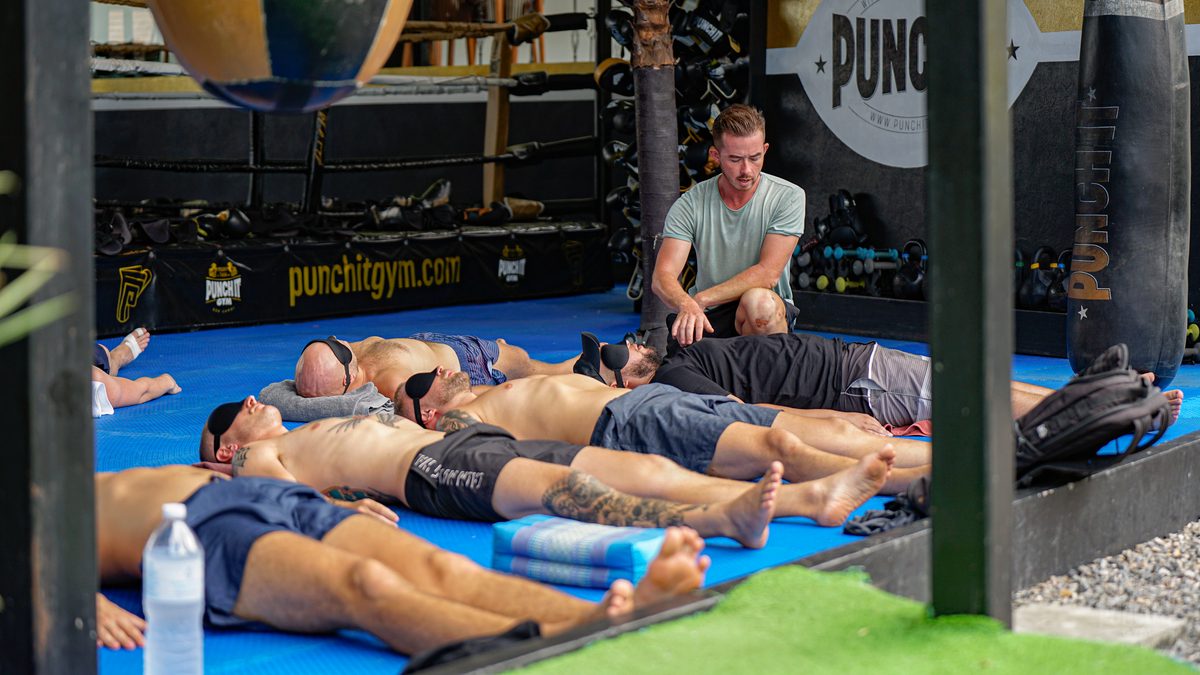
I have used all three of these with clients who came to sessions carrying weeks of accumulated tension. The people who struggle with sleep are often the same people who carry everything in their shoulders and jaw. The breath reaches what stretching and hot baths cannot.
1. Extended Exhale Breathing (The Foundation)
This is the simplest and most effective technique for sleep. Inhale for 4 counts through your nose. Exhale for 6 to 8 counts through your nose or gently through pursed lips. The exhale should be slow and steady, not forced.
Why it works: each long exhale slows your heart rate through the vagus nerve while you are doing it. That much is straightforward physiology and you can measure it on yourself. It is a real effect happening in the moment rather than a lasting change to your baseline. After 3 to 5 minutes, most people notice their body getting heavier and their thoughts slowing down.
Start with 4 counts in, 6 counts out. If that feels comfortable after a few cycles, extend the exhale to 7 or 8 counts. Do not strain. The moment you feel like you are running out of air, shorten the count. This should feel like a gentle release, not an effort.
Practice for 5 to 10 minutes lying in bed with your eyes closed. Many people fall asleep before the 10 minutes are up.
2. 4 7 8 Breathing (The Reset)
Inhale through your nose for 4 counts. Hold your breath for 7 counts. Exhale slowly through your mouth for 8 counts. Repeat for 4 to 8 cycles.
This technique was popularized by Dr. Andrew Weil, but variations of it exist in yogic breathing traditions going back centuries. The hold phase is what makes it different from simple extended exhale breathing. During the hold, CO2 builds slightly in your bloodstream. This triggers a mild chemoreceptor response that, paradoxically, leads to deeper relaxation on the exhale. Your body interprets the slow controlled exhale after a hold as a safety signal.
The 4 7 8 pattern works best when you have had a particularly stressful day and simple extended exhale breathing does not feel like enough. The breath hold adds a layer of nervous system reset that interrupts racing thoughts more effectively.
Important: if 7 counts feels too long for the hold, reduce it to 4 or 5. The ratio matters more than the exact numbers. Longer exhale than inhale, with a pause in between.
3. Body Scan with Breath (The Deep Release)
Lie on your back with your arms at your sides. Begin with extended exhale breathing (4 in, 6 out). After 2 minutes, start directing your exhale to specific parts of your body.
On each exhale, focus your attention on one area: your jaw, your shoulders, your chest, your stomach, your hips, your legs, your feet. Do not try to relax these areas. Just notice them while you breathe out slowly. Spend 3 to 4 breaths on each area before moving to the next.
This works because tension often lives in specific locations that you stop noticing during the day. Your jaw clenches. Your shoulders creep up. Your belly tightens. By bringing conscious attention to these areas while your nervous system is already shifting toward rest mode, you give those muscles permission to release. If you want to understand why the body holds tension in specific places and what it means when it lets go, the somatic breathwork article explains the mechanism.
I use this technique in almost every session I facilitate. The people who carry the most tension often have the biggest response because they finally notice where they have been holding it. In a guided UNTAMED session, this becomes even more powerful because the breathwork builds on movement, grounding, and cold exposure that have already started the release process.
The One Change That Improves Sleep More Than Any Technique
If you do nothing else from this article, consider this: tape your mouth shut before you sleep.
This sounds odd until you understand the physiology. When you breathe through your mouth during sleep, you expel too much carbon dioxide. CO2 is not waste gas. It determines whether oxygen actually gets delivered from your blood to your cells. When CO2 drops too low, oxygen stays locked onto your hemoglobin. Your pulse oximeter would read normal saturation, but your tissues are receiving less usable oxygen.
Mouth breathing during sleep also bypasses the production of nitric oxide, a gas released exclusively in the nasal passages that improves blood circulation and opens airways.
The practical result: mouth breathing during sleep produces lower quality rest, more snoring, drier mouth, and a nervous system that never fully drops into deep recovery.
The fix is simple. A small strip of medical tape (micropore tape works well) placed vertically over the lips before bed. It holds your mouth closed gently. You can still open your mouth if you need to. It simply encourages nasal breathing throughout the night.
Most people report noticeably deeper sleep within the first three nights. Many report that their partner notices the snoring stops. This is one of the simplest interventions I recommend and one of the most consistently effective.
What to Avoid Before Sleep
Breathwork for sleep works best when you are not fighting against other stimulating inputs. A few things that undermine even the best breathing practice:
Screens in the last 30 minutes. Blue light suppresses melatonin production. But the bigger issue is that scrolling keeps your brain in scanning mode: alert, reactive, processing new information. This is the opposite of the signal your nervous system needs.
Stimulating breathwork patterns. Not all breathwork calms you down. Techniques like Wim Hof style hyperventilation, kapalabhati, or breath of fire activate the sympathetic nervous system. These are morning techniques. Doing them before bed is like drinking coffee and wondering why you cannot sleep. If you want to learn the difference between activating and calming patterns, the beginners guide covers both types.
Trying too hard to relax. The moment you turn relaxation into a goal, you create tension. If you catch yourself thinking "why is this not working," that is your mind doing exactly what it does all day: evaluating performance. Let the breath do its job. You do not need to make anything happen.
Cold Exposure and Sleep
If you want to accelerate the sleep improvement, consider adding cold exposure earlier in the day. A cold shower or ice bath in the morning triggers a norepinephrine release that improves mood and focus during the day. By evening, those neurochemicals have cleared, and your body downshifts more easily. Regular cold exposure also trains your nervous system to transition between activation and recovery, which is the same skill that sleeping well requires. The cold exposure article covers the research.
When to Practice
The best time is the last 10 minutes before you want to fall asleep. Get into bed, turn off the lights, and begin your chosen technique. Do not do it sitting up and then lie down afterward because the transition resets some of what you built.
Consistency matters more than duration. Five minutes every night for a week will change your sleep more than one 20 minute session followed by nothing. Your nervous system learns patterns. After a few nights of the same routine, your body begins anticipating the shift before you even start the breathing.
If you wake in the middle of the night with a racing mind, use extended exhale breathing (technique 1) immediately. Do not check your phone first. Start breathing and let the vagal response carry you back down. Most people find they can return to sleep within 5 to 10 minutes once the technique becomes familiar.
The Difference Between Breathing Alone and Guided Practice
These techniques work on their own. You can start tonight. That is the point of teaching them here.
But there is a difference between using breathwork as a sleep tool and experiencing what your nervous system can actually do when someone who knows the work guides you through a full session. In a guided practice, the breathing patterns go deeper because you are not managing the process yourself. You can let go in a way that is harder to do alone.
If poor sleep is a symptom of a nervous system that has been running in overdrive for months or years, a private workshop gives you space to address that directly. Not with theory. With your breath, your body, and the experience of what it feels like when your system finally lets go.
The nightly practice keeps the baseline. A guided session resets it. If your sleep has been off for months, the burnout article covers why your nervous system may be stuck in survival mode and what to do about it.
Start Tonight
Pick one technique. Extended exhale breathing is the best starting point: four counts in, six counts out, through your nose, eyes closed, in bed. The breath pacer can guide the rhythm if counting feels like too much effort at bedtime.
If you also tape your mouth, you have addressed both the active practice and the passive environment. Two changes. No apps. No supplements. Just your breath and a strip of tape.
Keep Reading
How to Use Breathwork to Fall Asleep
A wind down breathing sequence you do lying in bed to shift your nervous system from alert into rest, so a tired body and a wired mind can finally power down. Five to ten minutes is usually enough, and many fall asleep before the end.
-
01
Get into bed first
Get into bed, turn off the lights, and close your eyes before you start. Do not practice sitting up and then lie down afterwards, because the transition resets some of what you build. The last ten minutes before sleep is the best window.
-
02
Extended exhale breathing
Inhale for four counts through your nose and exhale for six to eight counts through your nose or gently pursed lips. Keep the exhale slow and steady, never forced. After three to five minutes the body gets heavier and thoughts slow down.
-
03
Scan the body on each exhale
Keeping the same breath, move your attention on each exhale through your jaw, shoulders, chest, stomach, hips, legs, and feet. Spend three to four breaths on each area. Do not try to relax it, just notice it while you breathe out.
-
04
Use 4 7 8 on a hard night
If a stressful day needs more, inhale through the nose for four counts, hold for seven, and exhale through the mouth for eight, for four to eight cycles. If seven feels too long for the hold, drop it to four or five.
-
05
Tape your mouth for the night
For deeper passive sleep, place a small vertical strip of micropore tape over your lips to encourage nasal breathing. You can still open your mouth if you need to. Most people report deeper sleep within the first three nights.
Frequently asked questions
What is the best breathing technique to fall asleep faster?
Extended exhale breathing is the simplest and most effective. Inhale for 4 counts through your nose, exhale slowly for 6 to 8 counts. The longer exhale stimulates the vagus nerve, which slows your heart rate and shifts you toward rest mode. Most people notice their body getting heavier and their thoughts slowing within 3 to 5 minutes. Practice it lying in bed with your eyes closed. Many people fall asleep before the 10 minutes are up.
How does 4 7 8 breathing help with sleep?
Inhale through your nose for 4 counts, hold for 7, then exhale through your mouth for 8. The hold is what makes it different. During the hold, CO2 builds slightly in your bloodstream, which paradoxically leads to deeper relaxation on the exhale. I use it on nights when a stressful day means simple extended exhale breathing is not enough. If 7 counts feels too long, reduce the hold to 4 or 5. The ratio matters more than the exact numbers.
Why do I lie in bed with a tired body but a wired mind?
Your nervous system has not received the signal to power down. Sleep requires shifting from sympathetic, your alert scanning mode, to parasympathetic, your rest mode. When that shift does not happen, you lie there awake. Your mind is not malfunctioning at 2am. It is scanning for threats and replaying the day because nobody told it the day is over. Breathwork provides that missing signal through the vagus nerve, so you change the physiology and the mind follows.
Does mouth taping really improve sleep?
It is one of the simplest changes I recommend and one of the most consistently effective. Mouth breathing during sleep expels too much carbon dioxide, which keeps oxygen locked onto your hemoglobin, and it bypasses nitric oxide produced only in the nasal passages. The result is lower quality rest, more snoring, and a nervous system that never fully drops into deep recovery. A small strip of medical tape placed vertically over the lips encourages nasal breathing. Most people report deeper sleep within three nights.
Which breathing patterns should I avoid before bed?
Avoid stimulating patterns like Wim Hof style hyperventilation, kapalabhati, or breath of fire. These activate the sympathetic nervous system, so doing them before bed is like drinking coffee and wondering why you cannot sleep. They are morning techniques. Also avoid screens in the last 30 minutes, since scrolling keeps your brain in alert scanning mode. And try not to force relaxation. The moment you turn it into a goal you create tension. Let the breath do its job.
Stay in the loop.
Occasional dispatches when sessions open or new writing drops. No spam.
About Diego Pauel
I have lived in Koh Samui for 15 years. I discovered breathwork through freediving, which I have trained in for over a decade. When COVID hit and the island emptied out, I started offering breathwork and ice baths for free to help the local community feel better in their bodies. I was the first to offer this work on the island. Five years later, I have facilitated countless sessions for people from all over the world. No guru energy. No mystical language. Just the work.
Full story →