What Breathwork Actually Does to Your Nervous System
You already know you are stressed. You do not need another article telling you that.
Breathing is the one autonomic function you can consciously control, which is what makes it a useful handle on how you feel. Slow breathing with a long exhale does produce real, measurable changes: the heart rate slows, and in people with raised blood pressure a few points come off. Most people feel calmer within minutes. What the best controlled trials do not show is a lasting reset, or any advantage over a well matched comparison practice. Everyone improved. Nobody improved more. Reset is a marketing word. What you actually get is a safe, repeatable way to settle yourself.
What you might not know is why the stress stays. Why it follows you into the weekend. Why it is still sitting in your chest when you wake up at 3am even though nothing is technically wrong. Why you can be lying on a beach in Thailand and still feel the same tightness you felt in an office six thousand miles away.
The answer is your nervous system. And the fastest way to shift it is something you are already doing 20,000 times a day without thinking about it.
Breathing.
Your Nervous System in Plain Language
Your autonomic nervous system runs everything you do not consciously control. Heart rate. Digestion. Pupil dilation. Sweating. Blood pressure. Immune response. All of it, running in the background without your permission or input.
It has two main branches.
The sympathetic branch is your gas pedal. Fight or flight. It speeds everything up. Heart pounds. Muscles tighten. Digestion shuts down. Blood moves away from your organs and into your limbs. Your body is preparing to run from something or fight something. This was useful when the threat was a predator. It is less useful when the threat is an email from your boss or a notification on your phone.
The parasympathetic branch is your brake. Rest and digest. It slows things down. Heart rate drops. Muscles relax. Digestion turns back on. Blood returns to your organs. This is where repair happens. Where recovery happens. Where you actually feel like yourself again.
These two branches are supposed to work together. Gas pedal when you need it. Brake when you do not. Back and forth, all day long, adapting to what is actually happening around you.
The problem is that most people are stuck with the gas pedal pressed down. All day. Every day. Your body is running threat detection on everything: notifications, deadlines, traffic, conversations, even sleep. You are not in danger. But your nervous system does not know that.
Over time, this becomes your baseline. You forget what calm actually feels like. You think the tension in your shoulders is just how shoulders feel. You think waking up tired is normal. It is common. It is not normal. If you want to see where your nervous system is sitting right now, the two minute terrain quiz gives you a clear read.
The Vagus Nerve: Your Reset Button
Running through the center of all this is the vagus nerve. It is the longest nerve in your body, starting at your brainstem and winding down through your throat, heart, lungs, and all the way to your gut. It connects your brain to nearly every major organ.
The vagus nerve is the main line of the parasympathetic system. When it is activated, it tells your body that you are safe. That the threat has passed. That you can come back down.
Here is the thing that changes everything: you can activate the vagus nerve on purpose through your breath.
This is not a metaphor. This is not a wellness talking point. The vagus nerve responds directly to the rhythm, depth, and ratio of your breathing. Change your breath pattern, and you change your nervous system state. Within minutes. Sometimes within seconds.
That is what a nervous system reset actually is. Not a concept. Not a feeling. A measurable physiological shift from sympathetic dominance to parasympathetic activation. And breath is the simplest, most accessible lever you have to make it happen.
Three Breathing Patterns You Can Try Right Now
These are not complicated. They require no app, no equipment, no teacher. Just your lungs and a few minutes.
1. Box Breathing (Calming and Centering)
This one is used by the US Navy SEALs before high pressure operations. It works because it creates symmetry in your breathing pattern, which your nervous system interprets as stability.
- Inhale through your nose for 4 counts
- Hold your breath for 4 counts
- Exhale through your nose for 4 counts
- Hold empty for 4 counts
- Repeat for 4 to 6 rounds
Box breathing creates balance between your inhale and exhale. The holds give your nervous system a moment to recalibrate. Use this when you feel scattered, anxious, or before anything that requires calm focus.
2. Extended Exhale (Activating the Brake)
This is the most direct way to activate your parasympathetic system. If you only try one pattern from this entire article, make it this one.
- Inhale through your nose for 4 counts
- Exhale through your nose (or mouth) for 6 to 8 counts
- No holds. Just a long, slow exhale.
- Repeat for 2 to 3 minutes
The exhale is where the vagus nerve gets stimulated. When your exhale is longer than your inhale, your heart rate literally slows down on each out breath. This is called respiratory sinus arrhythmia, and it is a sign that your nervous system is doing exactly what it should.
Use this when you cannot sleep, when your heart is racing, when your mind will not stop looping, or when you feel that familiar tightness in your chest that will not let go. Two minutes. That is all it takes to start shifting.
3. Coherent Breathing (Sustained Regulation)
This is the most researched breathing pattern for nervous system balance. It is also the simplest.
- Inhale for 5 to 6 counts
- Exhale for 5 to 6 counts
- No holds. No pause. Continuous and even.
- Aim for about 5 to 6 breaths per minute
- Continue for 5 to 20 minutes
Coherent breathing brings your heart rate variability into its optimal range. Heart rate variability, or HRV, is one of the most reliable markers of nervous system health. Higher HRV means your system can shift between states fluidly. It can accelerate when needed and slow down when needed. Lower HRV means you are stuck. Locked in one gear.
This is a daily practice pattern. Not dramatic. Not intense. Just steady, rhythmic breathing that trains your nervous system to find balance on its own over time. Think of it as physical therapy for your autonomic nervous system. The effects are cumulative. The more consistently you practice, the more your baseline shifts.
Why Solo Practice Only Gets You So Far
These three patterns are real. They work. You should use them.
But here is what I have learned from guiding over 5,000 people through breathwork sessions over the last several years on this island.
Solo practice keeps you in the range of what feels safe. You breathe for a few minutes. You feel a bit calmer. You move on with your day. That is valuable. Genuinely. But it rarely takes you to the places where the deeper shifts happen.
The nervous system stores things. Old patterns. Old responses. Tension you have been carrying so long you forgot it was there. The way your jaw clenches in certain conversations. The way your chest tightens around certain people. The breath you hold without realizing it when you hear a certain tone of voice. These are not just habits. They are stored nervous system responses. And reaching those layers usually requires going deeper than your thinking mind will let you go on your own.
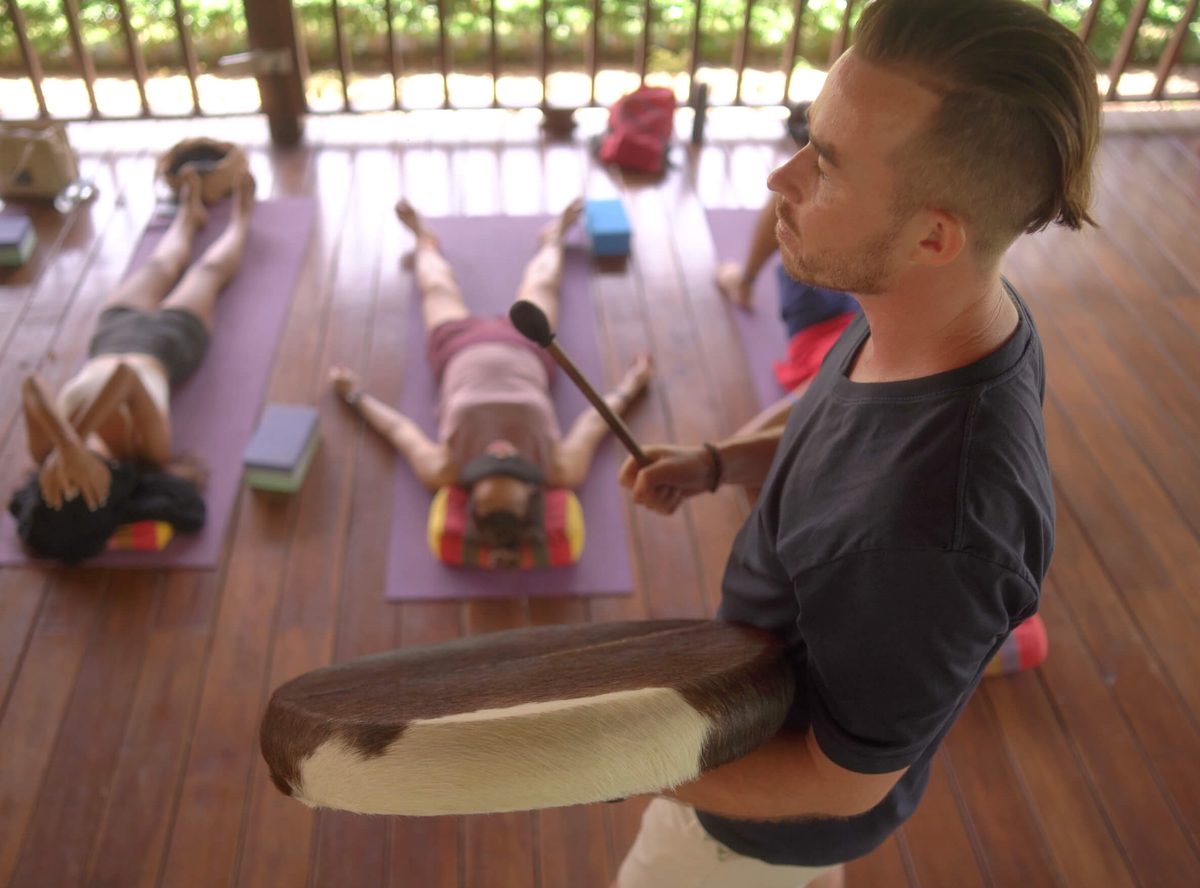
That is what guided breathwork does. A facilitator holds the space so you do not have to hold yourself together. You do not have to monitor your own experience. You do not have to decide when to stop. The breath does the work. You just have to keep breathing.
"The experience I had was so profound it genuinely shifted an internal blockage which to this date has remained permanent."
Florence Nagy, UNTAMED participant
Florence is not someone who uses words like "profound" casually. She came in skeptical and left different. Not because of anything I said. Because her nervous system finally had the space to do what it had been trying to do for years. You can read more experiences like hers on the results page.
That is the difference between breathing exercises and breathwork. The exercises regulate you in the moment. They are tools. Good tools. Use them daily. But breathwork, guided and held by someone who knows what they are doing, reaches the places that keep dysregulating you in the first place.
What This Actually Looks Like in Practice
If you are on Koh Samui, the most direct way to experience this is UNTAMED. It is a full day of breathwork, cold exposure, and honest conversation. Not gentle. Not aggressive. Just real.
If you have a group, private workshops run for two hours and can be built around what your people actually need. Four to sixteen people. No generic template. Real facilitation for real humans.
If you are not on the island, start with the three patterns above. Do the extended exhale tonight before bed. Do coherent breathing tomorrow morning for ten minutes. You can use the free breath pacer to guide the rhythm. Notice what shifts. Notice what feels different. Not in your thoughts. In your body.
Your nervous system already knows how to reset. It has been doing it your entire life. You just need to stop overriding it long enough to let it work.
Keep Reading
What Breathwork Actually Does to Your Nervous System
A short breathing sequence that shifts you from sympathetic stress into parasympathetic recovery by activating the vagus nerve. No app or equipment needed, just your lungs and a few minutes.
-
01
Box breathing to center
Inhale through your nose for four counts, hold for four, exhale through your nose for four, and hold empty for four. Repeat for four to six rounds. The symmetry reads as stability and the holds let your system recalibrate.
-
02
Extended exhale to brake
Inhale through your nose for four counts and exhale through your nose or mouth for six to eight counts, with no holds, for two to three minutes. The longer exhale stimulates the vagus nerve and your heart rate slows on each out breath.
-
03
Coherent breathing to sustain
Inhale for five to six counts and exhale for five to six counts, continuous and even, at about five to six breaths per minute, for five to twenty minutes. This trains your heart rate variability toward its optimal range over time.
-
04
Notice what shifts in the body
Pay attention to what feels different, not in your thoughts but in your body. A softer chest, slower mind, looser shoulders. Your nervous system already knows how to reset. You are giving it the space to do it.
-
05
Practice consistently
Keep coherent breathing as a daily pattern and reach for the extended exhale whenever your heart races or your mind loops. The effects are cumulative, so the more steadily you practice, the more your baseline shifts.
Frequently asked questions
Does breathwork actually reset the nervous system?
Not in the way the phrase suggests, and it is worth being straight about that. Breathing slowly with a long exhale does produce real, measurable changes. The heart rate slows. In people with raised blood pressure, a few points come off. Most people feel calmer within minutes. What the best controlled trials do not show is a lasting reset, or any advantage over a well matched comparison practice on stress and anxiety scores. Everyone in those trials improved. Nobody improved more. Reset is a marketing word. What you actually get is a safe, repeatable way to settle yourself, which is worth more than the word.
What is the fastest breathing pattern to calm down?
The extended exhale. Inhale through your nose for 4 counts, then exhale slowly for 6 to 8 counts, no holds, for two to three minutes. When your exhale is longer than your inhale, your heart rate slows on each out breath and the vagus nerve gets stimulated. If you only try one pattern, make it this one. Use it when you cannot sleep, when your heart is racing, or when your chest will not let go.
What is the difference between breathing exercises and guided breathwork?
Breathing exercises like box breathing or coherent breathing regulate you in the moment. They are good tools and you should use them daily. Solo practice keeps you in the range of what feels safe though. Guided breathwork reaches the deeper layers where the nervous system stores old patterns and held tension. A facilitator holds the space so you do not have to hold yourself together, and the breath does the work that thinking alone cannot reach.
How does coherent breathing help over time?
Coherent breathing means inhaling for 5 to 6 counts and exhaling for 5 to 6 counts, continuous and even, around 5 to 6 breaths per minute. It brings your heart rate variability into its optimal range, which is one of the most reliable markers of nervous system health. It is a daily practice and the effects are cumulative. The more consistently you breathe this way, the more your baseline shifts toward balance.
Stay in the loop.
Occasional dispatches when sessions open or new writing drops. No spam.
About Diego Pauel
I have lived in Koh Samui for 15 years. I discovered breathwork through freediving, which I have trained in for over a decade. When COVID hit and the island emptied out, I started offering breathwork and ice baths for free to help the local community feel better in their bodies. I was the first to offer this work on the island. Five years later, I have facilitated countless sessions for people from all over the world. No guru energy. No mystical language. Just the work.
Full story →