Breathwork for Burnout: When Thinking Harder Is Not the Answer
You are not lazy. You are not weak. You have not lost your drive. You are empty. There is a difference, and if you are burned out you already know it.
Burnout is a nervous system problem, not a mindset problem. Your system gets stuck in chronic survival mode, so more thinking, productivity systems, and journaling fail because they live in the same place the burnout does. Breathwork bypasses the thinking brain and resets your stress response from the body up.
Burnout does not feel like tiredness you can sleep off. It feels like the engine is still running but nothing is translating into forward motion. You can push harder. You have been pushing harder. It is not working.
Most of what gets recommended for burnout is more thinking. A new morning routine. A productivity system. Journaling prompts. Therapy. Time off. These have value. But they all operate in the same place where the burnout is already living, which is your head. And your head is the problem.
What Burnout Actually Is
Burnout is not a mindset problem. It is a nervous system problem.
When your body has been under sustained stress long enough, your nervous system shifts into chronic survival mode. Threat detection stays elevated. Stress hormones keep circulating even when there is no immediate danger. Your brain stays locked in beta waves, the alert, scanning, hypervigilant state that is designed for short bursts of focused action, not for months of continuous operation.
Your mind is not designed to make you happy. It is designed to keep you safe. Its job is to scan for threats, anticipate problems, and prepare you for the worst. When you are burned out, your mind is doing exactly what it was built to do. It is running survival protocols. The problem is that those protocols have been running for so long that they have crowded out everything else.
Ninety-five percent of the time, most of us are operating in defense mode. Protecting. Anticipating. Managing perception. This is not a moral failing. It is a nervous system that has never been taught how to downshift. The terrain assessment can show you exactly where your system is sitting right now.
The result shows up in the body in ways that are specific and recognizable.
Breathing becomes shallow. You default to chest breathing. The diaphragm barely moves. The exhale is cut short. This alone keeps your sympathetic nervous system activated because your body reads shallow breathing as a sign that something is wrong.
Digestion disrupts. When the body is running survival protocols, it diverts resources away from digestion. Constipation, bloating, loss of appetite, or the opposite. These are symptoms, not standalone conditions.
Sleep fragments. Not because you are not tired. Because your nervous system does not believe it is safe to fully rest. You wake at 3am with your mind already running.
Pleasure flattens. The things that used to bring you joy feel neutral. Food tastes the same. Music does not land. You go through the motions of enjoyment without actually feeling it. This is not depression in the clinical sense. It is a nervous system that has pulled the shutters down to conserve energy.
Physical tension becomes chronic. Jaw clenching. Shoulder bracing. Lower back compression. The body armor you have been wearing for months has hardened into your default posture.
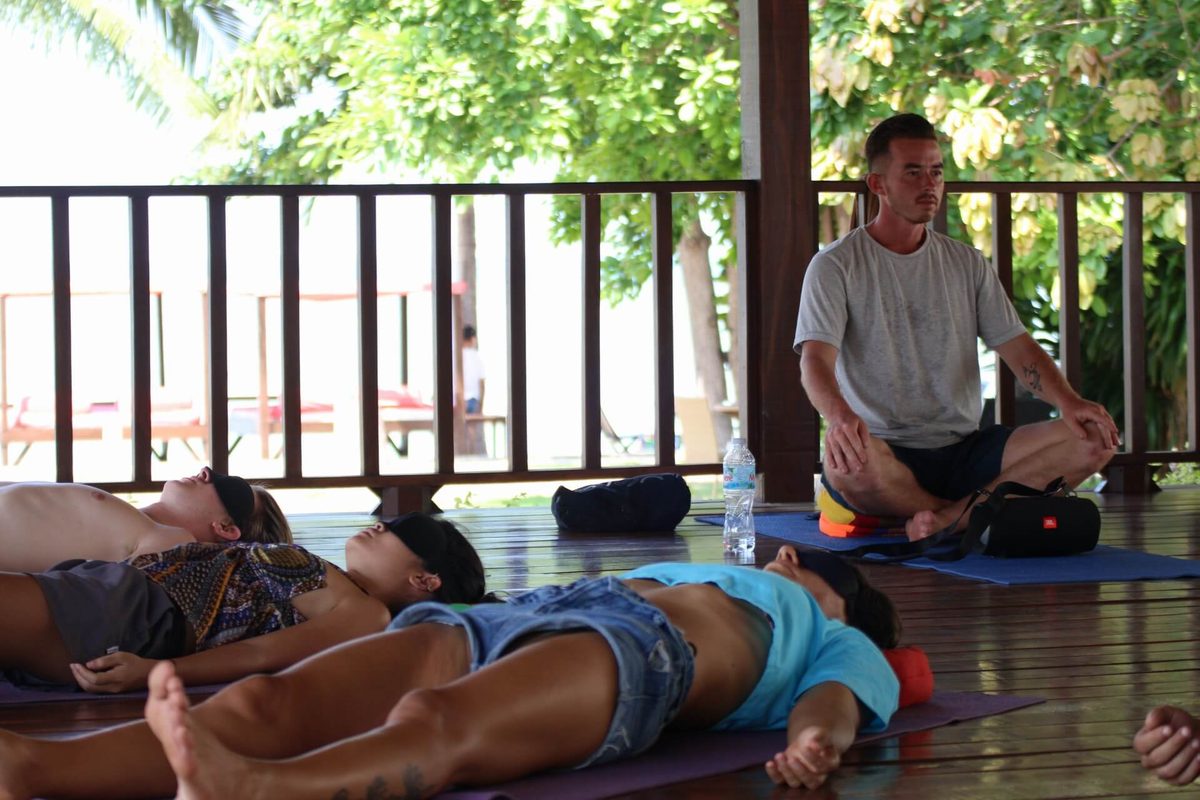
I can see burnout in someone before they tell me about it. The way they lie down on the mat. The shallow breath that barely moves their chest. The jaw that is clenched before we have even started. None of this is a character flaw. It is physiology. And physiology responds to physiological intervention.
Why Thinking Harder Does Not Work
The prefrontal cortex, the part of your brain responsible for planning, reasoning, and clear decision making, goes partially offline when you are chronically stressed. This is well documented. Under sustained pressure, your brain allocates resources to threat detection and away from higher cognition.
This is why the usual advice does not land. You sit down to plan your way out of burnout and the plan falls apart within 48 hours. Not because you lack discipline. Because the part of your brain that executes plans is underpowered. Your system is stuck in beta wave survival mode, and from that state, the cognitive tools that would normally help you are simply not available.
No amount of planning fixes a body that has forgotten how to rest. The intervention has to happen at the level of the body. The most direct tool you have is your breath.
What Breathwork Does to a Burned Out Nervous System
Your breath is the only autonomic function you can consciously control. Heart rate, digestion, hormonal cycles: none of these respond directly to your intention. Your breath does. And because the breath communicates directly with your nervous system through the vagus nerve, changing how you breathe changes your physiology in real time.
When you breathe in a guided pattern for 30 to 45 minutes, your brain waves begin to shift. From beta, the survival state, into alpha and theta. Alpha is the relaxed, open state. Theta is the state between waking and sleeping, where the critical filters of the mind soften and reconditioning becomes possible.
This is why people cry in breathwork without knowing why. It is not that they are thinking about something sad. The breathing has moved them out of the state where the thinking mind manages everything, and what was held underneath gets space to surface. The body stores unresolved stress as muscular tension, postural patterns, and shallow breathing habits. When the nervous system shifts gears, that stored charge finally has somewhere to go.
I have facilitated hundreds of sessions with people coming in burned out. The most common thing they say afterward: "I did not realize I was carrying that much." They are not being dramatic. They genuinely did not know. The cognitive mind had been compensating for so long that the tension became the baseline. They forgot what the absence of it feels like.
For a deeper look at the mechanisms of how breathwork shifts your nervous system, the nervous system reset article covers the physiology in detail.
What a Session Looks Like
You lie down. Eyes closed. Music plays. I guide you through a continuous circular breathing pattern: inhale through the mouth, exhale through the mouth, no pause between breaths. The pattern is deliberate. This is not meditation. It is active work.
For the first few minutes, your mind tries to stay in control. It narrates. It evaluates. It wonders if this is working. That is normal and expected. The breath pattern gradually overrides the narration. Around the ten to fifteen minute mark, something shifts. The body takes over. What happens next is different for each person.
Some people cry without a reason. Some feel a release in the chest or belly that has been locked for months. Some access memories or emotions that had been frozen under the surface. Some simply fall into a stillness that feels nothing like sleep and nothing like the constant vigilance of burnout.
After the active breathing, there is a rest period. This is not filler. This is when the nervous system integrates. The shift from sympathetic to parasympathetic. The body settling into a different baseline. Many people describe this as the most restful ten minutes they have experienced in months. The session walkthrough article covers the full experience minute by minute.
What Cold Exposure Adds
In UNTAMED, we add an ice bath after breathwork. This is not gratuitous discomfort. The cold does something specific and relevant to burnout recovery.
When you get into cold water, your body floods with norepinephrine, a neurotransmitter directly involved in mood, focus, and stress resilience. Research has documented increases of 200 to 300 percent following cold water immersion at temperatures below 10 degrees. That is not a marginal effect. It is the kind of neurochemical shift that changes how you feel for hours.
Beyond the chemistry, there is something about choosing to get into cold water that matters for burnout specifically. Burnout involves a feeling of helplessness. A sense that you are subject to forces you cannot manage. The ice bath is a microdose of agency. You decide to do something hard. You breathe through it. You stay present with discomfort instead of being consumed by it. That experience of voluntary challenge, where you practice tolerating intensity without being run by it, retrains your nervous system in a way that accumulates over time.
You cannot think your way through an ice bath. You can only breathe. For someone whose mind has been running nonstop for years, two minutes of the body completely overriding the brain is not nothing. It is practice in being present instead of perpetually ahead of yourself.
The cold exposure and mental resilience article goes deeper on why this transfer effect works.
How to Build a Daily Practice
One session matters. I have seen people describe a single breathwork session as more effective than months of trying to think their way out. But one session is a peak, not a practice. Your nervous system will return to its habitual patterns unless you give it a new one.
Here is what works for burnout recovery specifically.
Start with the initial shift. A guided session, either UNTAMED or a private workshop, shows your nervous system what is possible. It creates a reference point. Your body now knows what regulated actually feels like, and it has a destination to aim for.
Build a daily morning practice. Ten to twenty minutes before you look at your phone. This is non-negotiable. Checking your phone first thing floods your system with input while it is still in a receptive theta state. Whatever stress arrives in that first scroll gets absorbed more deeply than it would later in the day.
The simplest effective protocol: sit comfortably, breathe in for four counts through the nose, breathe out for six to eight counts through the nose. That is it. The breath pacer tool can guide you through this pattern if you want something to follow along with. The extended exhale directly activates the vagus nerve and shifts your nervous system toward parasympathetic. Ten minutes of this every morning compounds. Within two to three weeks, your resting stress level drops measurably. Sleep improves. Reactions become less hair-trigger.
If you want a more structured morning routine, the 10 minute morning breathwork article gives you a three-phase protocol you can start tomorrow.
Track your baseline. There is a simple test called the BOLT score, the Body Oxygen Level Test, developed by Dr. Buteyko. Normal inhale, normal exhale, hold your breath, and time how long until you feel the first physical urge to breathe. A score of 40 seconds is the target. Under 20 seconds suggests your breathing patterns need attention. Under 15 is a signal to be cautious with intense practices. Test once or twice a week, first thing in the morning. It is a daily read on your overall nervous system state. Some days you score 25, other days 40. That variation is normal and useful. It tells you what your system needs that day.
Return for periodic deeper sessions. The daily practice maintains the baseline. Deeper guided sessions clear what accumulates and push the baseline forward. Monthly or bi-monthly if possible.
What This Is Not
Breathwork is not a replacement for addressing the conditions that caused the burnout. If the source of your stress is structural, a job that is genuinely unsustainable, a relationship that is chronically depleting, a life misaligned with what you actually need, breathwork will help you regulate the symptoms. It will not remove the cause.
What it can do is give you enough nervous system regulation to think clearly about those structural issues. Many people arrive burned out and unable to make a meaningful decision about anything. After a session, the prefrontal cortex comes back online. The options that looked identical before become distinguishable. Decisions that felt impossible feel manageable.
Breathwork gives you back access to yourself. What you do with that access is still up to you. But most people who are burned out are not failing because the problem is unsolvable. They are failing because their nervous system is so depleted that genuine cognitive function is not available. Breathwork addresses that gap. In most cases, that is enough to shift things.
Where to Start
If you are on Koh Samui, UNTAMED is the full version. A full day: guided breathwork, ice bath, time in nature, honest conversation, and the space to let things settle. Hotel pickup included.
If you are not on the island, start with the daily practice above. Extended exhale, ten minutes, every morning before your phone. That alone will change the trajectory.
Burnout is not a sign that something is wrong with you. It is a sign that your system has been running without a reset for too long. The fix is not more effort. It is less. Ten minutes of breathing in the morning. One session that shows your body what it has forgotten. The rest follows from there.
Keep Reading
Frequently asked questions
Is breathwork good for burnout?
Yes, because burnout is a nervous system problem, not a mindset problem. After sustained stress your system shifts into chronic survival mode, stuck in beta wave hypervigilance with stress hormones still circulating. Breathwork is the most direct tool you have, since your breath is the only autonomic function you can consciously control. Breathing in a guided pattern shifts your brain waves from beta toward alpha and theta, where held stress finally has somewhere to go.
Why does thinking harder not fix burnout?
Because the prefrontal cortex, the part of your brain responsible for planning and clear decisions, goes partially offline under chronic stress as your brain reallocates resources to threat detection. That is why you sit down to plan your way out of burnout and the plan falls apart within 48 hours. It is not a lack of discipline. The part of your brain that executes plans is underpowered. The intervention has to happen at the level of the body.
What does cold exposure add for burnout recovery?
Getting into cold water floods your body with norepinephrine, a neurotransmitter tied to mood, focus and stress resilience, with documented increases of 200 to 300 percent below 10 degrees. Beyond the chemistry, choosing to get into cold water is a microdose of agency, which matters because burnout involves helplessness. You decide to do something hard, you breathe through it, and you practice tolerating intensity without being run by it. That retrains your nervous system over time.
How do I build a daily breathwork practice for burnout?
Start with a guided session to show your nervous system what regulated feels like, then build a ten to twenty minute morning practice before you touch your phone. The simplest protocol is to breathe in for four counts through the nose and out for six to eight, which activates the vagus nerve. Ten minutes every morning compounds, and within two to three weeks your resting stress level drops, sleep improves and reactions become less hair-trigger. Return for deeper sessions monthly.
Can breathwork fix the cause of my burnout?
No, and I am honest about this. If the source is structural, an unsustainable job, a depleting relationship, a life misaligned with what you need, breathwork will help you regulate the symptoms but it will not remove the cause. What it does is give you enough nervous system regulation to think clearly about those structural issues. After a session the prefrontal cortex comes back online and decisions that felt impossible feel manageable. What you do with that access is still up to you.
Stay in the loop.
Occasional dispatches when sessions open or new writing drops. No spam.
About Diego Pauel
I have lived in Koh Samui for 15 years. I discovered breathwork through freediving, which I have trained in for over a decade. When COVID hit and the island emptied out, I started offering breathwork and ice baths for free to help the local community feel better in their bodies. I was the first to offer this work on the island. Five years later, I have facilitated countless sessions for people from all over the world. No guru energy. No mystical language. Just the work.
Full story →