Breathwork vs Meditation: Which One Is Right for You
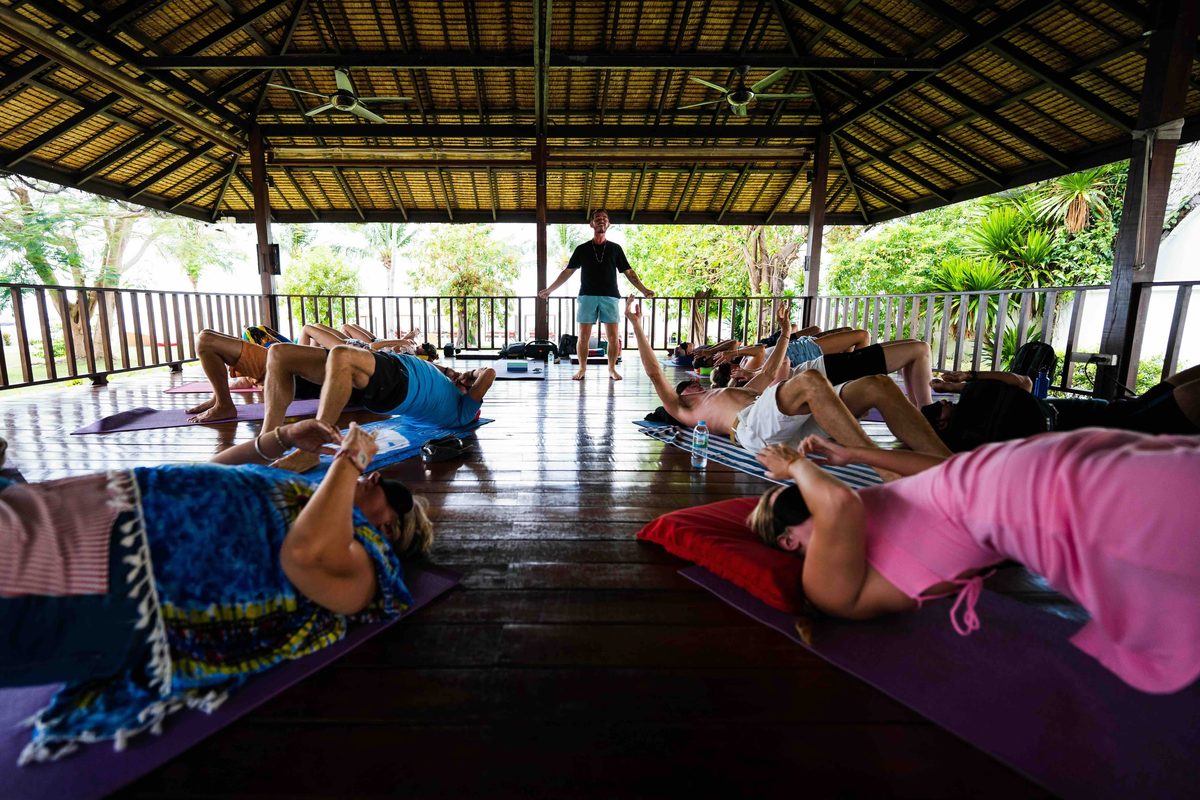
I get asked this question constantly. Usually by people who have tried meditation, struggled with it, and are wondering if breathwork is the thing that will finally work for them. Or by people who meditate regularly and are curious about whether breathwork offers something different.
Meditation trains your attention and works primarily through the mind. Breathwork changes your breathing pattern, which directly shifts your physiology first, with mental and emotional changes following. Neither is better. Breathwork often suits people who cannot sit still or quiet a racing mind, because it gives the mind something to do. I practice both.
The honest answer is that comparing breathwork and meditation is a bit like comparing swimming and running. Both are exercise. Both are good for you. They use different mechanisms, target different systems, and suit different people at different times. Saying one is better than the other misses the point entirely.
I have practiced both extensively. I have done years of meditation. I have facilitated over 5,000 breathwork sessions. I combine both in my personal practice. And I am going to give you the most honest comparison I can, not from a place of selling breathwork, but from the experience of someone who knows what each practice does and does not do well.
What Meditation Actually Is
Meditation gets talked about as if it is one thing. It is not. There are dozens of meditation traditions, each with different techniques and different goals. But at its core, most meditation practices share a common thread: you are training your attention.
In mindfulness meditation, you observe your thoughts without engaging with them. In focused attention meditation, you anchor your attention on a single point, often the breath, a mantra, or a sensation. In loving kindness meditation, you direct feelings of compassion toward yourself and others. In transcendental meditation, you repeat a mantra to access deeper states of consciousness.
What all of these share is that the primary tool is your mind. You are working with cognition. With awareness. With the relationship between your thoughts and your attention. The body is involved, obviously. You are sitting. You may be breathing in a specific way. But the main action is happening in your mental landscape.
What Breathwork Actually Is
Breathwork also encompasses a range of practices. Pranayama from the yogic tradition. Holotropic breathing developed by Stanislav Grof. Conscious connected breathing. Box breathing. Coherent breathing. Wim Hof method. Each has a different protocol and different effects.
But here is the fundamental difference from meditation: breathwork works primarily through the body. You change your breathing pattern, and that changed pattern directly alters your physiology. Heart rate. Blood chemistry. Nervous system state. Hormone levels. Brainwave patterns. The shift happens in the body first, and the mental and emotional changes follow.
You do not need to quiet your mind in breathwork. You do not need to observe your thoughts. You do not need to concentrate on anything except the breathing pattern. The technique does the work through physiology, not through attention management.
This is not a subtle distinction. It is the core difference that determines which practice works better for which person at which time.
When Breathwork Works Better
When You Cannot Sit Still
This is the number one reason people come to breathwork after struggling with meditation. They tried sitting. They tried apps. They tried guided meditations. And their mind raced the entire time. They spent twenty minutes thinking about what they need to do later while feeling guilty about not meditating correctly.
Breathwork gives the mind something to do. You are actively breathing a specific pattern. There is rhythm. There is physical sensation. There is enough happening in your body that your mind has less room to spiral. For people with active minds, restless energy, or attention challenges, breathwork often provides an entry point that meditation does not.
I cannot count how many people have told me "I cannot meditate" and then had a profound experience in a breathwork session. They could not access stillness through the mind, but they could access it through the body. Different door, same room.
When You Need Faster Results
Meditation is a slow practice. That is part of its value. But the honest truth is that most people do not notice significant effects from meditation until they have been practicing consistently for weeks or months. The early days can feel like nothing is happening, and for many people, that lack of immediate feedback causes them to quit before the benefits arrive.
Breathwork produces noticeable effects quickly. A single session of extended exhale breathing shifts your heart rate within minutes. A guided breathwork session can produce measurable changes in nervous system state, mood, and physical tension within 30 to 45 minutes. People walk out of their first session feeling different. Not because it is magic, but because the physiological changes are immediate and tangible.
That immediacy matters. Not because faster is always better, but because it gives people evidence that the practice works. And that evidence creates motivation to continue.
When You Need a Physiological Entry Point
Some people are disconnected from their bodies. They live in their heads. They process everything cognitively. Meditation, which also tends to be a cognitive practice, can reinforce that pattern. You are thinking about not thinking. You are observing your thoughts about observing your thoughts.
Breathwork drops you into your body. The tingling. The warmth. The waves of sensation. The physical experience of a changed breathing pattern is impossible to intellectualize. Your body is doing something, and you feel it. For people who need to get out of their heads and into their bodies, breathwork provides that bridge in a way that most meditation practices do not.
When You Are Carrying Something That Needs to Move
Breathwork, particularly continuous breathing practices, has a way of surfacing emotions that are stored in the body. Tears come up. Tension releases. Old grief or anger that has been sitting in the chest or the jaw or the belly finds its way out. This is not theoretical. I watch it happen multiple times a week.
Meditation can access emotional material too, particularly in longer sits or on retreat. But the pace is generally slower, and the mechanism is different. In meditation, you notice the emotion. In breathwork, the emotion moves. For people who know they are carrying something and need it to shift, breathwork often provides a more direct pathway.
When Meditation Works Better
When You Are Already Calm
If your nervous system is relatively regulated and you are not in an acute stress state, meditation offers something that breathwork does not: the experience of simply being. No technique. No activation. No sensation to ride. Just awareness itself.
That experience of undisturbed presence, of watching your mind without being caught by it, is deeply valuable. It cultivates a quality of equanimity that is hard to access through more active practices. Breathwork is doing. Meditation, at its best, is being. Both are needed, but the being part is harder to practice and arguably rarer in modern life.
When You Want Cognitive Clarity
Meditation sharpens the mind in a way that breathwork does not. Regular meditation practice improves focus, working memory, and the ability to hold multiple perspectives simultaneously. It trains the muscle of attention, and that trained attention carries into every area of your life.
Breathwork can leave you in a spacious, open state that is wonderful for creativity and emotional processing but is not the same as the sharp, clear focus that comes from sustained meditation practice. If your goal is mental precision, meditation is the more direct tool.
When You Want a Sustainable Daily Practice
Meditation is designed for daily practice. You can sit for ten to twenty minutes every morning for the rest of your life without any risk or diminishing returns. In fact, the benefits compound over time. The experienced meditator accesses states and insights that the beginner cannot, specifically because of the accumulated hours of practice.
Breathwork, particularly the more intense forms, is not designed for daily use at the same intensity. A full guided breathwork session with continuous breathing is a significant physiological event. Doing that every day would be like doing a high intensity workout every day. Your body needs recovery time. The gentler patterns like coherent breathing and extended exhale breathing are suitable for daily practice, but the deeper breathwork sessions are better spaced out, perhaps weekly or a few times per month.
When You Have an Established Practice and Want Depth
For people who already have a meditation practice and are comfortable with stillness, adding more technique can actually be a step sideways rather than forward. The depth available in pure awareness practice, in simply sitting with what is, is bottomless. Adding breathwork on top of an established meditation practice is sometimes useful. But replacing a deep meditation practice with breathwork because breathwork feels more exciting is not always an upgrade.
Excitement and depth are not the same thing. Meditation's quietness is not a limitation. It is the point.
How They Complement Each Other
In my own practice, I use both. And I think the combination is more powerful than either one alone.
Here is how I think about it.
Breathwork clears the field. If I am carrying tension, stress, or emotional weight, breathwork moves it. It is the tool I reach for when something needs to shift. When I feel stuck. When my chest is tight and I cannot pinpoint why. When I know something is sitting in my body that my mind cannot access. Breathwork goes in and moves it.
Meditation cultivates the ground. Once the field is cleared, meditation is where I build the quality of awareness that I want to carry through my day. The steadiness. The clarity. The ability to respond instead of react. Meditation does not move energy. It refines attention. And refined attention is what allows me to facilitate well, to be present with the people in front of me, and to navigate life without being tossed around by every thought and emotion.
In sessions, I sometimes combine elements of both. The active breathwork phase is intense and body centered. The rest phase afterward, where participants lie still with normal breathing and closed eyes, is essentially a meditation. The breathwork opens the door. The stillness integrates what came through.
Many people who come to breathwork discover that they can meditate after a session in a way they never could before. The body is calm. The nervous system is regulated. The racing thoughts have quieted. And suddenly, sitting still is not a struggle. It is a relief. Breathwork can be the on ramp to meditation for people who could never find the entrance before.
A Practical Guide to Choosing
Start with breathwork if:
- You have tried meditation and struggled with it
- Your mind races and you cannot seem to quiet it
- You are in a period of high stress or anxiety
- You feel disconnected from your body
- You are carrying emotional weight that needs to move
- You want noticeable results quickly to build motivation
Start with meditation if:
- You are relatively calm and want to deepen your awareness
- You want to improve focus and mental clarity
- You are looking for a sustainable daily practice
- You have already explored breathwork and want something quieter
- You are drawn to stillness as a practice
Do both if:
- You want the broadest toolkit for your mental and physical health
- You have the time and interest to maintain two practices
- You recognize that different situations call for different tools
What I Tell People Who Ask Me
When someone asks me whether they should do breathwork or meditation, I usually ask them one question: what does your body need right now?
If the answer is "I need to move something" or "I need to feel something shift" or "I am so wound up I cannot sit still," breathwork is the place to start.
If the answer is "I need to slow down" or "I need more clarity" or "I need to learn to just be with myself," meditation is the place to start.
And if they do not know the answer, which is common, I say start with breathwork. Because breathwork will show you what is happening in your body quickly and clearly. It will give you a felt experience of shifting your state. And from that grounded place, you can make a more informed decision about what to add to your practice.
There is no wrong choice here. Both practices have helped millions of people. Both have strong evidence supporting their benefits. The only wrong choice is spending so much time deciding between them that you never start either one.
If you are in Koh Samui and want to experience breathwork firsthand, UNTAMED is the full day experience, and private workshops run for two hours with groups of 4 to 16. If you are considering building a practice around facilitating breathwork for others, the 21 day facilitator course covers both the art and the science of this work.
Whatever you choose, choose something. Start today. Your nervous system does not care about the perfect practice. It cares that you showed up.
Keep Reading
Frequently asked questions
Is breathwork better than meditation?
Not better. Different. Breathwork gives you a direct lever on the nervous system, so change happens faster in the body. Meditation gives you a trained relationship with your own mind, so change happens deeper over time. Most serious practitioners do both. For a specific moment, breathwork tends to win. For a life long shift in baseline, meditation tends to win.
Can I do both breathwork and meditation?
Yes. They complement each other. A common pattern: 10 minutes of breathwork to settle the nervous system, then 10 minutes of meditation to observe what is left. Many meditation traditions actually start with breath awareness as the entry point, so the line between the two is more practical than philosophical.
Which should I start with, breathwork or meditation?
If your mind is busy and you cannot sit still, start with breathwork. It gives the mind something to do and produces a felt sense of change, which keeps people practicing. If you are already a physically calm person and you want to work with thoughts and awareness, start with meditation. Both end up in similar territory eventually.
Is breathwork just a type of meditation?
Some forms of breathwork (mindful slow breathing) overlap with meditation. Others (intense conscious connected breathing, Holotropic, Wim Hof style) are clearly not meditation, they are more like controlled physiological stress. The overlap in the middle is where most people practice.
Why does breathwork often make people cry when meditation does not?
Sustained fast breathing shifts blood chemistry and activates the sympathetic system in a controlled way. That combination tends to release held emotional material that meditation lets pass by. Meditation teaches you to observe the tension. Breathwork tends to discharge it. For people carrying unprocessed grief, anger, or tension in the body, breathwork often goes deeper faster.
Can breathwork replace a meditation practice?
For most people, no. Breathwork is a tool. Meditation is a skill. Doing breathwork every day without ever meditating will keep you regulated but will not develop the capacity to sit with discomfort without a tool. Most people do breathwork daily and meditation when they can. Both matter.
Stay in the loop.
Occasional dispatches when sessions open or new writing drops. No spam.
About Diego Pauel
I have lived in Koh Samui for 15 years. I discovered breathwork through freediving, which I have trained in for over a decade. When COVID hit and the island emptied out, I started offering breathwork and ice baths for free to help the local community feel better in their bodies. I was the first to offer this work on the island. Five years later, I have facilitated countless sessions for people from all over the world. No guru energy. No mystical language. Just the work.
Full story →