Breathwork for Beginners: Where to Start and What to Expect
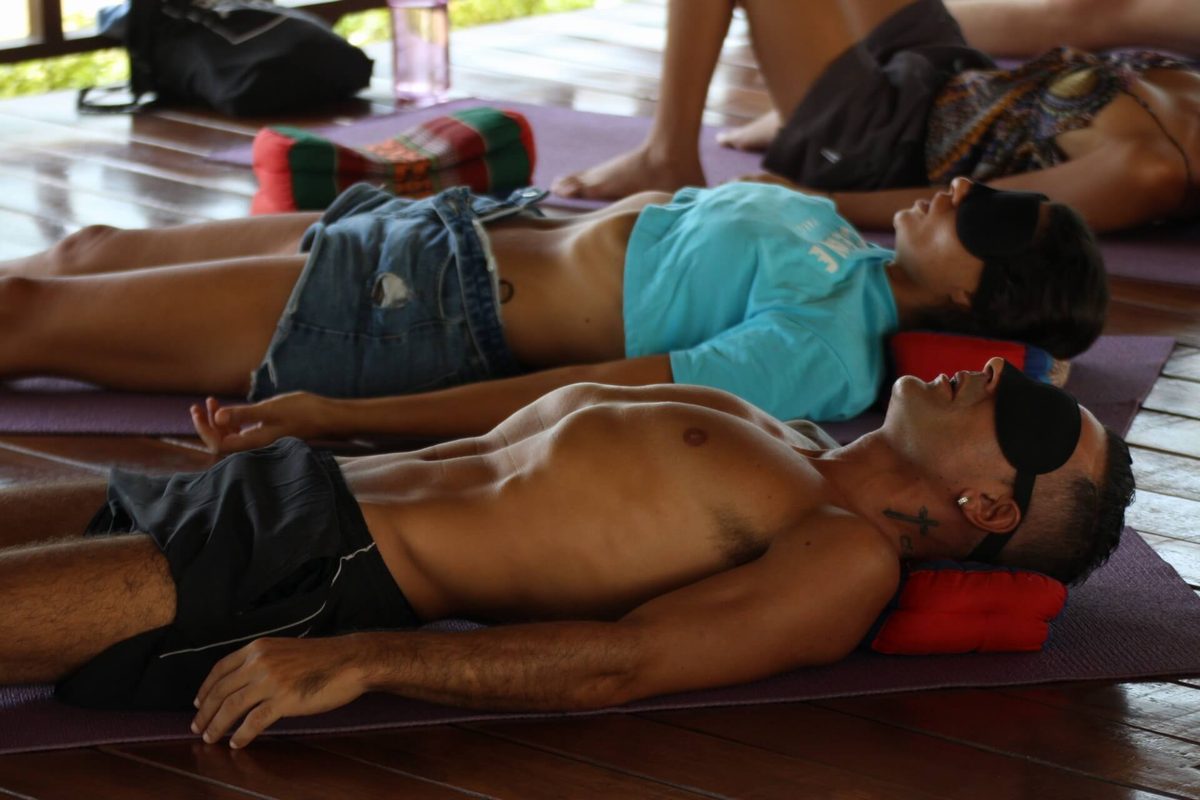
You have probably heard the word breathwork. Maybe a friend told you about it. Maybe you saw someone crying on a mat on social media and wondered what that was about. Maybe a therapist suggested it and you nodded but did not look into it.
Breathwork is using intentional breathing patterns to change how your body feels, shifting your nervous system on purpose. Start with extended exhale breathing to calm down. Lie down, breathe through the pattern, and let your body lead. I call it meditation for beginners because it gives your busy mind something to do instead of just sitting still.
Here is the honest version. What breathwork is, what it does, and how to start. No jargon. No spiritual pitch. Just what I have learned from guiding over 5,000 people through breathwork sessions on Koh Samui since 2020.
What Breathwork Actually Is
Breathwork is the practice of using intentional breathing patterns to change how your body feels. You breathe in a specific way, on purpose, and your nervous system responds.
This is not the same as taking a deep breath when you are stressed. It is not meditation with breathing added. It is an active practice where the breathing pattern itself creates the shift. You are not thinking your way into relaxation. You are using the one autonomic function you can consciously control to change your physiology directly.
There is a phrase I use in my facilitator training that captures why this matters for beginners specifically: breathwork is meditation for beginners. Meditation asks you to sit still and observe your thoughts. For most people, especially people whose minds run nonstop, that is incredibly hard. Breathwork gives you something to do. Your body follows the pattern, your mind quiets because it does not have bandwidth to breathe and narrate at the same time, and you arrive at a state of presence that meditation points toward but breathwork delivers through action.
Why Changing Your Breathing Works
Your nervous system operates in three states, not just two. Understanding this changes how you relate to stress and to breathwork.
The first is your calm, connected state. You feel safe. You can think clearly, listen, and be present. This is where you want to spend most of your time.
The second is fight or flight. Heart rate spikes. Muscles tense. Adrenaline flows. Useful for short bursts. Not for living.
The third is shutdown. When the stress is too much and you can neither fight nor flee, your system goes numb. Flat. Disconnected. Checked out. This is what chronic burnout and emotional numbness often look like.
Most people spend far too much time oscillating between sympathetic activation and dorsal shutdown, and almost none in ventral vagal. Breathwork gives you a lever to shift between these states deliberately.
Here is the mechanism. When you extend your exhale longer than your inhale, you activate the vagus nerve, which signals your system to shift toward parasympathetic (rest and recovery). When you breathe in a fast, continuous pattern, you deliberately activate your sympathetic system, which is useful for mobilizing stored tension and emotional charge so it can be processed and released.
Both directions have value. Calming techniques teach your system to downregulate. Activating techniques give stuck energy somewhere to go. A complete breathwork practice uses both.
For the full neuroscience of how the vagus nerve responds to breathing, the vagus nerve article goes deep on the mechanism.
What Happens in Your First Session
Most people are nervous before their first breathwork session. That is normal. Here is what actually happens.
You lie down on a mat. Eyes closed. The facilitator explains the breathing pattern. In most guided sessions, the pattern is continuous breathing through the mouth: inhale into the belly, then into the chest, exhale with a relaxed release. No pause between breaths. This continues for 20 to 40 minutes while music plays.
What You Feel Physically
Almost everyone feels tingling in the hands and around the mouth within the first few minutes. This is one of the most common questions afterward: "Is that normal?"
It is. The continuous breathing pattern drops your carbon dioxide levels, which shifts your blood pH toward alkaline. This changes how calcium ions bind in your blood, and that is what creates the tingling and the hand tension some people experience. Your fingers might curl or feel stiff. This is called tetany. It looks alarming but it is not dangerous. It resolves completely within minutes of returning to normal breathing.
Some people feel waves of warmth or cold. Some feel lightness, like floating. Others feel heaviness, like sinking into the mat. All of these are your nervous system responding to the shift in blood chemistry. There is no wrong physical response.
What You Feel Emotionally
This is where breathwork separates from breathing exercises on an app.
Many people experience unexpected emotions during their first session. Tears that come without a clear reason. A wave of sadness or relief. Laughter. Old memories surfacing. A feeling of putting something down that you did not realize you were carrying.
This happens because the breathing pattern bypasses your thinking mind. Your prefrontal cortex, the part that manages your social presentation and decides what to feel and when, gets quiet. What is underneath gets space to move. The tears are not about something specific. They are your body completing a cycle that has been waiting.
Not everyone has an emotional experience. Some people simply feel deeply relaxed. Both outcomes are real and valuable. There is no hierarchy. The breath meets you where you are. For a deeper look at why breathwork produces emotional release, the somatic breathwork article explains the physiology.
What Happens After
After the active breathing, you return to normal breathing and rest for 5 to 10 minutes. This integration period is not optional. Your nervous system is processing what just moved. Most people feel calm, clear, and lighter than when they walked in. Sleep that night is usually notably deeper.
For a full minute by minute walkthrough of the entire experience, read what happens in a breathwork session.
Three Techniques You Can Start With Today
You do not need a facilitator to begin. Here are three practices that cover different needs.
The Physiological Sigh (Instant Calm)
This is the fastest regulation tool you have. Your body already does it instinctively when you are crying or coming down from panic. You can do it deliberately.
Two quick inhales through the nose stacked on top of each other (inhale, then at the top take one more short sniff). Then the longest exhale you can manage through the mouth.
One or two repetitions produce an almost immediate shift. The double inhale reinflates collapsed alveoli in your lungs, and the long exhale activates the vagus nerve. Use this before a difficult conversation, after receiving bad news, or any time you need to come down fast. It takes five seconds and nobody around you will notice.
Box Breathing (Steady Regulation)
Inhale through the nose for 4 counts. Hold for 4 counts. Exhale through the nose for 4 counts. Hold for 4 counts. Repeat for 5 minutes.
This is what special forces operators use before high pressure operations. The equal ratio of inhale, hold, exhale, hold gives your nervous system a predictable pattern to organize around. It works best when you are moderately stressed and still need to function. The holds give your attention something neutral to anchor to, which interrupts the thought spiral that amplifies stress.
Extended Exhale Breathing (Deep Relaxation)
Inhale through the nose for 4 counts. Exhale through the nose for 6 to 8 counts. No holds. Repeat for 5 to 10 minutes.
The longer exhale is the key. When your exhale exceeds your inhale, your body reads it as a safety signal. Heart rate drops. Muscles soften. Cortisol production slows. You can try this right now with the guided breath pacer. If you learn one thing from this entire article, make it this: the exhale is the off switch. A longer exhale tells your body the danger has passed. Every technique in breathwork is built on that principle.
Use this before sleep, at your desk, or anywhere you need to settle without drawing attention. If you can only remember one rule when you are stressed, make it this: exhale longer than you inhale.
One Thing Most Beginners Get Wrong
Nose breathing. Almost everyone defaults to mouth breathing, and almost everyone would benefit from switching.
When you breathe through your nose, you produce nitric oxide, a gas that improves blood circulation, opens airways, and enhances oxygen delivery to your cells. Mouth breathing skips this entirely. Nose breathing also retains more carbon dioxide, which sounds bad but is actually essential. CO2 is what determines whether the oxygen in your blood actually gets delivered to your tissues or stays locked onto your hemoglobin.
This is called the Bohr effect, and it flips a common assumption. Most people think breathing more means more oxygen. The reality is that quality of oxygen delivery matters more than quantity. Nasal breathing with slower, fuller breaths gives your cells more usable oxygen than fast, shallow mouth breathing, even though the mouth breathing moves more air.
For your daily life, this translates to a simple rule: breathe through your nose unless you are doing the active phase of a guided breathwork session. During guided sessions, mouth breathing is deliberate and serves a specific purpose. The rest of the time, your nose is the better tool.
How to Track Your Progress
There is a simple test called the BOLT score: the Body Oxygen Level Test. It was developed by Dr. Buteyko, originally for training cosmonauts.
Here is how to do it. Sit comfortably. Take a normal inhale. A normal exhale. Then hold your breath and time how long until you feel the first physical urge to breathe. Not until you are gasping. Just the first movement in your throat or diaphragm that says "time to breathe."
The target is 40 seconds. That indicates healthy breathing patterns and good CO2 tolerance.
Under 20 seconds suggests your breathing patterns need attention. Under 15 means you should be cautious with intense breathwork practices.
Test once or twice a week, first thing in the morning before coffee. It is a simple daily read on your overall nervous system state. Some days you score 25, some days 38. That variation is normal and informative. Over time, as your breathing practice improves, the score trends upward.
When to Try a Guided Session
The practices above are useful for daily regulation. But a guided breathwork session with a facilitator is a different experience entirely.
The depth you reach in a guided session is not replicable alone with a timer. When someone trained is in the room, you do not have to monitor yourself. You do not have to decide if what you are feeling is okay. You do not have to wonder when to stop. Someone is watching, someone is steady, and that frees you to actually let go. That is the difference between doing breathing exercises and doing breathwork.
If you have been practicing on your own and feel curious about going deeper, that curiosity is the right signal. If you have been carrying stress or emotional weight that does not shift no matter what you try, guided breathwork might reach what other approaches have not.
Common Questions
Is breathwork safe?
For most people, yes. Contraindications include pregnancy, epilepsy, severe cardiovascular conditions, detached retina, uncontrolled high blood pressure, and recent surgery. A responsible facilitator will always ask about your medical history before the session. If they do not ask, that is a red flag about their training.
Can I do it wrong?
The most common beginner mistake is trying too hard. Forcing the breath. Tensing the jaw and shoulders. Fighting the process instead of letting it work. If you are on your own, keep the breath flowing without forcing it. Effort without tension. In a guided session, the facilitator will spot this and cue you to soften.
How is breathwork different from meditation?
Meditation asks you to observe your thoughts. Breathwork actively shifts your physiology. They complement each other well but work differently. The breathwork vs meditation comparison covers the distinction in depth.
How often should I practice?
The simple techniques (box breathing, extended exhale, physiological sigh) can be done daily. Even 5 minutes compounds when done consistently. Deeper guided sessions are best spaced out. Once a week to once a month gives your nervous system time to integrate. The morning breathwork routine gives you a structured 10 minute daily protocol.
Where to Start on Koh Samui
If you are on the island and want to experience guided breathwork for the first time, UNTAMED is designed to be accessible for complete beginners while going deep enough to be genuinely meaningful. It is a full day: breathwork, ice bath, jungle waterfall hike, honest conversation, and lunch. Hotel pickup and return included. 3,500 THB.
You do not need experience. You do not need to be fit. You do not need to believe anything. You need to be willing to breathe and see what happens.
For groups, the private workshop format is a 2 hour session with breathwork and ice bath. For solo practice, the weekly Practice runs every Thursday on Koh Samui. I bring everything to your location anywhere on the island.
If you have questions about whether breathwork is right for where you are right now, reach out via WhatsApp from the contact page. No pressure. Just a straight conversation. You can also explore the free resources page for breathing guides and audio you can start with at home.
Keep Reading
Frequently asked questions
Where should a complete beginner start with breathwork?
Start with 5 minutes of slow box breathing: 4 second inhale, 4 second hold, 4 second exhale, 4 second hold. Do it daily for a week. That is the foundation. Once the nervous system knows what regulated breathing feels like, every other technique is easier to learn. Do not start with Holotropic or Wim Hof on your own. Build the base first.
How long does a first breathwork session take?
A self practice session: 5 to 15 minutes. A first facilitated session: 60 to 90 minutes including intake, breath work, and integration. Longer is not better for beginners. Short and consistent beats long and occasional.
What should I expect during my first breathwork session?
Depends on the type. For slow breathwork, you will feel calm, maybe slightly spacey, sometimes a mild emotional wave. For conscious connected breathing, you may feel tingling in hands and feet (normal, it is tetany from blood chemistry shifts), temperature changes, emotional release, and sometimes non ordinary states. A good facilitator will tell you what to expect before you start.
Do I need any equipment to start breathwork?
No. Your body is the equipment. A quiet space, something comfortable to sit or lie on, and 10 minutes. Optional: a timer, a pulse meter if you want to track heart rate, or a journal for what comes up. None of it is required.
Can I do breathwork if I have never meditated before?
Yes. Breathwork is often easier than meditation for people who find sitting still hard. The breath gives the mind something to focus on and produces a felt physical shift, so the practice is more concrete. Many people come to meditation through breathwork later.
How do I know if breathwork is working?
After a session: slower heart rate, clearer thinking, a sense of settledness. After a few weeks of consistent practice: better sleep, less reactive under stress, more present in conversations. If none of these shift after 3 to 4 weeks of daily practice, try a different technique or work with a facilitator to figure out what is getting in the way.
Stay in the loop.
Occasional dispatches when sessions open or new writing drops. No spam.
About Diego Pauel
I have lived in Koh Samui for 15 years. I discovered breathwork through freediving, which I have trained in for over a decade. When COVID hit and the island emptied out, I started offering breathwork and ice baths for free to help the local community feel better in their bodies. I was the first to offer this work on the island. Five years later, I have facilitated countless sessions for people from all over the world. No guru energy. No mystical language. Just the work.
Full story →