Ice Bath Recovery: What to Do After Cold Exposure
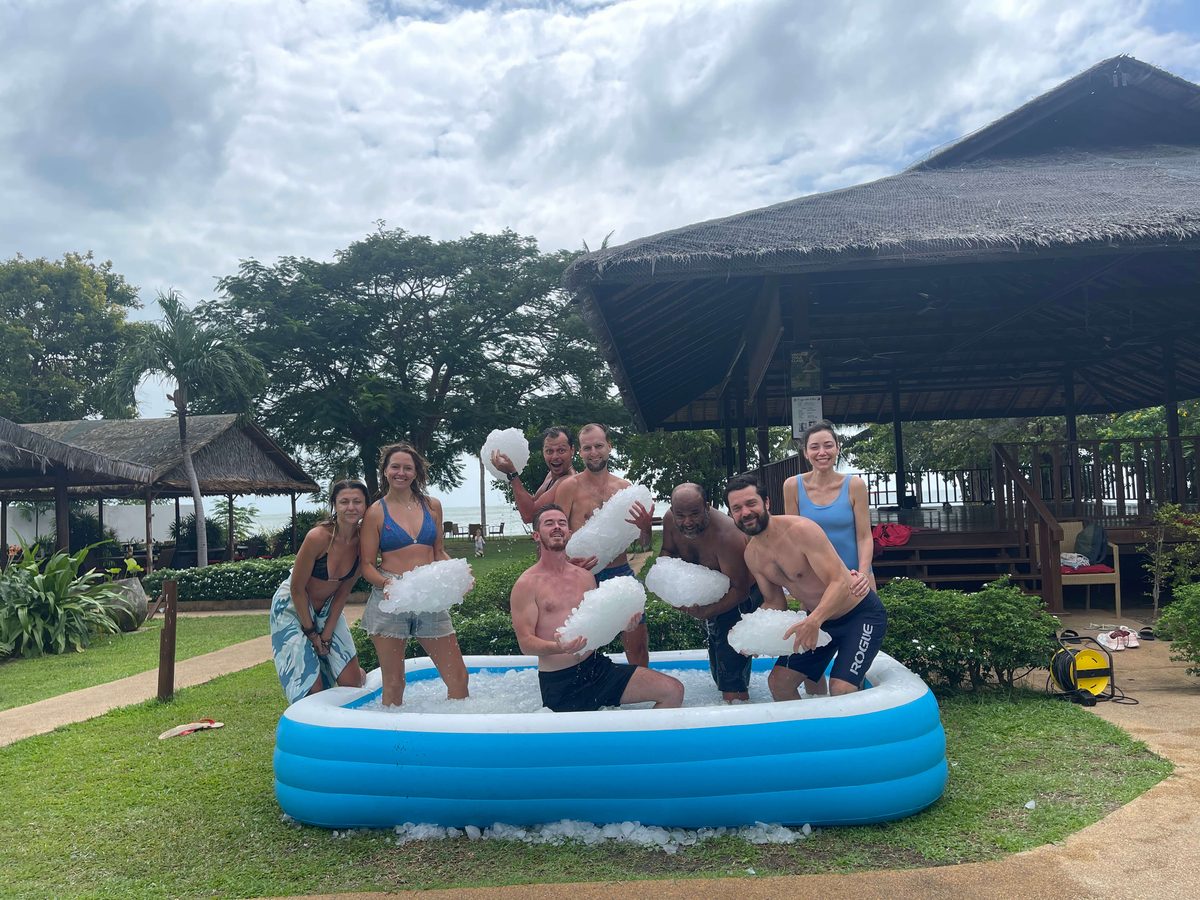
The ice bath gets all the attention. The moment of stepping in, the shock, the breath control, the rush of getting out. But what you do in the hours after cold exposure matters just as much as what you do during it.
After an ice bath, the most important thing you can do is nothing for the first few minutes. Let your body warm itself through the natural afterdrop response. Skip the hot shower. Stand in open air, then rewarm actively with gentle movement and a dry layer. External heat short circuits the thermogenic response that drives many of the recovery benefits.
I have guided thousands of people through ice baths over six years on Koh Samui. And the question I hear most often after someone gets out is some version of: "What do I do now?"
This is the answer. Everything I tell people when they are standing there, skin flushed, heart pumping, feeling more alive than they have felt in months.
The First Five Minutes: Let Your Body Work
When you step out of cold water, your body starts an aggressive warming process. Blood vessels that constricted during the cold now dilate. Blood rushes back to your skin and extremities. Your heart rate elevates slightly. You may feel a wave of heat spreading from your core outward. This is called the afterdrop response, and it is completely normal.
The single most important thing you can do right now is nothing. Stand still. Breathe naturally. Let your body do what it evolved to do.
Do not jump into a hot shower. Do not wrap yourself in a heated blanket. Do not rush to get warm. Your body is generating heat internally, and that process is part of the benefit. When you intervene with external heat, you short circuit the thermogenic response that drives many of the recovery benefits of cold exposure.
I tell people to stand or sit in the open air for three to five minutes. In Koh Samui, the tropical air at 30 to 35 degrees creates a natural contrast that feels incredible after ice water. Your body temperature comes back up gradually, and you get the full afterglow without cutting it short.
Warming Up the Right Way
After those first few minutes, start warming up with movement. Not intense exercise. Just gentle movement that generates body heat from the inside.
Walk slowly. Swing your arms. Do some light stretching. Roll your shoulders. If you are outdoors (which you should be if possible), walk barefoot on warm ground. The goal is active rewarming, which means your muscles and metabolism are producing the heat rather than a blanket or heater doing the work for you.
This matters because active rewarming extends the metabolic boost that cold exposure triggers. Your body is burning calories to generate heat. When you pile on external heat sources immediately, you tell your body to stop that process. Let it run.
If you feel uncomfortably cold after ten minutes, put on a dry layer. A light shirt and dry shorts are usually enough. Just avoid the impulse to bury yourself in warmth in the first fifteen minutes. Most people find that by the time they have walked around for five minutes, their body temperature has normalized and they feel a warm glow from the inside out. That glow is the goal.
The Afterglow: What You Are Feeling
Within ten to twenty minutes after an ice bath, most people report a specific set of sensations. Clarity. Calm energy. A slight buzz that feels natural rather than stimulated. Colors seem brighter. Sounds seem sharper. You feel present in a way that is hard to manufacture any other way.
This is not placebo. Cold exposure triggers a measurable release of norepinephrine, which can increase by 200 to 300 percent after immersion in cold water. Norepinephrine is a neurotransmitter that affects attention, focus, and mood. It is the same compound that many medications attempt to regulate, and your body just produced a massive dose of it naturally.
The afterglow typically lasts one to three hours, though some people report feeling the effects for the rest of the day. How long it lasts depends on the duration and temperature of the cold exposure, your individual physiology, and what you do afterward. Which brings us to what to eat.
What to Eat After Cold Exposure
Your body just burned through energy to maintain core temperature. It needs fuel. But timing and food choice matter.
Wait at least 20 to 30 minutes before eating a full meal. Your body is still in a heightened sympathetic state immediately after cold exposure, which means blood is directed toward your muscles and organs, not your digestive system. Eating too soon can cause nausea or bloating because digestion is not prioritized when your body is focused on rewarming.
When you do eat, choose warm, easy to digest foods. A bowl of soup or broth is ideal. Warm rice with vegetables. Eggs. Oatmeal. Foods that give your body fuel without requiring heavy digestive effort.
Protein is important in this window. Cold exposure creates a mild stress response that triggers repair and adaptation processes in your body. Protein provides the building blocks for that adaptation. A meal with 20 to 30 grams of protein within an hour of cold exposure supports recovery.
Avoid heavy, greasy, or processed food right after. Your body is in a clean, activated state. Give it clean fuel to match.
Hydrate well. Cold exposure is dehydrating even though you do not sweat. Drink water or herbal tea. If you are in the tropics, coconut water is excellent because it replaces electrolytes naturally.
Should You Exercise After an Ice Bath
This depends on your goals.
If you are using cold exposure for general wellness, stress relief, and nervous system regulation, gentle movement after is perfect. A walk, light yoga, stretching. Nothing intense. Let your body stay in the recovery and adaptation window that cold exposure opened.
If you are an athlete using cold exposure for performance recovery, the research suggests waiting at least four hours before intense training. Cold exposure reduces inflammation, which is good for recovery but can blunt the muscle adaptation signal from strength training if done too close together. The practical takeaway: do your ice bath after training (not before), and on rest days, do it whenever you want.
For most people reading this, you are not optimizing athletic performance. You are looking for the mental clarity, the stress release, the feeling of being fully alive. In that case, keep the hours after your ice bath calm. The benefits accumulate when your nervous system stays in a regulated state rather than immediately jumping back into intensity.
What About Hot Showers or Saunas After
I get asked this every single session. "Can I take a hot shower after?"
You can. But I recommend waiting at least 30 minutes. Here is why.
The contrast between cold and warm is where a lot of the physiological benefit lives. When you go from cold water to standing in warm air, your vascular system gets a workout. Blood vessels dilate and constrict. Your circulatory system adapts. If you immediately blast hot water on your skin, you skip that entire process and replace it with passive warming.
If your goal is recovery and adaptation, let your body do the rewarming on its own for at least 30 minutes. After that, a warm (not hot) shower is fine.
Sauna after cold exposure is a different story. The hot and cold contrast cycle (cold water then sauna then cold water then sauna) is a deliberate practice with its own benefits. Nordic cultures have done this for centuries. But that is a separate protocol, not the same as jumping in a hot shower because you are uncomfortable.
The key question to ask yourself: am I rewarming because it is time, or because I am avoiding the discomfort of letting my body handle it? If it is the second one, wait. The discomfort is part of the practice. Learning to be okay with mild discomfort is one of the core skills that cold exposure teaches you, and it transfers into everything else in your life.
Sleep After Cold Exposure
One of the most consistent reports I hear from people after their first ice bath is: "I slept better that night than I have in months."
Cold exposure helps sleep through several mechanisms. It reduces core body temperature, which is a signal your body uses to initiate sleep. It downregulates the sympathetic nervous system after the initial activation, leaving you in a calm, parasympathetic state by evening. And the norepinephrine release during the day means your brain has less residual stress to process at night.
If you are doing an ice bath specifically for sleep improvement, timing matters. Morning or early afternoon cold exposure tends to produce the best sleep results. Late evening cold exposure (within two hours of bedtime) can actually keep you awake because the norepinephrine boost has not yet cleared.
In our UNTAMED full day experience, we do ice baths in the late morning or early afternoon. By evening, participants are consistently reporting deep, restorative sleep. Many say it is the first time in years they slept through the entire night without waking.
Common Concerns After Cold Exposure
Shivering after getting out. This is normal and healthy. Shivering is your body generating heat through muscle contractions. It typically stops within 5 to 15 minutes. Do not fight it. Let it happen. If shivering continues beyond 20 minutes, put on a warm layer and move around.
Skin is red or blotchy. Completely normal. This is blood returning to the surface of your skin as your vessels dilate. It fades within 10 to 30 minutes. Some people get a pattern that looks like a rash. It is not a rash. It is your vascular system responding to the temperature change.
Feeling emotional. Cold exposure can release held tension in the body, and sometimes that tension has an emotional component. If you feel like crying, laughing, or having a strong emotional response after an ice bath, let it move through you. This is similar to what happens in a guided breathwork session, where the body processes stored experiences when the nervous system is activated.
Feeling tired later in the day. The energy boost from cold exposure lasts one to three hours for most people. After that, some people feel pleasantly tired. This is your parasympathetic nervous system asserting itself after the initial sympathetic activation. It is a sign that your nervous system is doing its job. Do not fight it. Rest if you need to.
Headache after an ice bath. This is less common but can happen, usually from holding your breath during the cold exposure (which raises blood pressure temporarily) or from dehydration. Drink water. Breathe normally. If you had breathwork before the ice bath, the headache is almost always from incomplete integration of the breathing practice. This is one reason guided sessions are valuable: a facilitator helps you regulate your breath during and after the cold so these side effects are rare.
The Difference Between Solo and Guided Recovery
Everything I have described above is what you can do on your own after any cold exposure. Fill a bathtub with ice, get in, get out, follow these steps.
But there is a meaningful difference between doing this alone and doing it with guidance.
In a guided session, the recovery begins before you even get out of the water. A facilitator is reading your breath, your body language, your expression. They are guiding you through the exit, through the rewarming, through the emotional processing that sometimes surfaces. They create a container where you do not have to think about what comes next because someone is holding that for you.
When you do cold exposure alone, your thinking mind stays active the entire time. "Am I doing this right? Should I get out now? What do I do next?" That mental chatter reduces the depth of the experience because part of your awareness is always managing logistics.
In a guided session, you can surrender to the experience fully. And the recovery afterward is different because you went deeper during the exposure itself. You access layers that are hard to reach when you are simultaneously the participant and the manager.
This is especially true when breathwork is combined with cold exposure. The breathwork before the ice bath changes your physiological state so dramatically that the cold exposure itself becomes a different experience. And the recovery afterward carries the benefits of both practices combined.
Building a Regular Cold Exposure Practice
One ice bath gives you a reset. Regular cold exposure gives you a fundamentally different nervous system.
If your first ice bath experience was powerful (and based on thousands of sessions, it probably was), here is how to build it into your life.
Start with cold showers. End your regular shower with 30 to 60 seconds of the coldest water your tap produces. This is not the same intensity as an ice bath at 5 to 8 degrees, but it maintains the adaptation between full cold exposure sessions. Do this daily.
Schedule a full ice bath once a week if you have access to a cold plunge or ice bath setup. The weekly frequency is enough to maintain and build on the adaptation without overloading your stress response.
Pay attention to how you respond. Some people thrive on more frequent cold exposure. Others do better with less. Your sleep quality is the best indicator. If your sleep improves after cold exposure, you are getting the dosage right. If sleep gets worse, you may be doing too much.
If you are visiting Koh Samui, UNTAMED gives you the full guided experience: breathwork preparation, ice bath at proper temperature (5 to 8 degrees, not a lukewarm "cold plunge"), guided recovery, and the integration time most people skip when they do it alone. For groups, private workshops bring the complete setup to your location anywhere on the island.
What Most People Get Wrong
The biggest mistake I see is treating the ice bath as the entire experience. People focus on getting in and surviving the cold. They count seconds. They white knuckle through it. Then they jump out, towel off immediately, blast a hot shower, and wonder why they did not get the transformational experience they heard about.
The cold exposure is one part of a three part process: preparation, immersion, and recovery. If you skip or rush any of those three, you get a fraction of the benefit.
Preparation means your nervous system is ready. This is why breathwork before cold exposure is so effective. It downregulates your fight or flight response so you can enter the cold from a place of regulation rather than panic.
Immersion is the part everyone focuses on. Stay in for two to three minutes at 5 to 8 degrees. Breathe slowly. Do not fight the cold.
Recovery is what this entire article is about. Let your body rewarm naturally. Move gently. Eat clean fuel. Stay calm. Let the adaptation happen.
Get all three right and cold exposure becomes one of the most powerful tools available for your physical and mental health. Get only one right and you get a cold, uncomfortable bath.
Explore More
Frequently asked questions
What should I do in the first five minutes after an ice bath?
Nothing. Stand still and breathe naturally. When you step out, blood vessels dilate, blood rushes back to your skin, and you may feel heat spreading from your core, the normal afterdrop response. Do not jump into a hot shower or wrap yourself in a heated blanket. Your body is generating heat internally, and that thermogenic process drives many of the recovery benefits. I tell people to stand or sit in the open air for three to five minutes and let body temperature come back up gradually.
What should I eat after cold exposure?
Wait at least 20 to 30 minutes before a full meal, because your body is still in a heightened sympathetic state and digestion is not prioritized, so eating too soon can cause nausea. When you do eat, choose warm, easy to digest foods like soup, broth, warm rice with vegetables, eggs, or oatmeal. Aim for 20 to 30 grams of protein within the hour to support repair and adaptation. Hydrate well with water, herbal tea, or coconut water, since cold exposure is dehydrating even though you do not sweat.
Can I take a hot shower or use a sauna after an ice bath?
You can, but wait at least 30 minutes. The contrast between cold water and warm air is where a lot of the physiological benefit lives, giving your vascular system a workout as vessels dilate and constrict. If you blast hot water immediately you skip that and replace it with passive warming. After 30 minutes, a warm shower is fine. A deliberate cold then sauna contrast cycle is a separate protocol with its own benefits, not the same as jumping into hot water because you are uncomfortable.
Why do I feel emotional after an ice bath?
Cold exposure can release held tension in the body, and sometimes that tension has an emotional component. If you feel like crying, laughing, or having a strong response after an ice bath, let it move through you. It is similar to what happens in a guided breathwork session, where the body processes stored experiences when the nervous system is activated. It is normal and healthy, the same way shivering, red blotchy skin, or feeling pleasantly tired later in the day are all signs your nervous system is doing its job.
When should I do an ice bath for the best sleep?
Morning or early afternoon cold exposure tends to produce the best sleep results. It reduces core body temperature, which signals your body to initiate sleep, and the norepinephrine boost has time to clear by evening. Late evening cold exposure within two hours of bedtime can actually keep you awake because that boost has not yet cleared. In our UNTAMED day we do ice baths in the late morning or early afternoon, and by evening participants consistently report deep, restorative sleep.
Stay in the loop.
Occasional dispatches when sessions open or new writing drops. No spam.
About Diego Pauel
I have lived in Koh Samui for 15 years. I discovered breathwork through freediving, which I have trained in for over a decade. When COVID hit and the island emptied out, I started offering breathwork and ice baths for free to help the local community feel better in their bodies. I was the first to offer this work on the island. Five years later, I have facilitated countless sessions for people from all over the world. No guru energy. No mystical language. Just the work.
Full story →Want to feel the cold for yourself?
Experience UNTAMEDContinue Reading
All Cold & Ice Bath →