Cold Exposure Benefits: What the Research Says (and What It Does Not)
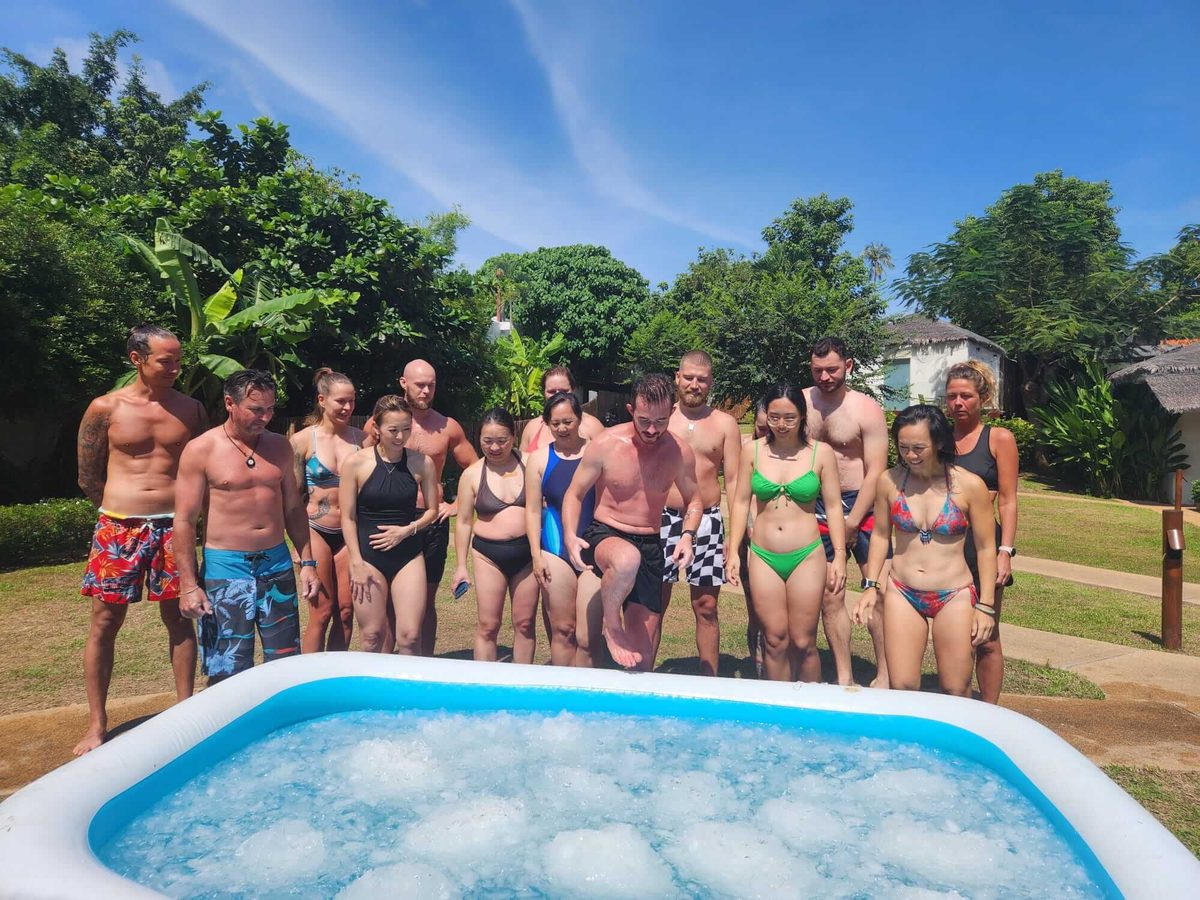
Cold exposure has gone from a fringe practice to a mainstream wellness trend in a few short years. Ice baths are in gyms now. Cold plunge companies are raising millions in funding. Everyone from podcasters to professional athletes to your neighbor is talking about the benefits of getting cold on purpose.
Some of what they say is backed by solid research. Some of it is overblown. And some of it is flat out made up, passed around social media until it sounds like fact.
I have been facilitating ice baths as part of breathwork sessions in Koh Samui for over five years. I have watched hundreds of people get into cold water. I have seen what it does to their bodies, their moods, and their nervous systems in real time. I also read the research, because what I observe in a session and what the science confirms are not always the same thing.
So here is an honest breakdown. What cold exposure actually does. What is well supported. What is promising but still early. And what is hype.
What Happens to Your Body When You Get Into Cold Water?
When you enter cold water, four things fire almost at once: a cold shock response that spikes your heart rate and breathing, vasoconstriction that pulls blood to your core, a release of norepinephrine, dopamine, cortisol and endorphins, and, if you stay and breathe, a shift back into parasympathetic calm. That last shift is the real training effect.
Before we talk about benefits, it helps to understand the basic physiology. When your body is suddenly exposed to cold water, a cascade of responses fires simultaneously.
Cold shock response. Your heart rate spikes. Your breathing becomes rapid and shallow. Blood pressure jumps. This is your sympathetic nervous system hitting the gas pedal at full force. Your body thinks it is in danger and mobilizes everything to respond. This phase lasts about 30 to 90 seconds and is the most uncomfortable part of the experience.
Vasoconstriction. Blood vessels near the skin surface constrict, redirecting blood toward your core and vital organs. Your body is prioritizing survival by protecting what matters most. Your skin goes pale. Your extremities go numb. All the blood is moving inward.
Hormonal and neurotransmitter release. The stress of cold exposure triggers the release of norepinephrine, dopamine, cortisol, and endorphins. These chemicals are responsible for the mood shift, the alertness, and the sense of euphoria that many people report after getting out of cold water.
Parasympathetic activation. If you stay in the cold and control your breathing, your body begins to adapt. Heart rate comes back down. Breathing slows. The initial panic gives way to a calmer state. This transition from sympathetic to parasympathetic while under stress is the core training benefit of cold exposure. You are teaching your nervous system to regulate under pressure.
Benefits Supported by Strong Research
Norepinephrine Increase
This is the most well documented effect of cold water immersion. A frequently cited study from the European Journal of Applied Physiology showed that immersion in cold water (14 degrees Celsius) for one hour increased norepinephrine by 530 percent and dopamine by 250 percent. Even shorter exposures at colder temperatures produce significant increases.
Norepinephrine is a neurotransmitter that plays a role in attention, focus, mood, and energy. It is also involved in the body's anti inflammatory response. The sustained elevation of norepinephrine after cold exposure is likely the primary mechanism behind the mood and focus improvements that people consistently report.
This is not placebo. The neurochemical changes are measurable and reproducible. When someone tells you they feel clear and alert after an ice bath, there is a concrete biological reason for it.
Mood and Mental Health
Multiple studies have shown that regular cold water exposure is associated with improved mood and reduced symptoms of depression. A 2023 meta analysis published in the British Journal of Sports Medicine found that cold water swimming was associated with improved mood across a range of populations.
A widely referenced case study from the British Medical Journal documented a young woman with treatment resistant depression who experienced significant improvement after a program of cold water swimming, allowing her to gradually reduce and eventually discontinue her medication.
The mechanisms likely involve the norepinephrine and dopamine release described above, along with the activation of the vagus nerve and the parasympathetic nervous system. Regular cold exposure appears to improve the body's ability to regulate mood states over time.
Important caveat: most of the research here is observational or involves small sample sizes. We do not yet have large randomized controlled trials specifically testing cold exposure as a treatment for depression. The evidence is promising and consistent, but it is not at the level where anyone should be recommending ice baths as a replacement for professional mental health treatment.
Reduced Inflammation
Cold water immersion reduces inflammatory markers in the body. This is well established in sports medicine, where ice baths have been used for decades as a recovery tool for athletes. The vasoconstriction and subsequent vasodilation cycle helps flush inflammatory byproducts from the tissues.
Beyond acute recovery, there is evidence that regular cold exposure reduces chronic low grade inflammation. The norepinephrine release plays a role here, as norepinephrine has direct anti inflammatory effects. A study from the Proceedings of the National Academy of Sciences demonstrated that subjects trained in cold exposure and breathing techniques showed reduced inflammatory responses when exposed to bacterial endotoxins.
Chronic inflammation is implicated in nearly every modern health concern, from cardiovascular disease to autoimmune conditions to metabolic disorders. Anything that helps keep inflammation in check is worth paying attention to.
The Vagus Nerve, and What Cold Actually Does to It
The vagus nerve is the main communication line between your brain and your body. It runs from the brainstem through the throat, heart, lungs and gut. Vagal tone is the term for how strongly it influences your heart rate, and higher vagal tone is associated with better emotional regulation and lower resting heart rate. Associated, not caused. It is a marker that tends to travel with good health, and treating it as a lever you pull is a step past what the evidence supports.
Here is the part that is solid. Cold water on the face produces a real, immediate drop in heart rate through cold receptors served by the trigeminal nerve. You can feel it happen. That is not in dispute.
The part that is not solid is the claim that repeated cold practice permanently raises your vagal tone. It gets repeated constantly and I have not found controlled evidence for it. Cold exposure has genuinely interesting effects on mood and on brown fat that are better supported than this one. I would rather point you at those than sell you a mechanism I cannot stand behind. If you want to understand more about how this works, I wrote about it in the nervous system reset article.
Benefits That Are Promising but Not Yet Proven
Immune Function
There is some evidence that regular cold exposure may improve immune function. The study mentioned above, where trained subjects showed reduced inflammatory responses to endotoxins, suggests the immune system can be modulated through cold and breathing practices. A Dutch study found that people who took cold showers for 30 days reported 29 percent fewer sick days than the control group.
However, the mechanisms are not fully understood, and the research is limited. Cold exposure is a stressor, and while moderate stress can strengthen the immune system (hormesis), excessive stress suppresses it. The dose matters. Saying "ice baths boost your immune system" is an oversimplification of a nuanced picture.
Fat Loss and Metabolic Benefits
Cold exposure activates brown adipose tissue (brown fat), which burns calories to generate heat. This is real. Brown fat is metabolically active in a way that white fat is not, and cold exposure increases its activity.
However, the actual caloric expenditure from cold exposure is modest. We are talking about maybe 100 to 200 extra calories burned during a cold exposure session, depending on duration and temperature. That is not nothing, but it is not a weight loss strategy on its own. If someone is telling you ice baths will melt body fat, they are overstating the evidence.
There is also some research suggesting cold exposure improves insulin sensitivity and glucose metabolism, but this is still early stage and the effects are not dramatic enough to replace proper nutrition and exercise.
I want to be blunt about the fat loss thing, because it is the claim that brings the most people to me for the wrong reason. In five years of running ice baths I have never once seen someone lose weight from the cold itself. The people who lean out are the ones for whom the cold became a doorway: they started sleeping better, drinking less, moving more, and managing stress without reaching for food. The brown fat activation is real, but it is a rounding error next to those behaviour changes. If you come to the cold for the metabolism and stay for the way it rewires your relationship with discomfort, you will get the body composition change as a side effect of the life change. Backwards is the only order that works.
Improved Sleep
Many people who do regular cold exposure report sleeping better. The proposed mechanism involves the body's thermoregulation response. After cold exposure, your core temperature drops, and this drop in temperature is a signal for the body to prepare for sleep. Evening cold exposure may enhance this natural process.
The anecdotal evidence here is strong. I hear it from participants constantly. But controlled studies specifically testing cold exposure and sleep quality are limited. It is plausible and commonly reported, but not yet well established in the literature.
What Is Overhyped
"Cold Exposure Cures Everything"
Social media has turned cold exposure into a cure for everything from autoimmune disease to chronic pain to PTSD. Some of these claims come from genuine personal experiences. Cold exposure did help that specific person with that specific issue. But personal experience is not clinical evidence, and what works for one person does not generalize to everyone.
Cold exposure is a physiological stressor that produces beneficial adaptations when applied correctly. It is not medicine. It is not a treatment protocol. Framing it as a cure positions it in a way that the evidence does not support and potentially leads people away from treatments that are better validated for their specific condition.
"The Colder and Longer, the Better"
More is not always more. The research suggests that the majority of the neurochemical benefits occur within the first one to three minutes of immersion at temperatures between 2 and 10 degrees Celsius. Staying in longer increases the stress load but does not proportionally increase the benefits. And extremely cold temperatures for extended periods carry real risks, including hypothermia, cardiac events, and cold water shock.
There is a sweet spot. Getting cold enough to trigger the adaptation response without overdoing it. If you are turning blue and your speech is slurred, you have gone too far. That is not discipline. That is poor risk assessment. This is exactly the kind of edge we coach in our weekly group sessions, where someone is reading your response the whole time.
"You Need an Expensive Cold Plunge"
The cold plunge industry would love you to believe you need a $5,000 unit in your backyard. You do not. A cold shower works. A bathtub with ice from the gas station works. A cold lake or ocean works. The water does not care how much you paid for the container.
Dedicated cold plunges are convenient and nice to have. They are not necessary. Do not let equipment be the barrier between you and the practice.
How Do You Start Cold Exposure Safely?
Start with cold showers, not full immersion. End your normal shower with 15 to 30 seconds of genuinely cold water and breathe through it with a long exhale. Build to 90 seconds over a few weeks, then move to full immersion for one to three minutes. Always control the breath, always have a way out, and never get into open water alone.
If you have never done cold exposure deliberately, here is a practical approach.
Week 1 to 2: Cold showers. End your regular shower with 15 to 30 seconds of cold water. Not lukewarm. Cold. Breathe through it. Extended exhale pattern. Inhale for 4, exhale for 6 to 8. The breath is what makes it manageable. Without the breath, you will gasp and bail.
Week 3 to 4: Extend the duration. Build up to 60 seconds, then 90 seconds of cold water at the end of your shower. The discomfort does not decrease. Your capacity to stay with it increases. That distinction matters.
Month 2 onward: Full cold immersion if available. If you have access to a cold plunge, ice bath, or cold natural body of water, try full immersion for 1 to 3 minutes. Always with controlled breathing. Always with the ability to get out whenever you choose.
Contraindications. Do not do cold immersion if you have uncontrolled high blood pressure, a history of cardiac events, Raynaud's disease, or are pregnant. If you have any cardiovascular concerns, talk to your doctor first. Cold water immersion causes a significant spike in heart rate and blood pressure during the first 30 to 60 seconds, and for people with certain conditions, that spike carries real risk.
Never do cold exposure alone in a body of water where you could drown if you lost consciousness. This sounds obvious. People still do it. Always have someone present or use a controlled setting.
How Cold Exposure Combines With Breathwork
Cold exposure and breathwork amplify each other in a way that neither achieves alone.
Before the cold, breathwork prepares your nervous system. Specific breathing patterns activate the parasympathetic branch and put you in a regulated state. When you enter the cold water from that state, your body handles the shock differently. The panic is shorter. The adaptation is faster. You stay calmer and stay in longer, not because you are tougher, but because your nervous system was prepared.
During the cold, the breath is your anchor. Slow, controlled exhales keep your heart rate manageable and prevent the gasping reflex from taking over. Every second in the ice is a practice of choosing regulation over reaction. That is a skill that transfers to every stressful situation in your life outside the tub.
After the cold, your body is flooded with norepinephrine and dopamine. Your nervous system is wide open. This is an optimal state for a second round of breathwork, integration, or simply sitting in the stillness and feeling what is there without filtering it.
At Breathflow Connection, cold exposure is never the standalone practice. It is always combined with breathwork. In UNTAMED, the full day experience, the ice bath comes after extended breathwork practice. By that point your nervous system is in a completely different state, and the cold becomes a test of everything you have built throughout the day. In private workshops, the two hour session moves from breathwork into ice bath as a natural progression.
If you want to experience cold exposure in a facilitated setting where the breathwork preparation is built in and someone is watching your response the entire time, that is what we do. You can read more about our ice bath sessions specifically in the ice bath in Koh Samui article.
The Benefit Nobody Measures
I have given you what research there is. Norepinephrine and dopamine responses to cold are real and measured. The inflammation finding rests on one unreplicated laboratory. The vagal tone story is the weakest of the four and I would not lean on it. That is the honest ranking, and it is not the one you will hear from most people selling cold.
But the benefit that keeps people coming back to cold exposure is not in any study. It is the experience of voluntarily choosing to stay with something uncomfortable.
Every moment in cold water is a choice. You can get out any time. Nobody will stop you. And the decision to stay, to breathe through the discomfort, to let the panic pass without acting on it, trains something that no amount of reading or thinking can train. It trains your relationship with discomfort itself.
Most people spend their lives avoiding discomfort. The uncomfortable conversation gets postponed. The hard decision gets delayed. The feeling gets numbed or distracted away. The ice bath is a two minute laboratory where you practice the opposite. You feel something intense. You stay. You breathe. And you discover that you are still here on the other side of it. Intact. Possibly better than before.
That lesson, which no study will ever quantify, is the one that changes how people live after they leave the tub.
Keep Reading
Frequently asked questions
What are the actual proven benefits of cold exposure?
Research shows reliable effects on: norepinephrine release (which correlates with focus and mood), brown fat activation (which improves glucose handling), inflammation markers, and subjective resilience under stress. Less reliable but suggested effects: immune function, recovery from exercise, and cardiovascular adaptation. The mental resilience benefit is harder to measure in a lab but is the one most practitioners report as most valuable.
How long do you need to stay in cold water to get benefits?
11 minutes of total cold exposure per week, split across 2 to 4 sessions, is the threshold most of the research points to for measurable effects on mood and metabolism. That is an average of 2 to 3 minutes per session, 4 times a week. More is not better. Going past your tolerance increases injury risk and cortisol without adding benefit.
How cold does the water need to be?
Below 15 degrees Celsius (59 Fahrenheit) is the threshold where the body starts the full cold stress response. 4 to 10 degrees Celsius is optimal for most protocols. Colder than 2 degrees gets dangerous fast for most people. A 10 degree ice bath for 3 minutes is roughly equivalent to a 4 degree ice bath for 90 seconds in terms of physiological stimulus.
Is cold exposure safe?
For most healthy adults, yes, when done correctly. The main risks are cardiac stress (which is why people with heart conditions or high blood pressure should talk to a doctor first), cold shock response on entry (which is managed by controlling the breath), and overstaying (which depletes more than it builds). Start slow. 30 seconds in a cold shower is enough for week one.
Does cold exposure burn fat?
It activates brown fat, which is metabolically different from white fat. Brown fat burns calories to generate heat. Regular cold exposure can increase brown fat activity and modestly improve glucose handling. The direct calorie burn from a 3 minute ice bath is small. The metabolic shift over weeks and months is where the effect lives.
Should I do cold exposure before or after a workout?
After strength training, wait at least 4 hours before cold exposure. Cold blunts the muscle building signal, so immediate cold exposure after lifting reduces gains. After cardio or conditioning, cold is fine immediately and speeds recovery. Before a workout, cold exposure gives a focus and energy boost. Before cold exposure in the morning, a short workout is not a problem.
Stay in the loop.
Occasional dispatches when sessions open or new writing drops. No spam.
About Diego Pauel
I have lived in Koh Samui for 15 years. I discovered breathwork through freediving, which I have trained in for over a decade. When COVID hit and the island emptied out, I started offering breathwork and ice baths for free to help the local community feel better in their bodies. I was the first to offer this work on the island. Five years later, I have facilitated countless sessions for people from all over the world. No guru energy. No mystical language. Just the work.
Full story →Want to feel the cold for yourself?
Experience UNTAMEDContinue Reading
All Cold & Ice Bath →