Cold Plunge vs Ice Bath: What Is the Difference and Does It Matter
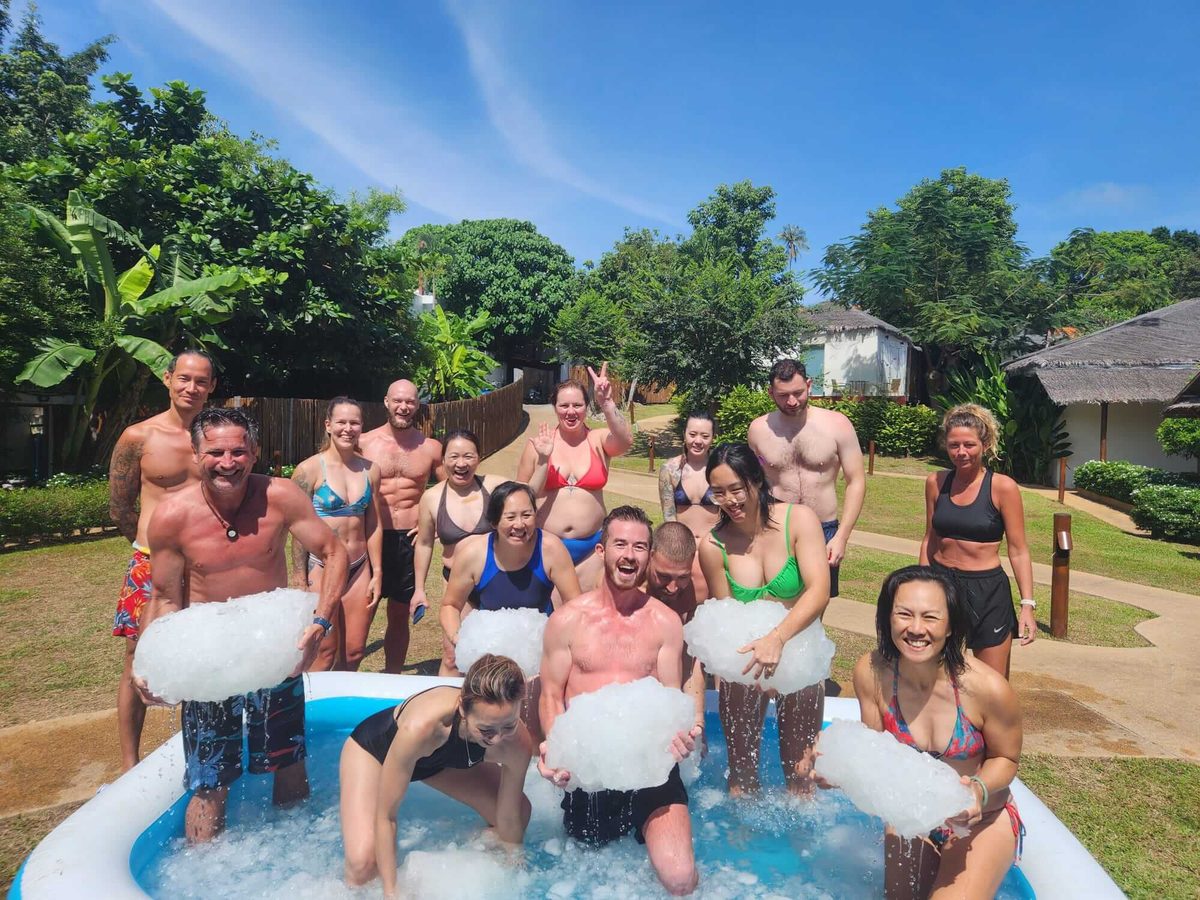
Cold plunge and ice bath get used interchangeably online. They are not the same thing. The difference matters for what you get out of the experience, how long you need to stay in, and how cold actually cold needs to be to produce the results you are after.
I have been running ice baths on Koh Samui since 2020. I was the first person on the island to offer structured cold exposure as part of a breathwork practice. I have put hundreds of people into cold water and watched what happens. Here is what I have learned about the difference between the two formats and when each one is worth your time.
What Cold Plunge Actually Means
Cold plunge typically refers to a cold water pool or purpose built tub that sits at a consistent temperature, usually somewhere between 10 and 15 degrees Celsius. Many gyms, wellness centers, and recovery studios now have cold plunge pools as permanent fixtures. The temperature is regulated. You step in, stay for a few minutes, step out. The setup is convenient, clean, and repeatable.
The cold plunge trend has grown partly because of the infrastructure around it. You can book a session at a recovery center, get in a pod, check the temperature on a screen, and track your time on a timer. It fits neatly into a performance optimization routine.
What an Ice Bath Actually Is
An ice bath is water with ice added, typically a tub or container filled with cold water and enough ice to bring the temperature down to 5 to 10 degrees Celsius. Sometimes colder. The temperature is less controlled and more aggressive. The experience is more raw.
At 5 to 8 degrees, the physiological response is noticeably more intense than at 12 to 15 degrees. Your skin receptors fire harder. The cold shock response is stronger. The breath naturally wants to gasp. This is where breathwork becomes not just useful but necessary.
What Is the Difference Between a Cold Plunge and an Ice Bath?
The difference is temperature, not the name. A cold plunge usually holds a regulated 10 to 15 degrees Celsius; an ice bath uses added ice to reach a colder, less controlled 5 to 10 degrees. Running cold exposure on Koh Samui since 2020, I judge any cold by its temperature, because that is what determines the effect, not the label.
The practical difference between a cold plunge and an ice bath comes down to temperature. Most cold plunge setups hold 10 to 15 degrees. Most ice baths run 5 to 10 degrees. That 5 degree gap is significant in terms of what your body experiences.
Cold receptors in your skin are not linear. The response at 8 degrees is not just slightly more intense than at 13 degrees. It is a qualitatively different experience. The urgency is greater. The instinct to exit the water is stronger. The mental demand of staying calm is higher. And because of that, the training effect on your nervous system is more substantial.
Research on cold water immersion shows dose dependent effects from temperature. Studies have found significantly higher norepinephrine increases at colder temperatures compared to moderately cold water. Norepinephrine, the neurotransmitter most associated with mood, focus, and stress resilience, rises up to 300 percent after cold water immersion at proper temperatures. At warmer cold plunge temperatures, the effect is present but smaller.
Duration Changes Depending on Temperature
At a 12 to 15 degree cold plunge, you typically need 5 to 10 minutes to produce a meaningful physiological response. At 5 to 8 degrees in an ice bath, 2 to 3 minutes is enough. Some research suggests 2 minutes at 5 degrees produces more benefit than 10 minutes at 15 degrees in terms of norepinephrine response.
This matters practically. Telling someone to get into cold water for 10 minutes is a very different psychological and physiological challenge than 2 minutes. The ice bath approach is shorter, more intense, and in my experience, more effective for the kind of mental regulation work I pair with breathwork.
Why Breathwork Changes Both Experiences
Cold water triggers an immediate threat response. Your body reads extreme cold as danger. Your sympathetic nervous system fires. Breathing becomes rapid and shallow. Heart rate spikes. The instinct is to get out.
Breathwork before cold exposure trains you to manage this response. When you enter the water with a regulated nervous system and a practised breath, something different happens. You breathe slowly and deliberately. Your body registers the cold but your nervous system does not treat it as an emergency. You stay in control. And because you stay in control, you experience the physiological benefits without the cortisol spike that comes from getting in panicked.
I have watched people attempt cold exposure without breath preparation. The experience is often survival mode. They hunch, gasp, grip the sides, and count down the seconds. When the same person enters the water after a breathwork session, with a long exhale as they lower in, their face changes. They stay present. They breathe. They notice what is happening instead of fighting it. The experience is completely different.
This is why we sequence breathwork before ice bath in every UNTAMED session and every workshop I run. The breath preparation is not optional. It is what makes the cold exposure a nervous system training instead of a test of stubbornness. If you want to build your own cold exposure practice at home, the cold protocol guide walks you through how to progress safely.
Which Is Better for Recovery, a Cold Plunge or an Ice Bath?
For physical recovery after training, a cold plunge at 10 to 15 degrees is better: it eases muscle soreness and inflammation without the added shock of full ice. For nervous system regulation, mood, and mental resilience, a colder ice bath at 5 to 8 degrees wins, because the norepinephrine response is temperature dependent.
If your goal is physical recovery after training, a cold plunge at 10 to 15 degrees is practical and effective. It reduces muscle soreness and inflammation without the added intensity of full ice. Many athletes use this format daily.
If your goal is nervous system regulation, mood, or mental resilience, colder is more effective. The norepinephrine response is temperature dependent. For the psychological and neurological benefits most people are looking for when they come to a breathwork and ice bath experience, a proper ice bath at 5 to 8 degrees is worth the extra intensity over a warmer cold plunge.
There is also a recovery point most people miss. A cold plunge straight after a hard training session can blunt some of the muscle adaptation you trained for, because the cold suppresses the inflammation your body uses to rebuild. If you are chasing strength or muscle, leave a few hours between the workout and the cold, or use the plunge on rest days. If you are chasing recovery for the next session, the timing matters less. I tell people who train seriously to treat the cold as a tool with a dose and a schedule, not something you do harder and longer to get more out of it.
For the regulation work I do, I have stopped thinking of cold as recovery at all. I treat it as nervous system training. The point is not the soreness it removes; it is the rep you get at staying calm while your whole body screams to get out. That rep is what carries over into the rest of your life. I cover how cold fits a wider regulation practice in the ice bath recovery guide, and the underlying physiology in the science of cold exposure.
What We Run in Koh Samui
In UNTAMED and in every group workshop, we use ice baths. Proper ice. We aim for 5 to 8 degrees. The cold is intentional. It is not decorative.
People arrive nervous. Most of them have never done it before. Some have anxiety just thinking about it. We run the breathwork first, usually 40 to 45 minutes of guided breathing. By the time we move to the ice, the nervous system is already in a regulated state. People lower themselves in on an exhale. They breathe slowly. Most stay two to three minutes. Virtually everyone gets out looking different than they got in.
The combination of breathwork and cold exposure is not just a nice pairing. The two practices reinforce each other. Breathwork teaches you to regulate internally. Cold exposure gives you an intense external stimulus to apply that regulation against. Over time, your nervous system gets better at returning to calm after disruption. That is a trainable skill. And it transfers to every stressful situation in your regular life.
Does the Terminology Matter
Practically, no. The word people use tells you almost nothing. A cold plunge at 6 degrees is more intense than an ice bath at 14 degrees, regardless of what each is called. When you book a cold exposure experience, ask the operator the actual water temperature. That single number predicts the effect better than any name on the menu.
Practically, no. If someone tells you they went for a cold plunge and they mean they got into a 6 degree ice tub, that is an ice bath by temperature regardless of what they call it. If someone says they did an ice bath and they mean a 14 degree cold pool at their gym, the temperature is what matters for predicting the effect.
When you are evaluating a cold exposure experience, ask the temperature. Not the name. A cold plunge at 6 degrees is more intense than an ice bath at 14 degrees. Temperature is the variable. Everything else is branding.
Where to Try This in Koh Samui
If you are on the island and want to experience proper ice bath combined with breathwork, UNTAMED is the full day format. Breathwork followed by ice bath followed by jungle and lunch. About 8 hours total. Hotel pickup is included. 3,500 THB.
For groups of 4 or more, the private workshop format brings the same breathwork and ice bath experience to your venue anywhere on the island. If you want a shorter, regular way in, the weekly group sessions include cold exposure with full coaching.
If you have questions about cold exposure or want to talk through whether UNTAMED is right for where you are right now, reach out to Diego directly on WhatsApp. He will give you a straight answer. You can also read what past participants say on the results page.
Keep Reading
Frequently asked questions
What is the difference between a cold plunge and an ice bath?
The difference is temperature, not the name. A cold plunge usually holds a regulated 10 to 15 degrees Celsius in a purpose built pool or tub. An ice bath uses added ice to reach a colder, less controlled 5 to 10 degrees. That five degree gap is significant, because cold receptors in your skin are not linear. The response at 8 degrees is a qualitatively different experience from 13 degrees, with a stronger urge to exit and a bigger training effect on your nervous system.
How long do you need to stay in a cold plunge versus an ice bath?
It depends on temperature. At a 12 to 15 degree cold plunge you typically need 5 to 10 minutes for a meaningful response. At 5 to 8 degrees in an ice bath, 2 to 3 minutes is enough. Some research suggests 2 minutes at 5 degrees produces more benefit than 10 minutes at 15 degrees for norepinephrine response. The colder ice bath approach is shorter, more intense and in my experience more effective for the mental regulation work I pair with breathwork.
Which is better for recovery, a cold plunge or an ice bath?
For physical recovery after training, a cold plunge at 10 to 15 degrees is better, since it eases muscle soreness and inflammation without the added shock of full ice. For nervous system regulation, mood and mental resilience, a colder ice bath at 5 to 8 degrees wins, because the norepinephrine response is temperature dependent. One caution, a cold plunge straight after hard training can blunt muscle adaptation, so leave a few hours or use it on rest days if you are chasing strength.
Why do you do breathwork before cold exposure?
Cold water triggers an immediate threat response. Your sympathetic system fires, breathing goes rapid and shallow, and the instinct is to get out. Breathwork before cold exposure trains you to manage that. When you enter with a regulated nervous system and a long exhale, your body registers the cold but does not treat it as an emergency, so you get the benefits without the cortisol spike of getting in panicked. That is why I sequence breathwork first in every UNTAMED session and workshop.
Does the terminology actually matter when booking cold exposure?
Practically, no. The word people use tells you almost nothing. A cold plunge at 6 degrees is more intense than an ice bath at 14 degrees, regardless of what each is called. Temperature is the variable and everything else is branding. When you book a cold exposure experience, ask the operator the actual water temperature. That single number predicts the effect better than any name on the menu.
Stay in the loop.
Occasional dispatches when sessions open or new writing drops. No spam.
About Diego Pauel
I have lived in Koh Samui for 15 years. I discovered breathwork through freediving, which I have trained in for over a decade. When COVID hit and the island emptied out, I started offering breathwork and ice baths for free to help the local community feel better in their bodies. I was the first to offer this work on the island. Five years later, I have facilitated countless sessions for people from all over the world. No guru energy. No mystical language. Just the work.
Full story →Want to feel the cold for yourself?
Experience UNTAMEDContinue Reading
All Cold & Ice Bath →