Breathwork for Couples: What Happens When You Breathe Together
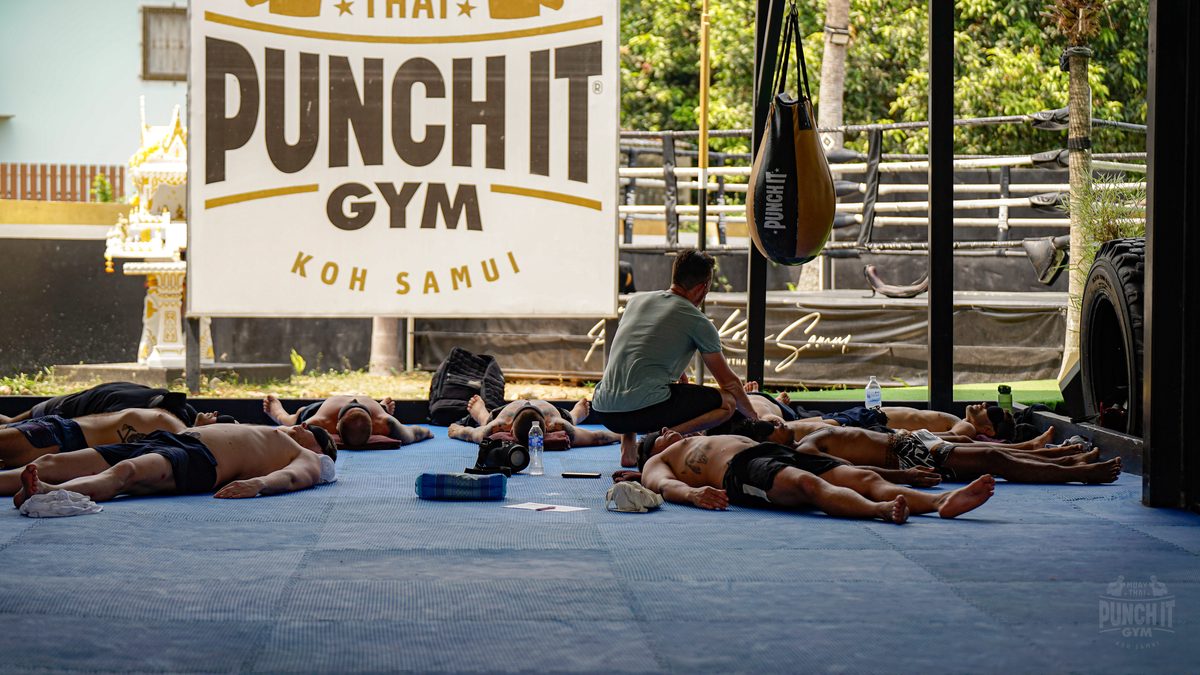
I have facilitated hundreds of partner and couple breathwork sessions over the past six years. Friends who traveled together. Married couples celebrating an anniversary. Partners who could not say what they needed from each other. Two strangers who met at the hostel that morning.
Every combination teaches me something. But the pattern that keeps showing up is this: when two people breathe together in a guided session, the guard drops. Not the social guard. The nervous system guard. The one that runs below language, below intention, below the version of yourself you have been showing your partner for the last however many years.
When that guard drops in two people at the same time, they feel each other in a way that conversation cannot produce. Not because breathwork is magic. Because the nervous system processes proximity differently when it is not defending.
Why We Stop Feeling Each Other
You know the feeling. You are in the same room. Talking. Making plans. Everything is fine on paper. But you are not quite reaching each other. The closeness that used to be automatic now takes effort you do not have. Nothing is wrong. But something is missing.
Most couples try to talk their way back. Another conversation about needs. Another attempt to explain what you are feeling. Sometimes it helps. Often it does not, because the distance is not a communication problem. It is a nervous system problem.
When two people have been together long enough, they develop patterns around each other. How you breathe in their presence. Where your body tenses when a certain topic comes up. The slight brace you carry that has nothing to do with today and everything to do with something years old. These patterns are invisible because they run below language. You cannot negotiate them away in a conversation. They live in the body.
Breathwork reaches the body directly.
What Actually Happens When You Breathe Together?
When two people breathe through the same guided pattern at the same time, their nervous systems co-regulate. Activation rises together, then both settle into parasympathetic calm simultaneously. This is the same mechanism that bonds a mother to an infant: the calmer system stabilises the more activated one. The result is a felt sense of safety and connection with a physiological basis, not just an emotional one.
When you do breathwork alone, the experience is entirely internal. You close your eyes. You follow the pattern. Whatever comes up is yours to process.
When you breathe next to someone you care about, the dynamic changes in ways that are measurable, not just felt.
Your nervous system constantly reads the people around you. Heart rate. Breathing rhythm. Muscle tension. Facial expression. These signals are processed below conscious awareness. When the person next to you is dysregulated, your system picks that up and braces. When they are calm, your system relaxes in response. This happens whether you want it to or not.
In a guided couples session, both nervous systems are moving through the same pattern at roughly the same time. Activation rises together. The breath intensifies. Then it softens. Recovery happens together. Both systems settle into parasympathetic activation simultaneously.
This is co regulation. It is the same mechanism that bonds a mother to an infant. The calmer nervous system helps stabilize the more activated one. In adults, doing this deliberately through shared breathwork creates a sense of safety and connection that has a physiological basis, not just an emotional one.
When both people settle into that state at the same time, something simple becomes possible that is usually blocked: you can actually receive each other. Your face softens. Your voice changes. The filter drops. You are not interpreting your partner through the stress of the week or the argument from last month. You are just with them.
Many couples have not been in that state together in months. Some have not been there in years. They have been in the same house, the same bed, but not in the same nervous system state. Breathwork puts you there at the same time. That is the difference.
What I Have Seen Between Partners
I am careful about sharing other people's experiences. But the patterns are universal enough to describe without betraying anyone's privacy.
The Couple Who Had Not Touched Each Other All Day
They arrived polite. Friendly. But physically distant in the way that long term couples sometimes are when the easy closeness of early connection has faded. Not angry. Just living in separate worlds while sharing a vacation. They lay down on their mats about a meter apart.
During the session, one of them started sobbing ten minutes in. Deep, full body sobs. The other lay still, eyes closed, breathing through their own process. When the active phase ended and the rest period began, I watched one of them reach out and take the other person's hand without opening their eyes.
After the session they sat together for a long time without talking. When they eventually spoke, one of them said something I have heard many variations of: "I forgot what it feels like to just be next to this person without needing to do anything."
What happened there is not mysterious. The breathwork took both people below the performance layer where they had been operating. In that unguarded state, the nervous system reached for connection because that is what it does when it feels safe. The hand reaching out was not a decision. It was what the body does when it finally feels safe enough to stop managing.
The Friends Who Went Deeper Than Expected
Two friends traveling together booked a session thinking it would be a fun wellness activity. Something to tick off the list alongside the temples and the cooking class. Neither had done breathwork before.
About fifteen minutes in, one started laughing and could not stop. The other started crying at the same time. After the session they looked at each other and both started laughing again. "We have known each other for twelve years," one of them said, "and I have never seen this side of you."
You can know someone for decades and never see them in the state that breathwork opens up. Not because they are hiding. Because that state is not accessible through normal interaction. The breath bypasses the thinking mind. What shows up is not the curated version of a person. It is the unedited one. Seeing that in someone you care about changes the relationship. Not because anything was said. Because something was seen that is usually invisible.
The Couple Who Came to Reconnect
They told me upfront they were in a rough patch. Not breaking up. But stuck. They had tried talking it out. They had tried space. Nothing was shifting.
I guided them through a longer session with a specific phase where they synchronized their breathing. Inhaling together. Exhaling together. Matching the rhythm so their nervous systems could begin to co regulate.
By the end of the session, their breathing had synchronized without my guidance. When they opened their eyes, one of them said something simple: "I can feel you again."
That is not a metaphor. When your nervous system is chronically dysregulated, connection with another person is physiologically unavailable. Not because you do not love them. Because your system is running in survival mode and survival mode does not prioritize bonding. The breath brings you back into the window where feeling another person is possible. The vagus nerve article explains the mechanism behind this shift in more detail.
What a Couples Session Looks Like
You arrive at the space. We sit and talk for a few minutes. I ask what brought you here, whether you have done breathwork before, and if there is anything I should know about. This is not therapy. I am not going to analyze your relationship. But context helps me guide the session better.
You both lie down on mats. Eyes closed. I guide you through a breathing pattern, usually continuous breath with no pause between inhale and exhale. Music plays. The active breathing phase lasts 30 to 45 minutes. Then a rest period where the breathing returns to normal and the body integrates what came up.
After the session, we sit together. I hold space for whatever you want to share. Some couples talk openly. Others barely say a word and just hold each other. Both are the right response.
The whole experience takes about 90 minutes. If you book an UNTAMED day, the breathwork is part of a longer arc that includes ice baths, time in nature, and lunch together. Having the full day means the shared experience deepens over hours instead of minutes. The ice bath adds another layer: facing a physical challenge together while coaching each other through the breath creates a bond that is felt in the body, not just agreed upon.
Do You Have to Be in a Romantic Relationship to Do Couples Breathwork?
No. I have guided breathwork for best friends, siblings, a parent and adult child, colleagues, and people who met traveling that week. The co-regulation works on any pair. When two people share a genuinely vulnerable experience, the connection between them deepens. The relationship does not need to be romantic for this to land. It needs to be real.
No. I have guided breathwork for all kinds of pairs. Best friends. Siblings. A parent and adult child. Colleagues. New friends who met traveling.
The dynamics change depending on the relationship, but the core principle is the same. When two people share a genuinely vulnerable experience, the connection between them deepens. The relationship does not need to be romantic for this to work. It needs to be real.
For groups beyond two, private workshops for 4 to 16 people create the same shared experience at a larger scale. The group dynamic adds its own dimension. When six or ten people are all in the same vulnerable space, the collective energy changes the room in ways that smaller sessions do not. The group breathwork article covers what this looks like in practice.
When Couples Get the Most From This
Based on hundreds of sessions, here are the moments when shared breathwork tends to land deepest.
When you feel disconnected but cannot explain why. You are not fighting. Nothing is technically wrong. But the ease is gone. The automatic closeness that used to be there takes effort now. Shared breathwork can reset the connection without needing to dissect what went wrong. Sometimes the body just needs to remember that the person next to you is safe.
When you are marking something. Anniversary trips. Milestone birthdays. A transition you came through together. A dinner celebrates an occasion. Breathwork gives you something you will both remember in your body, not just in photos. Couples tell me years later that the session was the moment the trip became real.
When you want to go deeper. Some couples communicate well. They talk openly. They listen. But they sense there is a layer underneath the words that conversations cannot quite access. The breath goes to that layer. It is where the things you cannot articulate live. Sometimes the most important shifts happen not in what you say to each other, but in what your nervous system releases in the other person's presence.
When you are traveling together. Travel is already a pattern interrupt. You are out of your routine, your environment, your roles. Adding breathwork into a trip amplifies that openness. This is why many couples book sessions while visiting Koh Samui. They are already in the mindset of doing something different. The breath meets that energy.
How Can Couples Try Breathwork Together at Home?
Sit facing each other with eyes closed. One person rests a hand on the other's chest. Breathe naturally for a few breaths, then begin to match rhythms: inhale when they inhale, exhale when they exhale. Hold the matched breathing for five minutes. Most couples feel calmer and more present within minutes, because matched breathing is one of the oldest co-regulation signals humans have.
You do not need a facilitator for every shared breathing experience. Here is a simple co regulation exercise.
Sit facing each other. Close your eyes. One person places their hand on the other person's chest. Breathe naturally for a few breaths without trying to change anything. Then begin to match rhythms. Inhale when they inhale. Exhale when they exhale. Do this for five minutes.
Most people report feeling calmer, more present, and more connected within a few minutes. The exercise is simple, but the nervous system response is real. Matched breathing is one of the oldest co-regulation signals humans have. You feel it immediately. Calmer. More present. More aware of the person in front of you.
This is not a substitute for a guided session. In a guided breathwork session, the depth is significantly greater because you can let go of control entirely. But this exercise gives you a felt sense of what co regulated breathing does. And for many couples, that taste is enough to make them curious about what a full session opens.
Booking
If you are on Koh Samui and want to experience this, UNTAMED is the full day format: breathwork, ice bath, jungle, honest conversation, and time for integration. For a focused couples session, reach out via WhatsApp from the contact page and I will design something that fits what you need.
One practical note from years of doing this: I deliberately do not put couples through anything I have not built up to with the breath first. A shared session is more exposing than a solo one, because you are unguarding in front of the one person whose opinion you have spent years managing. So we go slowly. We talk before we breathe, I watch both of you the entire time, and I never push either of you past where your nervous system is willing to go that day. If one of you cracks open and the other stays quiet, that is fine. The work is not symmetry. The work is that you are both in the room, below the performance layer, at the same time. That is rarer than it sounds, and it is the whole point.
If you want to feel the lighter end of this first, our weekly group sessions are an easy way to taste connected breathing before booking a private couples session.
No experience necessary. Just two people willing to breathe and see what happens.
Keep Reading
Frequently asked questions
What actually happens when two people do breathwork together?
When two people breathe through the same guided pattern at the same time, their nervous systems co-regulate. Activation rises together, then both settle into parasympathetic calm simultaneously. This is the same mechanism that bonds a mother to an infant: the calmer system stabilises the more activated one. The result is a felt sense of safety and connection with a physiological basis, not just an emotional one. When both people settle into that state together, something usually blocked becomes possible. You can actually receive each other.
Do you have to be in a romantic relationship to do couples breathwork?
No. I have guided breathwork for best friends, siblings, a parent and adult child, colleagues, and people who met traveling that week. The co-regulation works on any pair. The dynamics change depending on the relationship, but the core principle is the same. When two people share a genuinely vulnerable experience, the connection between them deepens. The relationship does not need to be romantic for this to land. It needs to be real.
Can couples try breathwork together at home?
Yes. Sit facing each other with eyes closed. One person rests a hand on the other person's chest. Breathe naturally for a few breaths, then begin to match rhythms: inhale when they inhale, exhale when they exhale. Hold the matched breathing for five minutes. Most couples feel calmer and more present within minutes, because matched breathing is one of the oldest co-regulation signals humans have. It is not a substitute for a guided session, but it gives you a real taste of what co-regulated breathing does.
Why does talking not fix feeling disconnected from a partner?
Because the distance is often not a communication problem, it is a nervous system problem. When two people have been together long enough, they develop patterns: how you breathe in their presence, where your body tenses, the slight brace that has nothing to do with today. These patterns run below language, so you cannot negotiate them away in a conversation. They live in the body. Breathwork reaches the body directly, which is why it can reset connection that another conversation cannot.
What does a couples breathwork session look like?
You arrive and we sit and talk for a few minutes about what brought you here and anything I should know. It is not therapy and I will not analyze your relationship. You both lie down on mats with eyes closed while I guide a continuous breathing pattern, usually with no pause between inhale and exhale, for 30 to 45 minutes. Then a rest period where the body integrates. Afterward we sit together. Some couples talk openly, others barely speak and just hold each other. Both are right.
Stay in the loop.
Occasional dispatches when sessions open or new writing drops. No spam.
About Diego Pauel
I have lived in Koh Samui for 15 years. I discovered breathwork through freediving, which I have trained in for over a decade. When COVID hit and the island emptied out, I started offering breathwork and ice baths for free to help the local community feel better in their bodies. I was the first to offer this work on the island. Five years later, I have facilitated countless sessions for people from all over the world. No guru energy. No mystical language. Just the work.
Full story →