Why Cold Exposure Is the Best Team Building Activity You Have Never Heard Of
The trust fall is not happening. Everyone knows it. The room goes quiet in the specific way that happens when professionals are asked to pretend that a staged exercise is producing real connection.
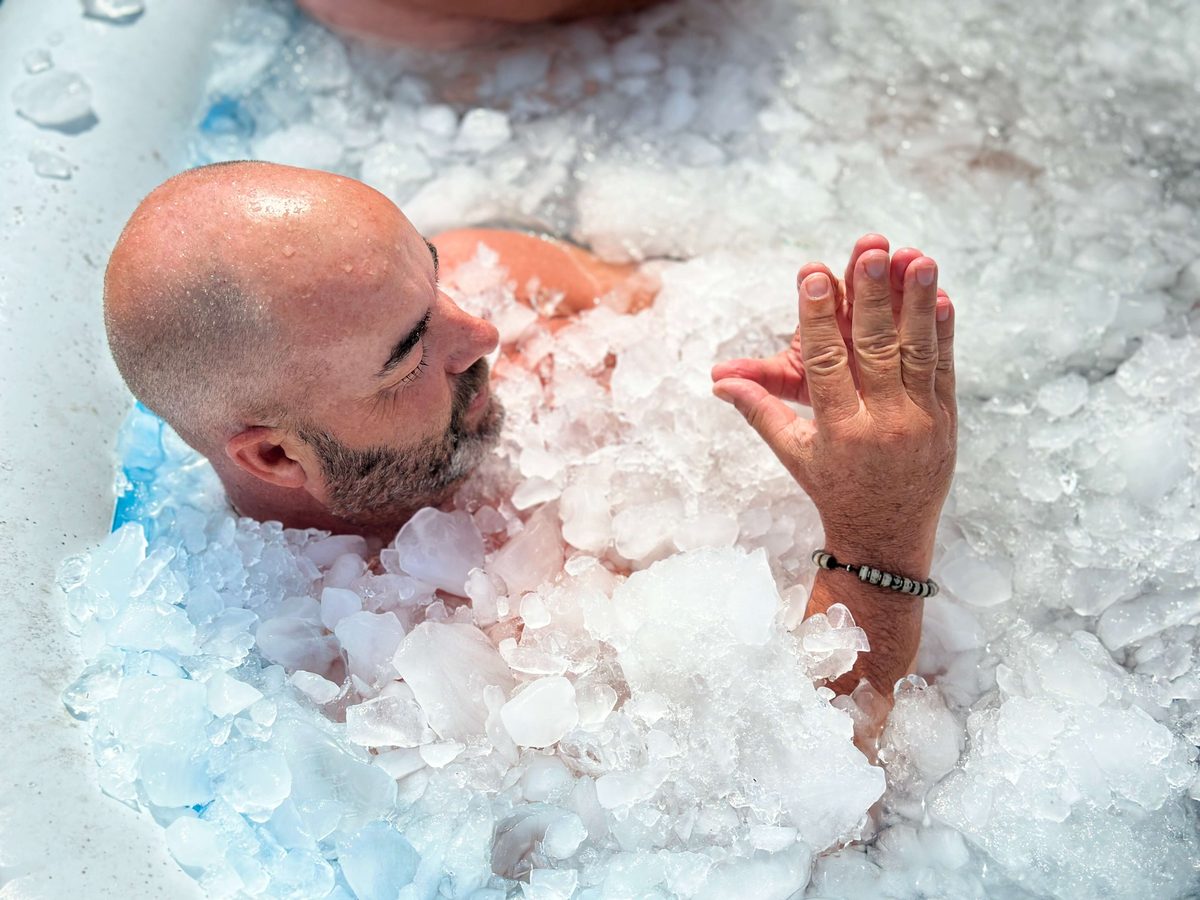
Cold exposure outperforms standard team building because it is real, not staged. An ice bath triggers a genuine threat response, and norepinephrine rises 200 to 300 percent. Staying in the water is nervous system regulation under pressure, made visible. Shared adversity creates information about who people really are, where trust falls only create memories.
Team building has a credibility problem. Not because people do not want to connect. They do. But the formats have drifted so far from anything that resembles a real experience that participants have learned to go through the motions. Two hours later, they are back at their desks, and nothing has changed.
Cold exposure works differently. Not because it is uncomfortable. Because it is real.
Why Most Team Building Fails
The standard formats share a common flaw. They are safe by design. The stakes are artificial. Nobody actually loses anything. Nobody actually depends on anyone else. And because of that, the room knows it is a performance.
Shared adversity creates bonds that shared success does not. This is not a philosophy. It is a well documented aspect of how human social bonding works. When people face something genuinely hard together and come out the other side, they carry that knowledge forward. Not as a memory of a fun day, but as actual information about who the person next to them is under pressure.
Most team building creates memories. Cold exposure creates information.
What Cold Exposure Actually Does
Getting into an ice bath is not complicated. It is also not easy.
When you step into very cold water, your body initiates a full threat response. Adrenaline spikes. Heart rate increases. Blood vessels constrict. The urge to escape is immediate and strong. None of this is metaphorical. Your nervous system is treating the situation as a genuine threat, and it wants you to react.
Research shows norepinephrine, the neurotransmitter tied to mood, focus, and composure, increases 200 to 300 percent during cold water immersion. That is the neurochemical basis for why people feel sharp and clear after an ice bath. It is also why the experience does not just feel meaningful. It changes your chemistry.
You have a choice at that moment. React, or stay.
The people who stay are not tougher than the people who want to leave. They have simply learned to keep the sensation from driving their behavior. The sensation is real. The threat is not. Staying in the water is an act of nervous system regulation under pressure. And that specific skill is exactly what separates high performers from people who are technically capable but fall apart when things get hard.
The ice bath makes this visible. In most workplaces, you cannot see your colleagues' nervous system responses. You can see the results, but not the mechanism. A stress response that should last 30 seconds runs for three hours, but you would have to know someone very well to recognize it. In an ice bath, everything is external. You can see who is regulated and who is fighting it. And you can see what happens when they help each other.
What Happens in a Group
The individual experience is one thing. What happens in a group is different.
When five or ten people are in ice water at the same time, something changes in the room. People start breathing together. Without being told to, they begin coaching each other. The person who was most resistant at the start tends to become the most supportive of others once they are in. The hierarchy flattens. Job title does not matter in 4 degree water.
What replaces it is something closer to how people actually relate when the performance layer drops. You see who stays calm under pressure. You see who takes care of others before taking care of themselves. You see who falls apart and who holds together. This information is not available in a conference room.
I have run this for teams from tech companies, hospitality groups, and multinationals. The debrief conversation afterward is consistently the most honest conversation those teams have had together in months. People say things in the 30 minutes after cold exposure that they would not say in six months of one on ones and quarterly reviews.
Cold water cuts through social conditioning faster than almost anything else I have found. The performance layer drops. What is underneath is usually a lot more connected than people expect.
Why Breathwork Comes First
We do not start with the ice bath.
Every workshop begins with breathwork. 60 to 90 minutes of guided breathing before anyone gets near the cold water.
This is not a warm up. The breathwork session does specific work that makes the ice bath both safer and more useful as a learning experience.
First, it regulates your nervous system before you put it under stress. You enter the cold water from a calmer baseline, which means the contrast is sharper and the learning is clearer. Second, it teaches you the breathing pattern you will need in the water: slow, nasal, with an extended exhale that activates your parasympathetic response and directly counteracts the adrenaline spike. Third, it opens the group.
A breathwork session done together is inherently vulnerable. You are breathing in a way most people never do outside of this context. You are in your body instead of your head. By the time the group gets to the ice bath, they have already been through something together. The social armor is partially down before the cold water starts.
The sequence is what produces the result. An ice bath without the breathwork primer is just discomfort. With it, it is a full nervous system experience with a layer of insight underneath.
The Debrief
The session ends with a debrief. This is where the experience becomes useful.
I use a simple structure. One speaker at a time. No interruptions. No unsolicited advice. Share from your own experience, not opinions about someone else's. These small rules create a space where honesty is possible. With a corporate team, the questions tend to be: what did you notice about how you handle pressure, what did you see in the people around you, where does that pattern show up at work. The questions are simple. The answers are usually not.
People make connections between the ice bath and specific dynamics in their team. The person who needed to be talked into the water recognizes themselves in how they approach change initiatives. The person who coached everyone else notices that they do not do that at their desk. These are not metaphors you have to stretch to reach. The pattern is the pattern.
I do not frame this as team building. I do not need to. The group has done something real together. The trust that comes from that is not manufactured by an exercise. It was produced by an actual shared experience. That is a different thing, and both the group and I know it.
What This Looks Like
The format is straightforward.
Two hours on your premises or at a venue on the island. Breathwork, ice bath, debrief. Groups of 4 to 16. All equipment including ice and ice baths is provided. No experience with breathwork or cold exposure is needed.
You can add a lunch component or extend to a half day if the group wants more integration time afterward. Some corporate teams add a morning session with an afternoon of unstructured time together after the experience.
The island context contributes to this in ways that are hard to replicate in a corporate setting. You are outdoors in 30 degree air. The thermal contrast with the cold water is extreme. Natural environments activate the parasympathetic nervous system, so the setting itself is doing work before the session starts. If your team is already in Koh Samui for an offsite or retreat, adding this as a half day activity is the highest impact use of two hours I know of.
For individual bookings, UNTAMED is the full day format. For groups, the private workshop brings everything to your hotel, villa, or venue. Two hours. Everything included. If you are coordinating a corporate offsite, the corporate workshops page has the format details specific to team events.
The Practical Question
The question that comes up most is whether people will actually do it.
Some will not. In every group of ten people, there will be one or two who get to the edge of the ice bath and decide not to get in. This is fine. You do not have to get in the water for the session to be useful. The breathwork alone changes the group. Watching your colleagues do something hard while you breathe them through it is its own experience.
Most people who think they will not do it get in. After an hour of breathwork, the resistance is different than it was before. Not because anyone persuaded them. Because their nervous system is in a different state, and from that state, the decision looks different.
Nobody has ever told me it was not worth it.
To book a workshop for your team, see corporate breathwork workshops for format and pricing, or reach out via WhatsApp from the contact page. Groups of 4 to 16. All equipment provided. No experience needed.
Keep Reading
Frequently asked questions
Why does most team building fail?
The standard formats are safe by design. The stakes are artificial, nobody actually loses anything, and nobody actually depends on anyone else, so the room knows it is a performance. Shared adversity creates bonds that shared success does not. When people face something genuinely hard together and come out the other side, they carry real information about who the person next to them is under pressure.
What makes cold exposure work as a team activity?
In most workplaces you cannot see your colleagues nervous system responses. In an ice bath everything is external. You see who stays calm, who takes care of others before themselves, who falls apart and who holds together, and what happens when they help each other. Within minutes people start breathing together and coaching each other without being told. Job title does not matter in 4 degree water.
Why does the breathwork come before the ice bath in a corporate workshop?
Every workshop begins with 60 to 90 minutes of guided breathing. It regulates the nervous system before you put it under stress, it teaches the slow nasal extended exhale pattern you need in the water, and it opens the group because breathing that way together is inherently vulnerable. By the time the group reaches the cold water, they have already been through something together. The sequence is what produces the result.
What does the debrief afterward involve?
The session ends with a structured debrief. One speaker at a time, no interruptions, no unsolicited advice, share from your own experience. With a corporate team the questions are simple, what did you notice about how you handle pressure, what did you see in the people around you, where does that show up at work. This is consistently the most honest conversation those teams have had in months.
What if some people on my team will not get in the water?
That is fine. In every group of ten, one or two get to the edge and decide not to get in, and you do not have to get in for the session to be useful. The breathwork alone changes the group, and breathing your colleagues through it is its own experience. Most people who think they will not do it get in, because after an hour of breathwork the resistance is different.
Stay in the loop.
Occasional dispatches when sessions open or new writing drops. No spam.
About Diego Pauel
I have lived in Koh Samui for 15 years. I discovered breathwork through freediving, which I have trained in for over a decade. When COVID hit and the island emptied out, I started offering breathwork and ice baths for free to help the local community feel better in their bodies. I was the first to offer this work on the island. Five years later, I have facilitated countless sessions for people from all over the world. No guru energy. No mystical language. Just the work.
Full story →Want to feel the cold for yourself?
Experience UNTAMEDContinue Reading
All Cold & Ice Bath →