The Complete Guide to Cold Exposure: Science, Safety, and How to Start
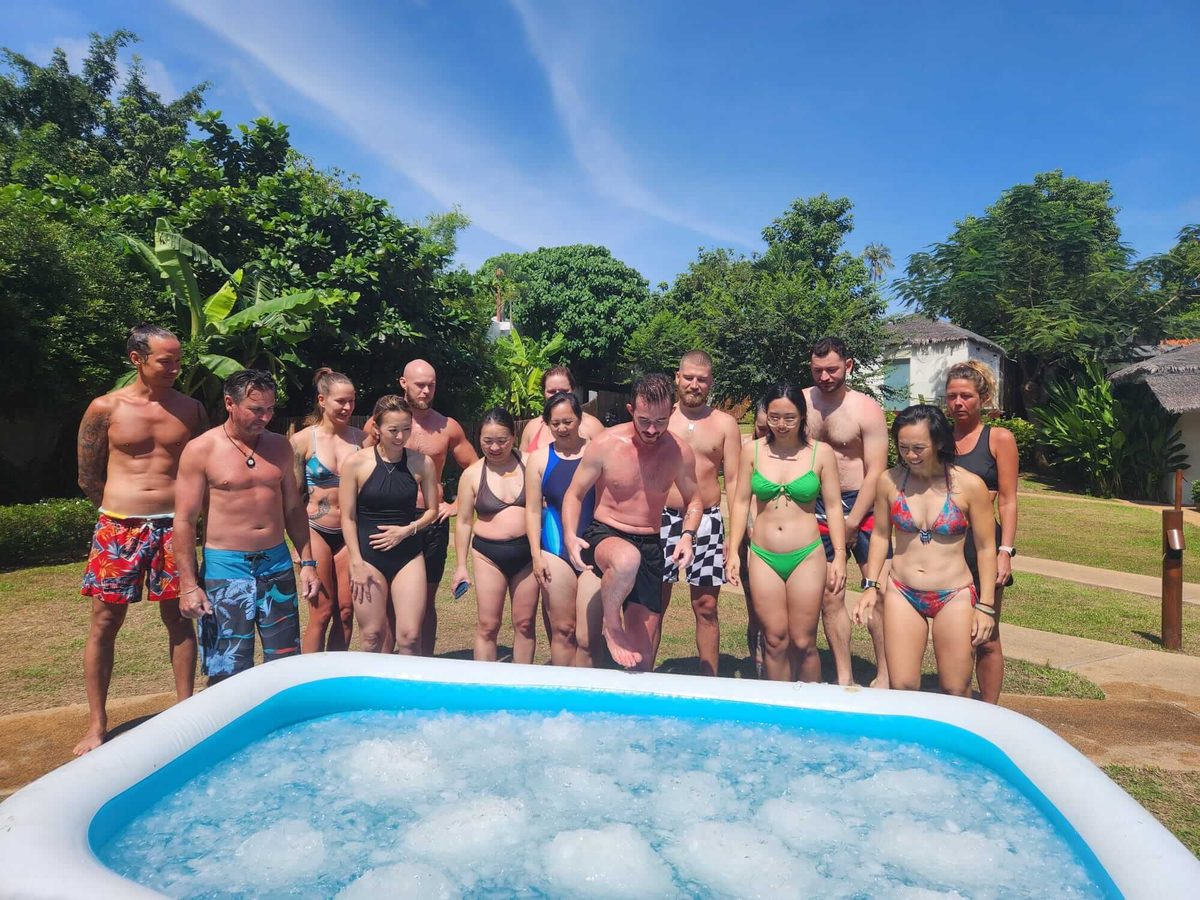
You are standing at the edge of a tub filled with ice water. The temperature reads 3 degrees Celsius. Your breathing is already faster than normal and you have not touched the water yet. Every part of your brain is telling you to walk away. And yet something made you show up. Something made you curious enough to be here.
Cold exposure is deliberately exposing your body to cold to trigger a physiological response, through cold showers, open water, or an ice bath. The cold shock response spikes heart rate and breathing for 30 to 90 seconds, then fades as you adapt. The skill is controlling your breathing through it. You can start without a dedicated tub.
That curiosity is worth following.
I have been guiding people through cold exposure on Koh Samui since 2020. Over 5,000 sessions. Tourists, athletes, therapists, skeptics, people terrified of cold water and people who claim they love it. I have watched what the cold does to people when it is done right, and I have seen what happens when it is done carelessly. I have read the research. I have tested it on my own body for years. And I have developed a clear picture of what cold exposure actually is, what it does, and what it does not do.
This is the guide I wish existed when I started. No hype. No bro science. Just the full picture from someone who lives and teaches this work every day.
What Is Cold Exposure
Cold exposure is the deliberate practice of exposing your body to cold temperatures to trigger a physiological response. That can mean standing under a cold shower, swimming in the ocean, sitting in an ice bath, or spending time outside in cold air with minimal clothing. The common thread is intention. You are choosing the discomfort on purpose because something useful happens on the other side of it.
What it feels like depends on the method and the temperature. A cold shower at 15 degrees feels bracing. An ice bath at 3 degrees feels like your skin is on fire for the first 30 seconds before the numbness sets in and your breathing finds a rhythm. Open water swimming feels different again because moving water pulls heat from your body faster than still water.
People come to cold exposure for different reasons. Some want the mental clarity. Some want to reduce inflammation or improve recovery from training. Some heard a podcast about dopamine and want to feel that rush. Some are dealing with anxiety or depression and are looking for something that works without a prescription. And some just want to prove to themselves that they can do hard things.
All of those are valid reasons. The cold does not care why you showed up. It responds the same way regardless of your motivation. And the response is where things get interesting.
The Science of Cold Exposure
What Happens When You Get Cold
When your body hits cold water, a sequence fires that you cannot control. This is the cold shock response and every human has it. Your heart rate spikes. Your blood pressure jumps. Your breathing becomes fast and shallow without you choosing it. Blood vessels near the surface of your skin constrict, redirecting blood toward your core to protect your vital organs. Your skin goes pale. Your extremities lose sensation. Your brain screams that something is wrong.
This phase lasts 30 to 90 seconds. It peaks and then it fades. Your body adapts faster than you expect. If you can control your breathing through that initial window, everything shifts. Heart rate comes down. Breathing slows. The panic gives way to a strange calm. What just happened is that your sympathetic nervous system fired at full power, and then your parasympathetic system caught up and began regulating. That transition, from fight or flight to calm under pressure, is the single most valuable thing cold exposure teaches your body.
Underneath the surface, your body releases a cocktail of chemicals. Norepinephrine floods your system, increasing alertness and focus. Dopamine rises, creating that feeling of being intensely alive. Cortisol spikes briefly and then drops. Endorphins release, which is why many people describe a sense of euphoria after cold immersion. These are not small changes. They are large, measurable shifts in your neurochemistry that can last for hours.
Brown Fat Activation
Until 2009, scientists believed brown fat only existed in infants and disappeared by adulthood. PET/CT imaging proved them wrong. Adults retain functional brown fat deposits above the collarbone, along the spine, and around the kidneys. And cold exposure is the most potent natural way to activate it.
Brown fat is different from the white fat you think of when you think of body fat. White fat stores energy. Brown fat burns energy to produce heat through a process called non shivering thermogenesis. Brown fat cells contain dense concentrations of mitochondria and a unique protein called UCP1, also known as thermogenin. When you get cold, your sympathetic nervous system releases norepinephrine, which activates UCP1 and tells your brown fat to start generating heat by burning glucose and fatty acids.
Here is what makes this significant. People with more active brown fat have better glucose metabolism, improved insulin sensitivity, and lower body fat percentages. Brown fat activity is inversely correlated with body mass index. Regular cold exposure does not just activate existing brown fat. It can recruit new brown fat and convert white fat cells into "beige" fat cells that function similarly. This process, called browning, takes time, which is why consistent practice over weeks and months matters more than occasional extreme exposure.
A study published in Nature Medicine found that 10 days of mild cold acclimation improved insulin sensitivity by 43 percent in patients with type 2 diabetes. That improvement is comparable to what some pharmaceutical interventions achieve. The mechanism involves increased glucose uptake by brown fat and skeletal muscle, improved GLUT4 transporter activity, and enhanced whole body glucose disposal. Cold exposure may also work through mechanisms distinct from exercise, which means combining the two could produce additive benefits.
The Immune Response
In 2014, a team at Radboud University in the Netherlands published what became the landmark study on cold exposure and immune function. They took 24 healthy men, trained 12 of them in the Wim Hof Method for 10 days (breathwork, cold immersion, and meditation), and then injected all 24 with bacterial endotoxin to trigger an immune response.
The results were striking. The trained group produced nearly six times more epinephrine than the control group. Their anti inflammatory cytokine IL 10 increased 194 percent more than controls. Pro inflammatory markers dropped significantly: TNF alpha reduced by 53 percent, IL 6 by 57 percent, IL 8 by 51 percent. The trained group experienced 56 percent fewer flu like symptoms.
This was the first controlled evidence that humans can voluntarily influence their innate immune system. The mechanism works through the breathing technique creating intermittent respiratory alkalosis and hypoxia, which triggers a massive epinephrine release that stimulates early IL 10 production. The elevated IL 10 then suppresses the entire pro inflammatory cascade before it fully develops.
What the study did not prove is equally important. The sample was small, only 12 per group. All male subjects. It tested acute inflammation, not chronic autoimmune conditions. The researchers could not isolate which component, whether breathing, cold, or meditation, was responsible for the epinephrine release. And the duration of the training effects was not measured. So when someone tells you ice baths cure autoimmune disease, the honest answer is: the evidence is promising but incomplete. What we can say with confidence is that the combination of breathwork and cold exposure produces measurable, significant changes in immune markers.
Dopamine and Norepinephrine
This is the reason most people feel incredible after cold exposure. A study published in the European Journal of Applied Physiology found that cold water immersion increased norepinephrine by 530 percent and dopamine by 250 percent. These are not subtle bumps. These are massive surges in neurotransmitters that regulate mood, focus, attention, and motivation.
Norepinephrine is responsible for the sharp clarity people describe after getting out of the cold. It increases alertness, enhances focus, and narrows attention to what matters. Dopamine is the molecule of motivation and drive. A 250 percent increase in baseline dopamine is higher than what most people get from caffeine, exercise, or nicotine, and unlike those stimuli, it comes without a crash. The elevation is sustained for hours, not minutes.
This is also where Dr. Anna Lembke's work in Dopamine Nation becomes relevant. She describes the pleasure pain balance: when you intentionally expose yourself to discomfort (the pain side), your brain overcompensates by producing pleasure chemicals that exceed the initial discomfort. Cold exposure is one of the cleanest examples of this mechanism in action. The 30 to 90 seconds of acute discomfort create hours of elevated mood afterward. The cold is an honest trade.
Inflammation and Recovery
Cold exposure reduces inflammatory markers. This is well established and it is why athletes have been using ice baths for decades. The vasoconstriction during cold immersion reduces blood flow to inflamed tissues. The norepinephrine release has a direct anti inflammatory effect. And the parasympathetic activation that follows cold shock calms the entire system down.
But there is a nuance here that matters. If you use cold exposure immediately after strength training, you may blunt the inflammatory response that drives muscle adaptation. The inflammation after exercise is not damage. It is the signal that tells your body to rebuild stronger. Shutting it down too quickly with cold immersion can reduce the training stimulus. Research suggests waiting at least 4 to 6 hours after intense training before doing cold exposure if hypertrophy or strength gains are your primary goal.
For general recovery between training sessions, for managing chronic low grade inflammation, or for the mood and nervous system benefits, timing is less critical. Most people find that doing cold exposure in the morning, separate from their training, gives them the benefits without interfering with adaptation.
Benefits of Cold Exposure
Mental Clarity and Mood
This is the benefit people notice first and talk about most. After cold exposure, your mind gets quiet in a way that feels different from meditation or exercise. The norepinephrine and dopamine surge creates a state of focused calm that can last for hours. I see it every session. People get out of the ice bath and their eyes are different. Wider. Clearer. Present. Many describe it as the fog lifting. People who deal with low mood or mild depression often report that cold exposure gives them a window of feeling genuinely good that they had forgotten was possible. The research supports what I see: cold water immersion produces meaningful, measurable changes in the neurochemistry that governs mood.
Stress Resilience
Cold exposure is a controlled stressor. When you get into ice water and manage your breathing instead of panicking, you are training your nervous system to handle stress without falling apart. This is not metaphorical. The physiological pathway is identical: sympathetic activation, cortisol spike, breathing disruption. The only difference between cold water stress and work stress or relationship stress is that in the ice bath, you can practice the response you want. Slow exhale. Stay present. Let it pass. Over time, this training transfers. People who do regular cold exposure consistently report that they handle stressful situations in their daily lives with more composure. The cold becomes a rehearsal space for everything else.
Sleep Quality
Cold exposure, particularly when done in the morning or afternoon, often improves sleep quality. The mechanism involves thermoregulation. Your body temperature needs to drop slightly to initiate sleep. Regular cold exposure trains your thermoregulatory system to be more responsive, making this natural temperature drop happen more efficiently at night. The parasympathetic activation from cold exposure also helps shift the nervous system out of the hypervigilant state that keeps many people awake. I hear it from participants regularly: the night after their first ice bath was the best sleep they have had in months. The research on this is still developing, but the anecdotal evidence is overwhelming and consistent.
Immune Function
The Kox et al. 2014 study demonstrated that breathwork combined with cold exposure can modulate the immune response. Regular cold exposure on its own also appears to support immune function through chronic elevation of norepinephrine, which plays a role in immune cell activity. Studies on winter swimmers show lower rates of upper respiratory infections compared to non swimmers. The evidence is not yet strong enough to make definitive medical claims, but it is strong enough to say that regular cold exposure appears to support a more responsive and regulated immune system. I rarely get sick. I cannot prove the cold is why, but my experience aligns with what the research suggests.
Metabolic Health
Brown fat activation during cold exposure increases resting metabolic rate. Active brown fat takes glucose from the bloodstream and burns fatty acids to produce heat. The 43 percent improvement in insulin sensitivity found in the cold acclimation study is remarkable. Epidemiological data shows that type 2 diabetes prevalence is positively associated with ambient temperature, meaning populations in warmer climates have higher rates of metabolic disease. Our modern temperature controlled environments may be contributing to metabolic dysfunction by keeping brown fat dormant. Regular cold exposure is not a weight loss protocol, but it is a metabolic health practice that the research increasingly supports.
Pain and Inflammation
Cold exposure has been used for pain management for centuries and the mechanism is straightforward. Cold numbs nerve endings, reduces blood flow to inflamed areas, and decreases the metabolic rate of tissues, which slows the inflammatory cascade. Brain imaging studies on Wim Hof showed heightened activation of the periaqueductal gray matter, a brainstem region that releases the body's own opioids and cannabinoids. The breathing techniques before cold exposure trigger this release, creating a stress induced analgesic response. This explains why people often feel pain free during and after ice baths. It is not willpower. It is measurable neurochemistry.
Cold Exposure Methods
Ice Bath (Full Immersion)
This is the gold standard. Full body immersion in water between 0 and 5 degrees Celsius. Chest deep. The full surface area of your body in contact with cold water means maximum cold shock response, maximum vasoconstriction, maximum hormonal release. Nothing else produces the same intensity of physiological response in such a short time.
This is what we do in UNTAMED. Chest deep. 2 to 4 degrees. Coached through every second. You are not alone in there. I am beside the tub talking you through your breathing, watching your body, keeping you present. The coached element changes the experience completely because you can let go of managing the process and just be in it.
For a home setup, you need a vessel large enough to submerge your torso, cold water, and ice. A chest freezer converted to a cold plunge is the most common setup. Dedicated cold plunge units with chillers are convenient but expensive. A regular bathtub with bags of ice works perfectly for getting started.
Cold Shower
The most accessible entry point. No equipment needed. No ice required. You already have a shower. Just turn the handle to cold.
Cold showers typically reach 10 to 15 degrees depending on your location and season. That is warmer than an ice bath by a significant margin, which means the cold shock response is less intense. But for building the habit and training your breathing, cold showers are excellent. You learn to breathe through discomfort. You practice choosing the cold instead of running from it. And you get a meaningful norepinephrine and dopamine response, even if it is smaller than full immersion.
Start by ending your regular shower with cold water. Thirty seconds is enough at first. Build from there. Within a few weeks, most people can handle 2 to 3 minutes without difficulty.
Cold Water Swimming
Natural bodies of water offer a different experience than a controlled ice bath. The ocean, a lake, a river. Moving water pulls heat from your body faster than still water. The environment adds a sensory dimension that a bathtub cannot replicate. Wind on wet skin. The sound of water. The openness of the space.
Here on Koh Samui, the ocean temperature sits around 27 to 29 degrees for most of the year. That is not cold enough for a cold exposure practice. But in temperate climates, ocean swimming in autumn and winter or mountain lake swimming provides genuine cold exposure. The key safety rule for open water is simple: never swim alone. Cold water impairs your physical ability faster than you expect. Cramping, confusion, and loss of motor control can happen without warning in water below 10 degrees.
Cryotherapy
Cryotherapy chambers expose you to extremely cold air, typically around minus 110 to minus 160 degrees Celsius, for 2 to 3 minutes. The temperatures sound dramatic, but air is a poor conductor of heat compared to water. The actual heat extraction from your body during a 3 minute cryo session is substantially less than even a 1 minute ice bath.
Cryotherapy has its place. It is convenient, fast, and the extreme air temperature does trigger a sympathetic nervous system response. But the evidence for lasting physiological benefits comparable to cold water immersion is limited. Most of the research supporting cold exposure benefits used water immersion, not air cooling. If cryotherapy is all you have access to, it is better than nothing. But if you have the option, water immersion gives you more benefit per minute.
How Cold Exposure and Breathwork Work Together
This is where our work at Breathflow Connection sits. The combination of breathwork and cold exposure is not something we invented. Wim Hof showed the world that this pairing works. Yogic traditions have combined pranayama with cold for centuries. But teaching people how to actually do it, how to use the breath as the tool that transforms cold exposure from an endurance test into something deeper, that is what we focus on every session.
Here is what I have learned from thousands of coached ice baths. Without breath training, most people enter the cold and fight it. They tense every muscle. They hold their breath or gasp. They white knuckle through it and get out as fast as possible. They might feel a rush afterward, but they miss most of the experience because they were busy surviving.
With breath training, everything changes. When you spend 30 to 45 minutes doing intentional breathwork before the ice bath, you have already practiced the skill you need in the cold. You have learned to stay with intensity without resisting it. You have trained your exhale to calm your body even when things feel overwhelming. By the time you touch the water, your nervous system has a playbook. The cold shock still happens. But instead of drowning in it, you breathe through it. And on the other side is a quality of presence and calm that has to be felt to be understood.
The 2018 brain imaging study on Wim Hof at Wayne State University revealed part of why this works. The breathing techniques activate the periaqueductal gray matter in the brainstem, which releases endogenous opioids and cannabinoids. The breath literally changes your brain chemistry before you enter the cold, providing a natural analgesic effect that reduces the perception of pain and discomfort. This is not about being tough. It is about being prepared on a neurochemical level.
If you want to understand cold exposure benefits in more depth, I wrote a separate article breaking down the research. And if you want to experience the combination firsthand, that is what UNTAMED is built around.
A Practical Cold Exposure Protocol
Week 1: Cold Showers
End every shower with 30 seconds of cold water. Do not start cold. Take your normal warm shower first. When you are done washing, turn the water to cold and stay under it for 30 seconds. Focus entirely on your breathing. Slow inhale through the nose. Long exhale through the nose or mouth. The temptation will be to hold your breath or breathe fast. Resist it. The exhale is your anchor. Count to 30 if it helps. When the time is up, step out and notice how you feel. Most people feel a buzz of energy within seconds.
Week 2: Extend the Duration
Increase to 1 to 2 minutes of cold at the end of your shower. Same approach: slow, deliberate breathing. By now the initial shock will feel less dramatic because your body is adapting. You might notice that the burning sensation on your skin fades faster. You might notice that your breathing settles into a rhythm more quickly. This is your nervous system learning. Breathe through the shock. Stay with the discomfort without fighting it. Notice what your mind does when the cold hits. Notice how fast it tries to negotiate an exit. Breathe through that too.
Week 3: Full Cold Showers
Start cold. Skip the warm water entirely. Step into a cold shower and stay for 3 to 5 minutes. This is a different challenge than ending warm and going cold because there is no gradual transition. The shock hits immediately. Your body has to regulate from the first second. This is excellent training for ice baths because it removes the comfort of warming up first.
By week three, you will notice something shifting in your relationship with discomfort. Not just in the shower. Throughout your day. The pattern of "I do not want to do this, but I am going to do it anyway, and I am going to breathe through it" starts showing up in other areas of your life. This is the transfer effect. The cold is a training ground, not the end goal.
Week 4 and Beyond: Ice Bath
If you have access to an ice bath, this is when you try it. Fill a tub with cold water and add ice until the temperature reaches 5 to 10 degrees. Start with 1 minute of immersion. Focus on breathing: slow inhale, long exhale. Let the cold shock come and let it pass. If 1 minute feels manageable, build to 2 minutes the following session. Over weeks, work toward 3 minutes at 2 to 4 degrees.
Do not rush this progression. Cold water immersion creates real cardiovascular stress. Your body needs time to adapt. More is not always better. Consistency at manageable durations will give you better results than occasional extreme sessions.
Or come to Koh Samui and let me coach you through it. There is a reason people fly here for this experience. Having someone who has done this thousands of times guiding your breathing, watching your body, and holding the space lets you go deeper than you can on your own. That is what UNTAMED was built for.
Safety and Contraindications
The cold is a tool. Like any tool, it can help you or hurt you. Respect it.
Cold exposure creates real stress on the cardiovascular system. The cold shock response raises blood pressure and heart rate rapidly. For most healthy adults, this is safe and temporary. But for certain populations, it carries genuine risk.
Cardiovascular conditions. If you have a history of heart disease, uncontrolled high blood pressure, arrhythmia, or have had a cardiac event, consult your doctor before attempting cold exposure. The acute blood pressure spike during cold shock can be dangerous for compromised cardiovascular systems.
Raynaud's disease. Cold exposure triggers severe vasoconstriction in people with Raynaud's, which can cause painful, prolonged loss of blood flow to extremities. If you have Raynaud's, cold immersion is not recommended without medical supervision.
Pregnancy. The cardiovascular and hormonal stress of cold exposure during pregnancy has not been studied adequately. Most practitioners and physicians recommend avoiding cold immersion during pregnancy.
Hypothermia risk. In open water, hypothermia is a real danger. Your core temperature can continue dropping even after you leave the water, a phenomenon called afterdrop. Never do open water cold exposure alone. Have someone with you who knows the signs of hypothermia: confusion, slurred speech, loss of coordination, uncontrollable shivering that suddenly stops.
Never combine hyperventilation breathing with water. This is critical. Breathing techniques that lower your CO2 levels can suppress the urge to breathe. If you do this in water and lose consciousness, you drown. All breathwork happens on dry land before you enter the water. In the water, your only job is calm, steady breathing.
Start gradual. Cold showers before ice baths. Short durations before long ones. Supervised before solo. This is not a competition. The person who builds a sustainable daily practice over months will get more benefit than the person who forces 10 minutes in an ice bath once and never does it again.
What Your First Ice Bath Actually Feels Like
I have watched this moment unfold thousands of times, and it follows a remarkably consistent pattern. Here is what happens from the facilitator's side of the tub.
The first 10 seconds. You step in and your body explodes. A sharp gasp. Breathing goes fast and shallow. Your eyes go wide. Hands grip the sides of the tub. Every muscle tightens. Your brain is sending one clear signal: get out. This is the cold shock response at full volume. I am talking to you the entire time. Slow your exhale. Breathe out long. You are safe. Your body knows what to do. Let it happen.
30 seconds in. The initial wave starts to recede. Your breathing is still fast but it is finding a rhythm. The burning on your skin softens into a deep, even cold. Your grip on the tub loosens slightly. This is the moment where the shift begins. Your parasympathetic system is catching up to the sympathetic surge. Most people cannot believe only 30 seconds have passed because the first phase felt like minutes.
1 minute in. The mind gets quiet. Not empty. Quiet. The chatter, the planning, the worrying, all of it goes silent because the cold commands every bit of your attention. You are more present than you have been in weeks, maybe months. Your breathing is steady. Some people smile here. Not because it feels good in the traditional sense, but because something has shifted inside them and they can feel it.
Coming out. You stand up and step out of the tub. Blood rushes back to your skin as vessels dilate. A wave of tingling spreads across your entire body. Some people shake. Some laugh. Some feel an emotional release they were not expecting. Do not jump into a hot shower. Stand in the air. Breathe. Let the rewarming happen naturally. This phase, the 5 to 10 minutes after the ice bath, is where many people say the real experience happens. A rush of warmth from inside. A clarity that is hard to describe. A feeling of being fully, completely alive.
For a deeper walkthrough of the full first timer experience, read what to expect from your first ice bath.
Cold Exposure Myths
"Cold showers are just as good as ice baths." Not quite. Cold showers are excellent for building the habit, training your breathing, and getting a meaningful neurochemical response. But the intensity of full body immersion in water below 5 degrees produces a significantly larger hormonal and nervous system response than a shower at 12 to 15 degrees. The total body surface area in contact with cold water matters. The temperature matters. Both are valuable, but they are not equivalent. Think of cold showers as the daily practice and ice baths as the deep session. For a detailed comparison, read cold plunge vs ice bath.
"You need to stay in for 10 minutes." No. One to three minutes in water between 0 and 5 degrees is enough to get the full hormonal response. The benefit curve flattens quickly after the first few minutes. Staying longer adds diminishing returns and increases the risk of hypothermia. The people you see online sitting in ice baths for 10 or 15 minutes have built up to that over months or years. For most people, 2 to 3 minutes is the sweet spot. Quality of presence during those minutes matters more than duration.
"Cold exposure burns fat directly." This is a misunderstanding of the brown fat research. Cold exposure activates brown fat, which burns glucose and fatty acids to produce heat. That is not the same thing as burning body fat in a meaningful way. The caloric expenditure from brown fat activation during a typical cold exposure session is modest. The real metabolic benefit is improved insulin sensitivity, better glucose metabolism, and the recruitment of more brown fat tissue over time. These are significant health benefits, but if someone is doing ice baths expecting to lose weight without changing anything else, they will be disappointed.
"It is all about willpower." This might be the most harmful myth. The people who succeed in cold exposure are not the toughest or the most disciplined. They are the ones who breathe the best. When you fight the cold with tension and willpower, you make the experience harder and shorter. When you breathe through the cold with slow, deliberate exhales, your nervous system adapts and the experience transforms. I have watched people who could barely hold it together for 30 seconds on their first attempt sit calmly for 3 minutes once they learned to breathe. The breath is the tool. Not your will.
Frequently Asked Questions
How cold should an ice bath be?
For meaningful physiological benefit, aim for water between 0 and 5 degrees Celsius (32 to 41 degrees Fahrenheit). Most research uses temperatures in this range. Anything below 10 degrees will produce a cold shock response. Anything below 5 degrees is intense. If you are starting at home, get a floating thermometer and add ice until you reach your target temperature. The water should feel genuinely uncomfortable, not just cool.
How long should I stay in an ice bath?
One to three minutes for most people. Beginners should start with 1 minute and build gradually. The major hormonal and nervous system benefits happen within the first 2 to 3 minutes. Going longer is fine if you have built up to it, but it is not necessary for the benefits. The golden rule: get out while you still feel in control. If your thinking becomes confused or your speech slurs, you have stayed too long.
Is cold exposure safe?
For most healthy adults, yes. The risks are real but manageable with gradual progression and awareness. The populations who need medical clearance before attempting cold exposure include people with cardiovascular disease, uncontrolled hypertension, Raynaud's disease, and pregnant women. If you are new to cold exposure, start with cold showers, not ice baths. And for your first ice bath, do it with someone experienced. The guided element is not a luxury. It is practical risk management.
Can cold exposure help with anxiety?
Many people report reduced anxiety after regular cold exposure. The mechanism makes sense: cold exposure trains your nervous system to activate the stress response and then regulate it back down. This is exactly what people with anxiety struggle to do. The norepinephrine and dopamine release also improves mood and focus in the hours after exposure. I have seen people with generalized anxiety describe the post ice bath state as the calmest they have felt in years. The cold exposure and mental resilience article covers this in more detail. Cold exposure is not a replacement for therapy or medication, but it is a powerful complementary practice.
What is the difference between a cold shower and an ice bath?
Temperature and surface area. A cold shower typically runs 10 to 15 degrees Celsius and hits part of your body at a time. An ice bath is 0 to 5 degrees and submerges your entire torso simultaneously. The ice bath produces a larger cold shock response, more intense vasoconstriction, and a bigger hormonal release. Cold showers are better for daily practice and habit building. Ice baths are better for deep physiological training. Both have value. Read the full comparison here.
Should I breathe before or during cold exposure?
Both, but differently. Before cold exposure, use intentional breathwork (connected breathing, controlled hyperventilation with breath retention) to prepare your nervous system, release adrenaline, and activate the periaqueductal gray matter for natural pain modulation. During cold exposure, use calm, steady breathing: slow inhale through the nose, long exhale through the nose or mouth. Never do hyperventilation breathing while in the water. The pre immersion breathwork primes your system. The in water breathing keeps you regulated and present.
How often should I do cold exposure?
Daily cold showers are sustainable and beneficial. Ice baths 2 to 4 times per week is a reasonable frequency for most people. Some practitioners do daily ice baths and thrive. Others find 2 to 3 times per week gives them the benefits without it becoming a source of additional stress. Listen to your body. If cold exposure feels like a chore you dread rather than a challenge you choose, reduce the frequency or temperature until it feels sustainable. Consistency over months is worth more than intensity over days.
Where can I try an ice bath in Thailand?
On Koh Samui, we run UNTAMED, a full day breathwork and cold exposure experience that includes a coached ice bath at 2 to 4 degrees, breathwork training, and a jungle waterfall hike. It is designed for first timers and experienced practitioners alike. Hotel pickup and lunch included. 155 five star reviews from people who showed up nervous and left transformed. If you are visiting Thailand and want to experience cold exposure with proper guidance, this is the real thing. Not a spa treatment. Not a wellness trend. A full nervous system reset in the jungle. Read more about ice baths on Koh Samui.
Keep Reading
- Cold Exposure Benefits: What the Research Says
- What to Expect from Your First Ice Bath
- Ice Bath Recovery: When and How to Use Cold After Training
- Cold Plunge vs Ice Bath: What Is the Difference
- Cold Exposure and Mental Resilience
- The Complete Guide to Breathwork
- Cold Protocol Tool
- Find Your Starting Point
Ready to try cold exposure with guidance? UNTAMED includes a coached ice bath as part of a full day breathwork experience in Koh Samui. Hotel pickup. Breathwork. Ice bath. Jungle waterfall. Lunch. 3,500 THB. Book your spot.
Stay in the loop.
Occasional dispatches when sessions open or new writing drops. No spam.
About Diego Pauel
I have lived in Koh Samui for 15 years. I discovered breathwork through freediving, which I have trained in for over a decade. When COVID hit and the island emptied out, I started offering breathwork and ice baths for free to help the local community feel better in their bodies. I was the first to offer this work on the island. Five years later, I have facilitated countless sessions for people from all over the world. No guru energy. No mystical language. Just the work.
Full story →Want to feel the cold for yourself?
Experience UNTAMEDContinue Reading
All Cold & Ice Bath →