What to Expect from Your First Ice Bath (From Someone Who Has Guided Thousands)
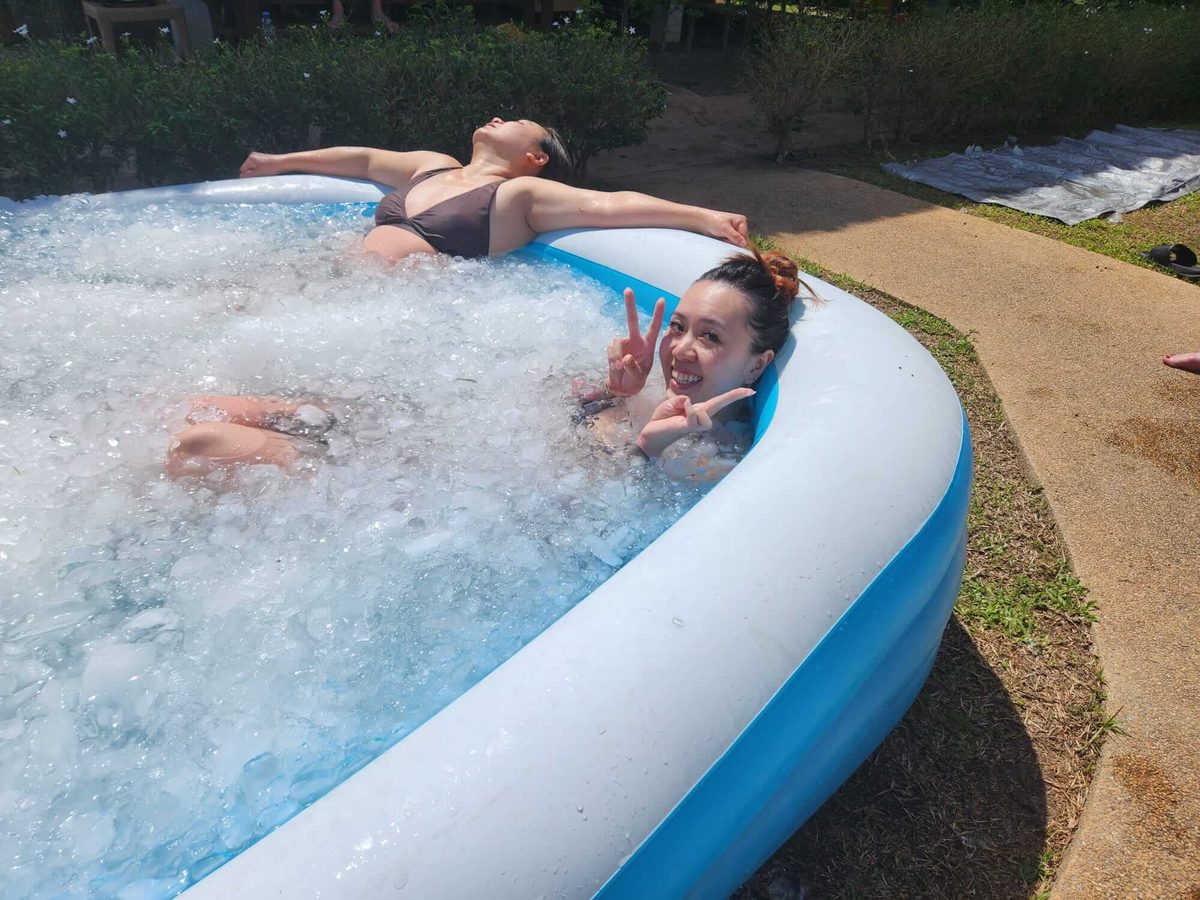
You are standing next to the ice bath. The water is somewhere between 2 and 5 degrees Celsius. You can see the ice floating on the surface. Your body is already telling you this is a bad idea. Your hands are clenching. Your breathing is shallow. Every instinct you have says walk away.
Your first ice bath starts with the cold shock response, a sharp gasp, fast shallow breathing, and a brain screaming get out. This peaks in about thirty seconds and always passes. Slow, deliberate exhales carry you through it. After the shock fades, most people find a surprising calm and the most present feeling they have had in years.
This is the moment where most people almost quit. Not because the cold is dangerous. Because the unknown is uncomfortable. You do not know what it will feel like. You do not know if you can handle it. You do not know what your body is about to do.
I have guided over a thousand people through their first ice bath on Koh Samui. Tourists, athletes, yoga teachers, CEOs, people who told me beforehand they would never get in. Almost every single one of them got in. And almost every single one of them said afterward that it was nothing like what they expected.
Here is what actually happens. No hype. No tough guy talk. Just the honest experience from the other side.
The First 30 Seconds Are the Hardest Part
When you step into the water, your body triggers what is called the cold shock response. This is an involuntary reaction that every human being has. It is not weakness. It is biology.
Here is what you will feel. A sharp gasp. Your breathing will become fast and shallow without you choosing it. Your heart rate spikes. Your skin feels like it is burning, which is confusing because the water is freezing. Your muscles tighten. Your brain floods with one clear message: get out now.
This lasts about 30 seconds. Sometimes less. Sometimes up to a minute. But it always passes. The cold shock response is a wave, not a wall. It peaks and then it recedes. Your body adapts faster than your mind expects it to.
The single most important thing you can do in those first 30 seconds is breathe. Not a special technique. Just slow, deliberate exhales. When your body is gasping and pulling air in fast, the deliberate act of slowing down the exhale tells your nervous system that you are choosing to be here. That signal changes everything. It shifts you from panic to presence.
This is why breathwork and ice baths belong together. The breath is not just preparation for the cold. It is the tool you use inside the cold to move through it instead of fighting against it.
What Happens After the Shock Fades
Once you are past the initial response, something shifts. Your breathing finds a rhythm. The burning sensation on your skin softens into a deep, even cold. Your body stops fighting and starts adapting.
Most people describe this phase as surprisingly calm. Some say it feels meditative. Others say it is the most present they have felt in years. There is a reason for that. When you are in ice water, your mind cannot wander. You cannot think about your emails or your to do list or the argument you had last week. The cold commands 100 percent of your attention. For many people, this forced presence is the most valuable part of the experience.
Physically, your body is doing remarkable things beneath the surface. Blood vessels near your skin constrict, pushing blood toward your core to protect your organs. Your vagus nerve activates, triggering a parasympathetic response that lowers inflammation and calms your nervous system. Norepinephrine floods your brain, which is why many people feel a surge of clarity and alertness that lasts for hours afterward. For a deeper look at what is happening inside your body, I wrote a full breakdown of the science of cold exposure.
How Long Should You Stay In
For your first time, 1 to 2 minutes is plenty. I know there are videos online of people sitting in ice baths for 10 or 15 minutes. Ignore them. Those people have built up to that over months or years. Starting with 1 to 2 minutes gives you the full physiological benefit without pushing past what your body is ready for.
The benefit curve of cold exposure is not linear. You get the majority of the hormonal and nervous system response in the first 1 to 3 minutes. Going longer adds diminishing returns for beginners and increases the risk of staying too long without realizing it because your skin goes numb.
When I guide someone through their first ice bath, I watch their breathing and their body. If the breathing is steady and the person is present, we stay. If the breathing becomes erratic or the person checks out mentally, we get out. Duration is not the measure of a good ice bath. Quality of presence is.
Getting Out Is Part of the Experience
Here is something nobody tells you: getting out of the ice bath feels almost as intense as getting in. Your blood vessels dilate. Warm blood rushes back to your skin. You might feel a wave of tingling across your entire body. Some people shake. Some people laugh. Some people feel an emotional release they were not expecting.
Do not jump straight into a hot shower. Your body needs time to rewarm naturally. Stand in the air. Breathe. Let the sensation move through you. This phase, the 5 to 10 minutes after the ice bath, is where many people say the real magic happens. A rush of warmth from inside. A feeling of being completely alive. A lightness that is hard to describe until you feel it.
This afterglow is the norepinephrine and dopamine response at full effect. It is real, it is measurable, and it is one of the reasons people who try one ice bath often come back for more.
Common Fears (And What Is Actually True)
I am afraid I will not be able to handle it. You will. I have never had someone who was physically able to get in and then unable to complete even 60 seconds. Your body is built for this. Humans have been using cold water for thousands of years. The fear is almost always bigger than the actual experience.
What if I hyperventilate. The cold shock response includes rapid breathing. This is normal and it passes. When you have a guide, they will talk you through the breathing in real time so you never feel like you are managing it alone. This is one of the biggest differences between doing an ice bath alone versus doing it guided.
Will it be painful. The initial contact is intense. I would not call it pain. It is more like a loud sensation. Imagine the volume being turned up on everything you feel for 30 seconds, then gradually turning back down. People who have done it rarely use the word painful when describing it afterward.
I have a health condition. If you have heart problems, uncontrolled high blood pressure, Raynaud disease, or are pregnant, talk to your doctor first. Cold exposure creates real cardiovascular stress in the first minute. For most healthy adults it is completely safe, but certain conditions need medical clearance. When you book with us, we ask about health conditions beforehand so nothing is a surprise.
Should I do this alone. For your first time, no. Having a guide makes the experience completely different. Not because of safety, although that matters too. Because when someone who knows the process is talking you through the breathing, keeping you present, and holding the space, you can let go in a way that is nearly impossible when you are also trying to manage the logistics and the timer and the doubt in your head. In our UNTAMED experience, the ice bath comes after breathwork, movement, and grounding, which means your nervous system is already prepared before you ever touch the water.
Why Breathwork Before Ice Changes Everything
Most people think of ice baths as a physical challenge. Get in, endure the cold, get out, feel accomplished. And yes, there is a mental toughness element. But when you pair the ice bath with intentional breathwork beforehand, the experience transforms from endurance into something much deeper.
In a breathwork session, you spend 30 to 45 minutes activating your nervous system in a controlled way. You learn to stay with intensity without resisting it. You practice using your exhale to calm your body even when things feel overwhelming. By the time you get to the ice bath, you have already rehearsed the exact skill you need inside the cold: the ability to breathe through discomfort instead of running from it.
This is not just about making the ice bath easier, though it does that. It is about discovering that the way you respond to cold water is the same way you respond to everything else in your life that feels uncomfortable. The people who have the biggest shifts are not always the ones who stay in the longest. They are the ones who stay present with what comes up.
What You Will Feel Afterward
The hours after your first ice bath are worth paying attention to. Here is what most people report:
Physical energy without stimulation. Not the jittery buzz of caffeine. A clean, clear alertness. Many people say they feel more awake than they have in months.
Better sleep that night. The parasympathetic activation and the physical reset from cold exposure often lead to deeper sleep. This pairs directly with the calming techniques in breathwork for sleep.
Mood elevation. The norepinephrine and endorphin release creates a natural high that can last several hours. This is not a placebo. It is measurable brain chemistry. Some research suggests a single cold exposure can increase norepinephrine by 200 to 300 percent.
A sense of accomplishment. You did something your body told you not to do. You stayed with the discomfort. You breathed through it. That experience carries over. People often tell me the ice bath gave them confidence in situations that have nothing to do with cold water.
How to Prepare for Your First Time
Keep it simple. There is no special diet or supplement routine needed.
Eat a light meal at least an hour beforehand. An empty stomach is fine. A full stomach is not.
Bring a towel and dry clothes to change into afterward. Wear whatever you are comfortable swimming in.
Arrive without caffeine or alcohol in your system. Both affect your cardiovascular response to cold in ways that are unpredictable and unnecessary.
Most importantly, arrive willing. Not fearless. Willing. Every person I have guided was nervous before their first time. That is normal. The nervousness is not a sign you should not do it. It is a sign your body is paying attention.
Your First Ice Bath on Koh Samui
If you are on Koh Samui or planning a trip, the UNTAMED experience is built around this. It is not just an ice bath. It is a full day: movement, grounding, authentic conversation, a guided breathwork journey, ice bath, lunch, jungle hike, and waterfall. The ice bath sits within a larger container that prepares your body and mind for it. That is what makes the first time something meaningful instead of just something cold.
For groups of 4 or more, private workshops bring the breathwork and ice bath to your location anywhere on the island. Hotels, villas, retreat centers. Two hours of guided practice with everything provided.
You do not need to be fit. You do not need experience. You just need to be willing to breathe and step in.
Keep Reading
Frequently asked questions
What does the first 30 seconds of an ice bath feel like?
When you step in, your body triggers the cold shock response, an involuntary reaction every human has. You get a sharp gasp, fast shallow breathing you did not choose, a spiking heart rate, and a burning sensation on your skin even though the water is freezing. Your brain floods with one message: get out now. This lasts about 30 seconds, sometimes up to a minute, but it always passes. The cold shock response is a wave, not a wall. It peaks and then recedes.
How long should I stay in an ice bath my first time?
For your first time, 1 to 2 minutes is plenty. Ignore the videos of people sitting in for 10 or 15 minutes. They built up to that over months or years. You get the majority of the hormonal and nervous system response in the first 1 to 3 minutes, so going longer adds diminishing returns and increases the risk of staying too long once your skin goes numb. Duration is not the measure of a good ice bath. Quality of presence is.
What should I do in those first cold seconds?
Breathe. Not a special technique, just slow, deliberate exhales. When your body is gasping and pulling air in fast, deliberately slowing the exhale tells your nervous system that you are choosing to be here. That signal shifts you from panic to presence. This is why breathwork and ice baths belong together. The breath is not just preparation for the cold, it is the tool you use inside the cold to move through it instead of fighting against it.
What will I feel in the hours after my first ice bath?
Most people report clean physical energy without the jittery buzz of caffeine, better sleep that night, and a mood lift that lasts several hours. That is the norepinephrine and endorphin release, real measurable brain chemistry, not placebo. Some research suggests a single cold exposure can raise norepinephrine by 200 to 300 percent. People also describe a sense of accomplishment that carries over into other parts of life, telling me the ice bath gave them confidence in situations that have nothing to do with cold water.
Is an ice bath safe if I have a health condition?
For most healthy adults cold exposure is completely safe, but it does create real cardiovascular stress in the first minute. If you have heart problems, uncontrolled high blood pressure, Raynaud disease, or are pregnant, talk to your doctor first. When you book with us, we ask about health conditions beforehand so nothing is a surprise. Arrive without caffeine or alcohol in your system, since both affect your cardiovascular response to cold in unpredictable ways.
Stay in the loop.
Occasional dispatches when sessions open or new writing drops. No spam.
About Diego Pauel
I have lived in Koh Samui for 15 years. I discovered breathwork through freediving, which I have trained in for over a decade. When COVID hit and the island emptied out, I started offering breathwork and ice baths for free to help the local community feel better in their bodies. I was the first to offer this work on the island. Five years later, I have facilitated countless sessions for people from all over the world. No guru energy. No mystical language. Just the work.
Full story →Want to feel the cold for yourself?
Experience UNTAMEDContinue Reading
All Cold & Ice Bath →