Ice Baths in Koh Samui: What Actually Happens When You Get In
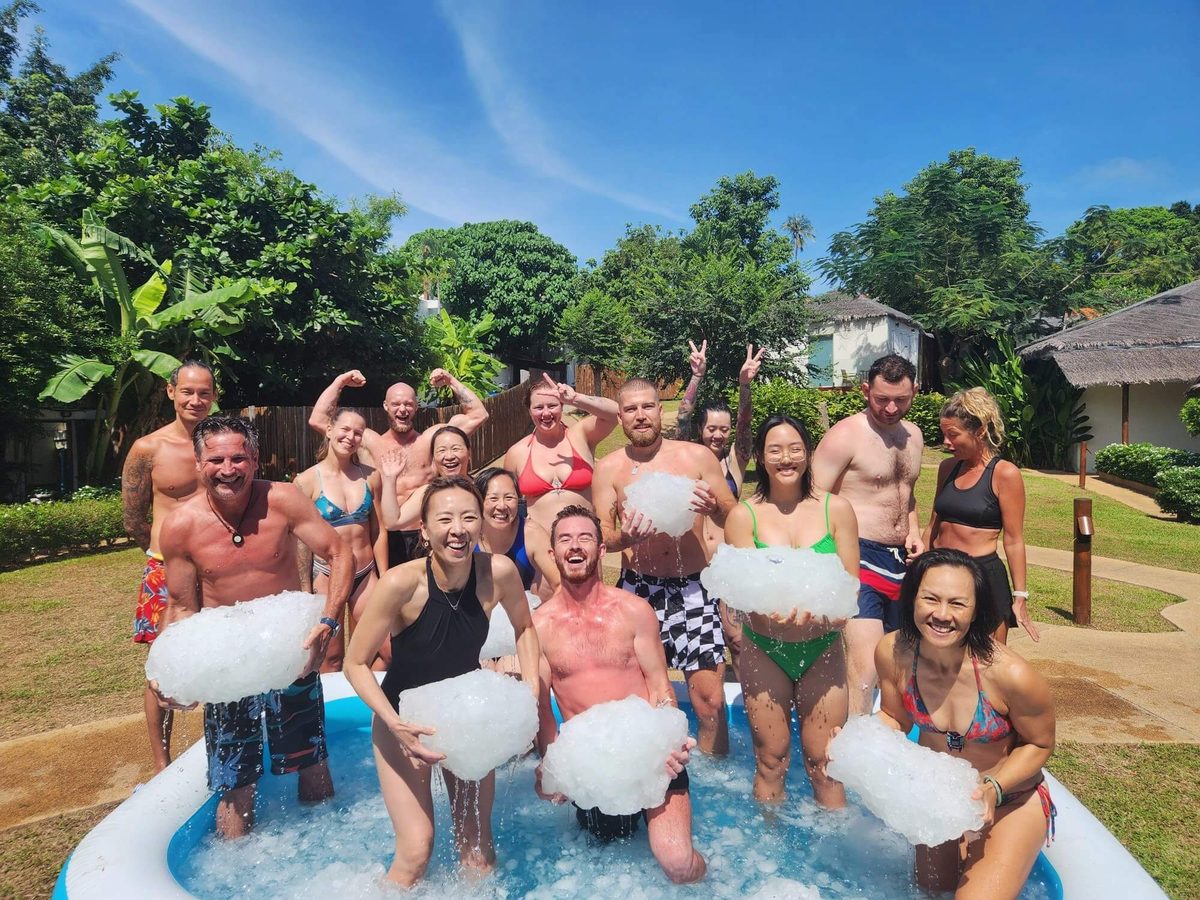
You are standing next to a tub of ice water in 35 degree heat on a tropical island. Your body knows what is about to happen. Your mind is already negotiating.
When you get into an ice bath, your cold shock response fires and every instinct says get out. If you stay with slow, controlled breathing, within about 30 seconds the shock passes and your body adapts. The real work is learning to stay calm under stress. I have taken over 5,000 people through this on Koh Samui.
Maybe I will just put my feet in first. Maybe I will count to three and then get in. Maybe I will skip this part entirely and tell everyone I did it.
That conversation in your head is the whole point. Not the cold. Not the ice. The conversation. Because what happens in the seconds before you step into an ice bath is the same thing that happens every time you face something uncomfortable in your life. You hesitate. You negotiate. You look for the exit.
The ice bath does not let you negotiate. You either get in or you do not. And that binary simplicity is what makes cold exposure one of the most direct ways to train your nervous system to handle discomfort.
The First 30 Seconds
The moment you get in, your body goes into cold shock response. Your heart rate spikes. Your breathing becomes rapid and shallow. Every instinct tells you to get out. This is your sympathetic nervous system firing at full capacity. Fight or flight. Your body thinks you are in danger.
You are not. But your body does not know that yet.
This is where the breathwork comes in. Before you ever touch the water, we spend time with specific breathing patterns that train your nervous system to stay regulated under stress. When you get in the ice, you use those same patterns. Slow, controlled exhales. Nasal breathing. Keeping the breath steady while everything inside you screams to gasp.
Within 30 seconds, if you stay with the breath, something shifts. The initial shock passes. Your body starts to adapt. Your heart rate comes back down. The water does not feel warmer. But your relationship to the cold changes. You stop fighting it. You start being in it.
What the Cold Does to Your Body
Cold exposure is not a trend. It is one of the oldest forms of physiological stress training humans have used. The research on it is extensive and growing.
When you submerge in cold water, several things happen simultaneously.
Vasoconstriction. Blood vessels near the surface of your skin constrict, pushing blood toward your core and vital organs. This is your body protecting what matters most. When you get out, those vessels dilate rapidly, flooding your body with freshly oxygenated blood. This cycle of constriction and dilation is essentially a workout for your vascular system.
Norepinephrine release. Cold exposure triggers a significant release of norepinephrine, a neurotransmitter that affects mood, attention, and focus. Studies have shown cold water immersion can increase norepinephrine levels by 200 to 300 percent. This is why people report feeling alert, clear, and calm after an ice bath. Not hyped up. Calm and focused.
Inflammation reduction. Cold water immersion reduces systemic inflammation. This is why athletes use it for recovery. But the benefits extend beyond sore muscles. Chronic low grade inflammation is linked to almost every modern health concern. Regular cold exposure helps keep that inflammation in check.
The vagus nerve. Cold water on the face produces a fast, real drop in heart rate, and that pathway is vagally mediated. What is far less certain is the popular follow-on claim that regular cold exposure permanently raises your vagal tone and so builds resilience for life. That step gets repeated everywhere and I have not found controlled evidence for it. The immediate effect is real and you can feel it. The lasting one is a hypothesis.
Why Koh Samui Makes It Different
You can take a cold shower at home. You can fill your bathtub with ice. Plenty of people do. And it works to a degree.
But there is something about doing cold exposure in this specific context that changes the experience.
First, the heat. When the ambient temperature is 35 degrees and the humidity is thick enough to cut, the contrast between the air and the ice water is extreme. That contrast amplifies the physiological response. Your body has been warm all day. It is not expecting cold. The shock is bigger, and the adaptation is more complete.
Second, the setting. We do ice baths outdoors. Jungle sounds. Ocean nearby. Open sky. You are not in a gym with fluorescent lights and a timer on the wall. You are in nature, which in itself activates the parasympathetic nervous system. The combination of cold exposure and natural environment creates a compounding effect.
Third, the facilitation. Doing an ice bath alone is one experience. Doing it with someone who has guided hundreds of people through it is a different experience entirely. I watch your breathing. I read your face. I know when to talk and when to be quiet. I know the difference between healthy discomfort and someone who needs to get out. That is not something you get from a YouTube video or a cold plunge in your backyard.
The Part Nobody Talks About
The physical benefits of cold exposure are real and well documented. But the thing that keeps people coming back is not the dopamine or the reduced inflammation.
It is the experience of choosing to stay.
Every moment in the ice bath is a choice. You can get out any time. Nobody is going to stop you. And that voluntary choice to stay with something uncomfortable, to breathe through it instead of running from it, is a skill that transfers to everything else in your life.
The difficult conversation you keep avoiding. The project you keep putting off. The feeling you keep pushing down. The ice bath teaches your nervous system that discomfort is not danger. That you can feel something intense and not fall apart. That staying present with what is hard is not just survivable. It is where the growth happens.
"Both breathing and ice bath are power tools to take to my daily life. As Diego says, to learn to respond and not to react."
Zohar Shalev
Zohar nailed it. Respond, not react. The ice bath is a training ground for that skill. Because when you can stay calm in two degree water, staying calm in a meeting or a conflict or an airport delay becomes much simpler by comparison. You can read more experiences like this on the results page.
How Ice Baths Fit Into What We Do
Cold exposure is part of every session at Breathflow Connection. It is never the only thing. It is always combined with breathwork because the two practices amplify each other.
In UNTAMED, the full day experience, the ice bath comes after extended breathwork practice. By that point, your nervous system is already in a different state. The cold becomes a test of what you have been building all day. Most people are surprised by how long they stay in.
In private workshops, the ice bath is the second half of a two hour session. We start with breathwork, build the foundation, then move to the cold. The group dynamic adds another layer. Watching someone else face the same challenge and stay with it creates a kind of silent encouragement that words cannot match.
The ice bath is always optional. Nobody is forced. Some people watch the first round and then decide to go. Some people decide it is not for them that day. Both are fine. The point is not to prove anything. The point is to practice choosing presence over avoidance.
If You Want to Try It
If you are on Koh Samui and you are curious about cold exposure, the best starting point is a private workshop or the UNTAMED experience. Both include guided breathwork before the ice bath, which makes a meaningful difference in how you handle the cold.
If you are not on the island, start with cold showers. End your regular shower with 30 seconds of cold water. Breathe through it. Extended exhale. Slow and steady. Do that for a week. Then try 60 seconds. Then 90. You are training the same response pattern. The cold exposure protocol gives you a structured progression to follow. For a wider look at breathwork options across Thailand, read the complete Thailand guide.
The cold does not get easier. You get better at being in it. That distinction matters more than you might think right now.
Keep Reading
Frequently asked questions
Where can I do an ice bath in Koh Samui?
Breathflow Connection runs guided ice bath sessions every week as part of UNTAMED and The Practice. Private ice bath sessions are also available. There are a few gyms and wellness centers on the island with cold plunge tubs, but guided breathwork plus ice bath in the Wim Hof tradition is what Breathflow specializes in.
How cold is the ice bath?
Between 4 and 10 degrees Celsius, depending on the session. Cold enough to create a real physiological response, not so cold that it becomes dangerous. The exact temperature matters less than how you enter and how long you stay in.
How long should I stay in the ice bath?
2 to 3 minutes is enough to get the full physiological benefit for most people. Beginners often start with 1 minute. Experienced participants sometimes stay in 5 minutes or longer. Longer is not better. The goal is to meet the cold, breathe through it, and exit before the body goes into shutdown.
Is an ice bath safe for beginners?
Yes, when guided properly and when you are in good general health. The risks come from entering too fast, staying in too long, or attempting it alone without preparation. A guided session with a facilitator who screens for contraindications and teaches breath control first is the safest way to experience cold exposure for the first time.
What should I bring to an ice bath session?
A swimsuit, a towel, and comfortable clothes to change into after. That is all. Arrive hydrated, avoid heavy food in the 2 hours before, and avoid alcohol the night before. Everything else is provided by Breathflow Connection at the session.
Can I do an ice bath if I have a heart condition or other medical issue?
Cold exposure puts real stress on the cardiovascular system. Anyone with a known heart condition, high blood pressure, Raynauds, uncontrolled diabetes, epilepsy, or who is pregnant should get clearance from a doctor before doing an ice bath. Breathflow Connection asks about medical history before every session and adapts or declines based on what is safe.
Stay in the loop.
Occasional dispatches when sessions open or new writing drops. No spam.
About Diego Pauel
I have lived in Koh Samui for 15 years. I discovered breathwork through freediving, which I have trained in for over a decade. When COVID hit and the island emptied out, I started offering breathwork and ice baths for free to help the local community feel better in their bodies. I was the first to offer this work on the island. Five years later, I have facilitated countless sessions for people from all over the world. No guru energy. No mystical language. Just the work.
Full story →Want to feel the cold for yourself?
Experience UNTAMEDContinue Reading
All Cold & Ice Bath →