What to Expect from a Breathwork Facilitator Training in Thailand
There is a question that comes in regularly via WhatsApp and email. It goes something like this: I want to learn to hold space for others. What does 21 days actually look like?
A 21 day breathwork facilitator training in Thailand starts with science and nervous system anatomy, daily personal practice, contraindication screening, and tools like the BOLT score. It builds toward holding real sessions. It suits people already working with others who arrive with their own practice and serious intent, not a weekend certificate.
Not the marketing version. The honest version.
This post is that answer. What happens each week. What you will find hard. What you will walk away with. And the practical details that matter when you are deciding whether to fly to Thailand for three weeks.
Who This Training Is For
The people who get the most from this training are already working with other people in some capacity.
Yoga teachers who notice their students need more than postures. Life coaches who want a body based tool. Somatic therapists looking for structured breathwork to complement their practice. Wellness entrepreneurs who want to offer something more specific than a general retreat.
It is also for people who want to change direction entirely. Career changers who have been in breathwork for a few years as practitioners and want to move into facilitation. People who left demanding careers and want to build something more meaningful. The common thread is not the background. It is seriousness of intent.
This is not a weekend workshop. Three weeks is a real commitment. The people who thrive in it arrive ready to work.
Who It Is Not For
If you have done breathwork twice and want a certificate to put on a website, this is the wrong training. The work goes deeper than that and you will struggle without some foundation of your own practice. If you are new to the work, start with an UNTAMED experience or a private workshop and build from there.
If you are looking for a spiritual experience disguised as a training, also the wrong fit. The approach here is grounded, practical, and evidence based. We talk about the nervous system, not the chakras. That does not make the work less profound. It means we describe it in terms that do not require a particular belief system to understand or apply.
Week 1: Foundation
The first week is orientation and science.
You are learning the anatomy of breathing, the physiology of the nervous system, and the mechanism behind why breathwork does what it does. You learn to use tools like the BOLT score to assess your own baseline and your future clients' readiness. You are also learning contraindications: who should not do breathwork without medical clearance, what to watch for during a session, how to assess a participant before they start.
This is not optional background. It is what makes you safe to work with other people.
By the end of Week 1, you understand more about how breathing works than most people learn in years of yoga classes and wellness content. You also understand why the popular breathwork videos on social media are not the same as facilitated sessions, and why that distinction matters when you are the one holding the space.
Parallel to the science, you are doing daily practice. Your own nervous system regulation. Your own processing of what surfaces. This is not warm up for the learning. This is part of the learning. You cannot guide someone into territory you have not been to yourself.
What a Typical Day Looks Like
You start each morning with practice before anything else. Breathwork, cold exposure, reflection. An hour or so of your own nervous system work before the formal training begins.
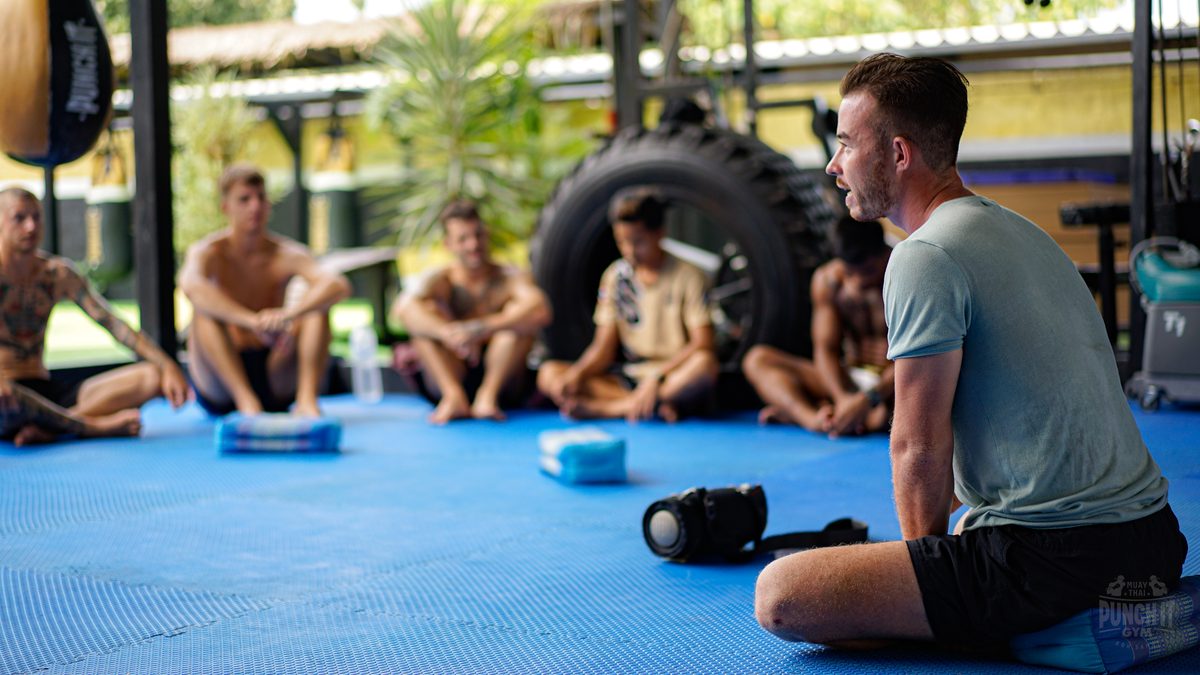
From there, the day alternates between instruction and application. Morning sessions tend to be conceptual: physiology, session design theory, case studies from real sessions. Afternoon sessions are practical: you are facilitating, being facilitated, watching, being watched, and getting direct feedback on what worked and what did not.
It is not a passive training. You do not sit in a room taking notes and walk out with a certificate at the end. Most of what you learn happens in the doing and the feedback, not the lecture.
Evenings are your own. Dinner is not included. Most participants use the time to debrief with each other, process what came up during the day, or simply rest. Three weeks of intensive learning and daily breathwork practice builds up. The unstructured time is not empty space. It is part of the integration.
Week 2: Practice
Week 2 is where the training shifts from knowing to doing.
You learn session design from the ground up. How to build a breathwork session from intention to opening to active breathing to integration. How to choose music for different session goals. How to use your voice to guide without over-directing. How to hold the space before anyone says a word.
Then you start facilitating. First within the training group, which is both safe and honest. Your peers will tell you what landed and what did not. I will show you where your voice drops, where you look uncertain, where you overcomplicate a simple instruction. This feedback is direct and specific. There is no way to shortcut the learning of actually facilitating a real person through an experience.
The cold exposure component comes into this week in a structured way. You learn to facilitate ice bath sessions alongside breathwork. The sequence, the safety protocols, the breathing patterns that make cold exposure effective rather than just uncomfortable. By the end of Week 2, you can design and hold a combined breathwork and ice bath session for a group.
Voice work is something most programs skip. Your voice is your primary instrument in a session. How you use it sets the tempo, depth, and safety of the space. We spend time on this specifically, including the things people do unconsciously with their voice that undermine the experience for the person they are guiding.
Week 3: Integration
Week 3 is real sessions.
You facilitate actual participants. People from outside the training who have signed up for a breathwork session. Not your training colleagues. Not a simulation. Real people who are showing up for the work.
This changes everything. The first time you hold space for a stranger in a breathwork session, something shifts. You move from someone who knows how to facilitate to someone who has facilitated. That gap is not small, and nothing in the first two weeks fully prepares you for it. The third week is where the training becomes real.
You also work through what you will need after the training ends. Building a practice. Ethics and professional boundaries. How to price your work and communicate your offering. What to say when someone asks about your training. The business side is not the focus of the program, but leaving it out would be irresponsible. You need to know how to operate when you leave.
Post training mentorship access is included. Conversations after you are home, when questions come up that you could not have anticipated during the training itself. These tend to be among the most valuable interactions of the whole program.
The Koh Samui Factor
Three weeks is a long time to be away from home. Where you do it matters.
Koh Samui is a small island. Not Bali level of wellness infrastructure. Not Bangkok levels of stimulation. It is the right size for this kind of work. There are no tourist traps pulling you toward distraction. You can walk to the ocean. The heat slows things down in a way that is actually useful when you are trying to go inward.
Breakfast and lunch are included. Dinner and accommodation are your own. Most participants stay at guesthouses within 15 to 20 minutes of the venue, in the 500 to 1,200 THB per night range. That is roughly $15 to $35 per night. Koh Samui is significantly cheaper than Bali or any European training location for both accommodation and daily expenses.
The outdoor sessions are part of what makes this training feel different from a classroom certification. You are not sitting in a conference room for 21 days. You are working in the environment where this practice actually makes sense: warm air, natural surroundings, the pace of island life in the background.
For a more complete sense of why this location works for this kind of training, the post on why Koh Samui for facilitator training covers the specifics in detail. For a broader look at the breathwork landscape across the country, read the breathwork in Thailand guide.
What You Leave With
A certificate. The practical experience of having facilitated real sessions with real people. A clear methodology you understand from the ground up, not one you memorised from a manual.
The confidence to say yes when someone asks if you can hold a breathwork session. For their team, their group, a private client, a retreat they are running. That confidence comes from having done it, not from having read about it.
Most of what participants say changed them most was not any single session. It was the accumulation of doing the practice every day for three weeks. Daily breathwork, daily cold exposure, daily reflection. That consistency does something that a weekend intensive cannot replicate. Three weeks of daily practice is enough to change the baseline.
Practical Details
The next cohort dates are being confirmed. The course runs with a maximum of 16 participants. Cost is $2,490 USD, which includes all training materials, breakfast and lunch daily, and post training mentorship access. Flights, accommodation, and dinner are not included.
This price is roughly 36 to 64 percent below comparable in person programs in Europe and the US. The cost of living in Thailand is part of what makes the full immersion affordable without compromising on quality or group size.
If you are considering this and want to be notified when dates are confirmed, register your interest on the facilitator course page. Every inquiry gets a personal response.
Questions about the training? Reach out via WhatsApp from the contact page. Happy to answer anything that would help you decide.
Keep Reading
Frequently asked questions
What does a 21 day breathwork facilitator training actually look like?
Three weeks, structured in stages. Week 1 is foundation, the anatomy of breathing, nervous system physiology, contraindications, and daily personal practice. Week 2 is practice, where you learn session design, voice work, and start facilitating peers and combined ice bath sessions. Week 3 is integration, facilitating real participants from outside the group, plus the business and ethics of building a practice.
Who is this facilitator training for and who is it not for?
It is for people already working with others in some capacity, yoga teachers, coaches, somatic therapists, wellness entrepreneurs, and serious career changers. It is not for someone who has done breathwork twice and wants a certificate for a website. The work goes deeper than that and you will struggle without a foundation of your own practice. The common thread is seriousness of intent, not background.
How much does the training cost and what is included?
The course is 2,490 USD, which includes all training materials, breakfast and lunch daily, and post training mentorship access. Flights, accommodation, and dinner are not included. The course runs with a maximum of 16 participants. This price is roughly 36 to 64 percent below comparable in person programs in Europe and the US, because the cost of living in Thailand makes full immersion affordable.
Why train on Koh Samui specifically?
Three weeks is a long time to be away from home, so where you do it matters. Koh Samui is a small island, not Bali level wellness infrastructure and not Bangkok level stimulation. It is the right size for this work. There are no tourist traps pulling you toward distraction, you can walk to the ocean, and the heat slows things down in a way that is useful when you are trying to go inward.
What will I actually be able to do after the training?
You leave with a certificate, the practical experience of having facilitated real sessions with real people, and a clear methodology you understand from the ground up rather than memorised from a manual. You walk away able to say yes with confidence when someone asks you to hold a breathwork session for their team, group, or retreat, because you have done it, not just read about it.
Stay in the loop.
Occasional dispatches when sessions open or new writing drops. No spam.
About Diego Pauel
I have lived in Koh Samui for 15 years. I discovered breathwork through freediving, which I have trained in for over a decade. When COVID hit and the island emptied out, I started offering breathwork and ice baths for free to help the local community feel better in their bodies. I was the first to offer this work on the island. Five years later, I have facilitated countless sessions for people from all over the world. No guru energy. No mystical language. Just the work.
Full story →