Ice Bath Safety: How to Do Cold Exposure Without Hurting Yourself
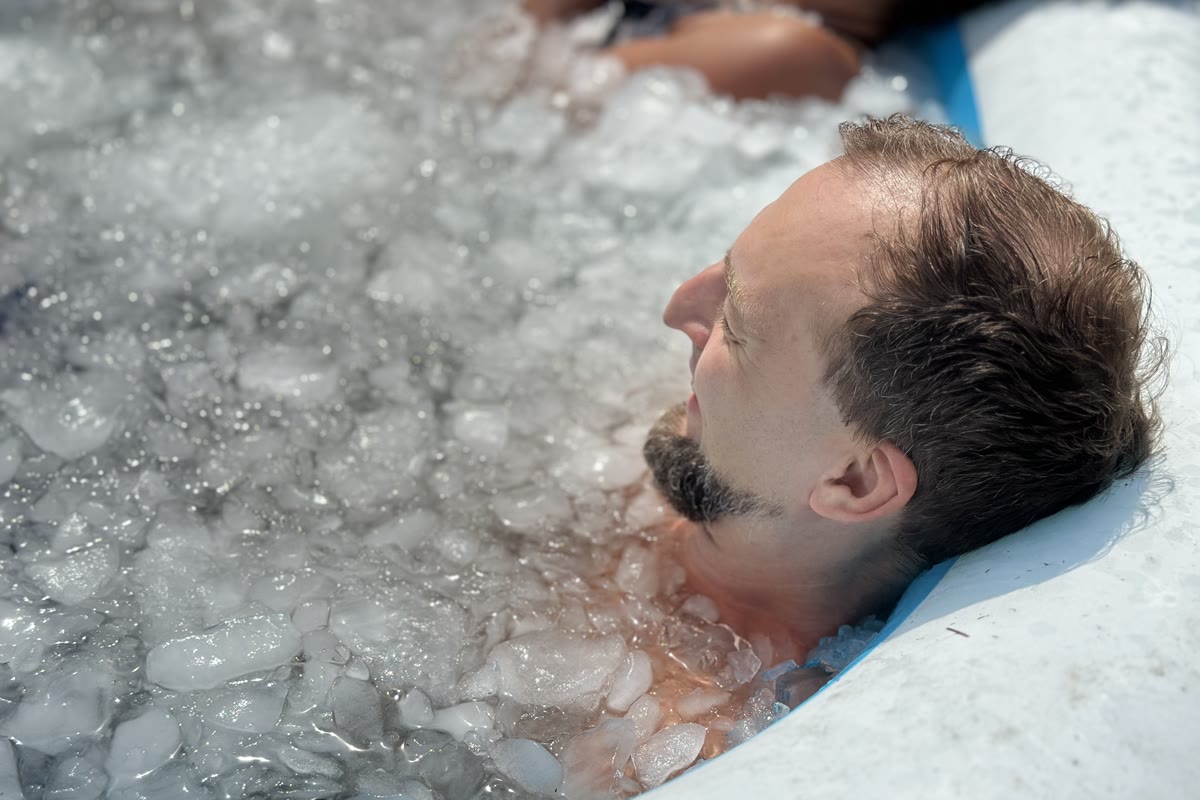
You do an ice bath safely by breathing first, getting in slowly, and never gasping with your face near the water. Keep your breath calm with long slow exhales, stay one to three minutes, never go alone, and warm up gently afterwards. If you have any heart or blood pressure condition, check with a doctor before you start.
I have run ice baths on Koh Samui since 2020, the first to bring this work to the island, and I have taken thousands of people into cold water. The worst outcomes I have seen all came from one thing. People treating the cold like a test of how tough they are. It is not. An ice bath is nervous-system training. Done with respect it is one of the safest, most useful things you can do for your stress response. Done as a dare it can hurt you. The safety below is mostly about slowing down and not being a hero.
What is the cold shock response and why does it matter
The cold shock response is the automatic gasp and rapid breathing that hits the moment cold water touches your skin. It is your body reacting to a perceived threat. It matters because that involuntary gasp is dangerous if your face is underwater, and the panic breathing it triggers is the root of most cold water trouble.
You cannot fully stop the gasp, but you can prepare for it. This is why you never put your face near the water on the way in, and why open water without supervision is so risky. That gasp underwater is how people drown in water they could stand up in. Get in slowly and sit upright with your head clear.
How do you control your breathing in cold water
You control your breathing by making your exhale longer than your inhale. Breathe in through the nose, then let a long slow breath out through the mouth. The long exhale tells your nervous system you are safe and switches off the panic. Slow the breath down and the cold stops being an emergency and becomes something you can sit inside calmly.
The whole skill of the ice bath lives in the breath. Your instinct is to breathe fast and tense everything. The work is the opposite. Long exhales, soft shoulders, eyes open. This is straight out of my freediving background, where slow breathing under stress is the whole job. It is why a first ice bath goes better with coaching.
How long should you stay, and is colder always better
For most people one to three minutes is plenty, and colder is not automatically better. Water around 5 to 10 degrees Celsius gives you the full benefit. Staying longer or going colder is not braver, it just shortens the safe window and raises the risk. Beginners start with thirty to sixty seconds and build slowly. Staying calm is the achievement, not the clock.
The benefit plateaus quickly. A calm two minutes at 8 degrees does more than a panicked thirty seconds at 2 degrees. The difference between a guided ice bath and a random plunge is never the temperature, it is the coaching. I cover that in the cold plunge vs ice bath comparison and cold exposure benefits breakdown.
Who should not do ice baths
Skip ice baths, or clear it with a doctor first, if you have a heart condition, high or uncontrolled blood pressure, are pregnant, or have Raynaud's. The cold spikes your heart rate and constricts blood vessels hard, which is exactly what these conditions cannot handle. If you are unsure about any health issue, ask a doctor before you get in.
This is the part I will not soften. Cold water puts real load on your heart and circulation. For a healthy person that is a useful stress, but for someone with a cardiovascular condition, uncontrolled blood pressure, or a disorder like Raynaud's it can be genuinely dangerous, and pregnancy is a clear no without medical sign-off.
Why should you never do an ice bath alone
Never do an ice bath alone because the cold shock response and the afterdrop can both catch you off guard, and you want someone there if your breathing or coordination goes. Never do cold exposure in open water without supervision. A person present is the single biggest safety factor, far more than temperature or duration.
Alone is where the avoidable accidents happen. A friend watching can see you struggle before you can, and pull you out. It is why the work I run as the UNTAMED experience, the weekly group sessions, and private workshops always has someone coaching, never a tub you climb into on your own.
What is the afterdrop and how do you warm up safely
The afterdrop is when your core temperature keeps falling for several minutes after you get out, as cold blood from your limbs returns to your centre. You warm up safely by drying off, putting on warm dry layers, moving gently, and having a warm drink. Do not jump into a hot shower straight away, and do not rely on willpower to stop the shivering.
Getting out is not the end of the cold. For the next ten minutes you can actually get colder, which surprises people. Warm up slowly and from the inside, with dry layers, gentle movement, and a warm drink. A hot shower straight away can drop your blood pressure and make you dizzy. This is why ice bath recovery matters as much as the bath.
What are the signs you have gone too far
Get out immediately if your speech slurs, your coordination goes, your skin turns blue or grey, or your shivering becomes violent and uncontrolled. These are signs your core temperature has dropped too low. Numbness that does not fade after rewarming also needs attention. When in doubt, get out. The cold will be there tomorrow.
None of these warnings are things to push through. The whole point of training the nervous system is learning to listen to it, which includes hearing when it says enough. The ice bath is not a contest. It is a controlled way to teach your system to stay calm when everything is screaming at it to panic, so you carry that calm into the hard moments of normal life. The goal is to respond and not to react. Do it with someone the first few times, and if you have any cardiovascular or other health condition, check with a doctor first. The cold is always optional in my sessions, and nobody is ever pushed.
How to Take an Ice Bath Safely
How to do cold exposure safely by breathing first, getting in slowly, staying calm, and warming up gently. Treat it as nervous system training, never as a test of toughness, and most people stay one to three minutes.
-
01
Clear it with a doctor
Skip ice baths, or check with a doctor first, if you have a heart condition, high or uncontrolled blood pressure, are pregnant, or have Raynaud's. The cold spikes your heart rate and constricts blood vessels hard, which these conditions cannot handle.
-
02
Never go alone
Never do an ice bath alone, and never do cold exposure in open water without supervision. A person present is the single biggest safety factor. They can see you struggle before you can and pull you out if your breathing or coordination goes.
-
03
Breathe before you get in
Settle your breath first so you are calm before the cold. Long slow exhales tell your nervous system you are safe. The whole skill of the ice bath lives in the breath, so build it before you touch the water.
-
04
Get in slowly, face clear
Get in slowly and sit upright with your head clear, never with your face near the water. The cold shock response is an involuntary gasp, and that gasp underwater is how people drown in water they could stand up in.
-
05
Stay calm, one to three minutes
Breathe in through the nose and out long and slow through the mouth, keep your shoulders soft and eyes open. One to three minutes at around 5 to 10 degrees Celsius is plenty. Beginners start with thirty to sixty seconds. Staying calm is the achievement, not the clock.
-
06
Get out if warning signs appear
Get out immediately if your speech slurs, your coordination goes, your skin turns blue or grey, or your shivering becomes violent and uncontrolled. Numbness that does not fade after rewarming also needs attention. When in doubt, get out.
-
07
Warm up gently
For about ten minutes after you get out your core keeps cooling, the afterdrop. Dry off, put on warm dry layers, move gently, and have a warm drink. Do not jump into a hot shower straight away, as it can drop your blood pressure and make you dizzy.
Frequently asked questions
How long should you stay in an ice bath?
For most people one to three minutes is plenty, and you get the full nervous-system benefit in that window. Beginners should start with thirty to sixty seconds and build slowly over many sessions. Staying longer is not braver, it just raises the risk to your core temperature. Staying calm is the achievement, not the clock.
Can an ice bath be dangerous?
Yes, if you treat it like a toughness contest or do it wrong. The two real dangers are the cold shock gasp near water, which is why you never go in open water alone, and dropping your core temperature too low. Done with calm breathing, a short duration, and someone present, it is one of the safest practices you can do.
Who should not do ice baths?
Avoid ice baths, or clear it with a doctor first, if you have a heart condition, high or uncontrolled blood pressure, are pregnant, or have a circulation disorder like Raynaud's. The cold spikes your heart rate and constricts blood vessels hard. If you are unsure about any health issue, ask a doctor before you get in.
What is the afterdrop after an ice bath?
The afterdrop is when your core temperature keeps falling for several minutes after you get out, as cold blood from your limbs returns to your centre. Warm up slowly with dry layers, gentle movement, and a warm drink. Do not jump straight into a hot shower, since that can drop your blood pressure and make you dizzy.
Stay in the loop.
Occasional dispatches when sessions open or new writing drops. No spam.
About Diego Pauel
I have lived in Koh Samui for 15 years. I discovered breathwork through freediving, which I have trained in for over a decade. When COVID hit and the island emptied out, I started offering breathwork and ice baths for free to help the local community feel better in their bodies. I was the first to offer this work on the island. Five years later, I have facilitated countless sessions for people from all over the world. No guru energy. No mystical language. Just the work.
Full story →Want to feel the cold for yourself?
Experience UNTAMEDContinue Reading
All Cold & Ice Bath →