Trauma-Aware Breathwork in Koh Samui: What It Means
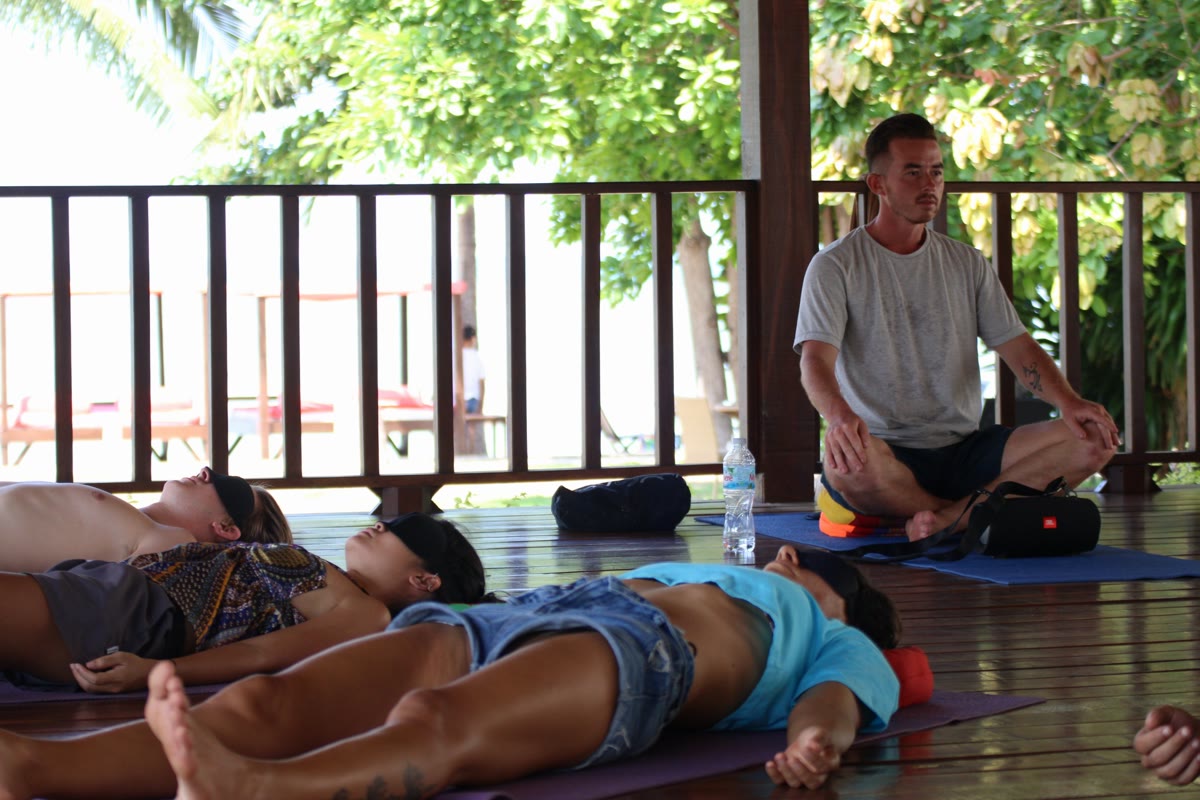
Trauma-aware breathwork means I run the session around your consent and your nervous system, not a fixed script. You stay in choice the whole time. I never force a breath, I watch for signs of overwhelm, and I know when something is outside my scope and needs a referral. Safety comes before catharsis.
I am Diego, a breathwork facilitator and freediving instructor on Koh Samui. In 2020 I was the first on the island to offer dedicated breathwork plus ice baths, and I have run more than 500 sessions since. Almost every week someone arrives carrying something heavy, and the way I hold that has changed how I work. This page explains what trauma-aware actually means in practice, because the phrase gets used loosely.
What does trauma-aware breathwork actually mean?
It means the breath is an invitation, not an instruction. You decide how deep you go, you can slow down or stop at any moment, and nothing is done to you without a clear yes. I track your body for signs of stress and adjust in real time. The goal is regulation and choice, not pushing you over an edge.
Trauma-aware rests on a few plain principles. The first is consent. Before we start I tell you exactly what we will do, and I check that you actually want it rather than just complying. The second is titration, which is a clinical word for going in small amounts. Instead of one long intense round, we can work in shorter pieces and rest between them, so your system meets the experience at a pace it can handle.
The third is choice. At any point you can open your eyes, slow the breath, sit up, or stop. None of that is failure. It is you staying in the driver seat of your own body, which for a lot of people is the actual repair work.
How is it different from a loud cathartic breathwork class?
A generic cathartic class often pushes everyone through the same intense pattern with loud music and encouragement to go harder. That can flood a sensitive nervous system. Trauma-aware work moves slower, reads the individual, and treats a big release as optional rather than the point. The aim is for you to feel safe, not blown open.
I have nothing against intensity. There is a place for it, and some people love a big loud room. The problem is that a one-size pattern assumes everyone in the room has the same capacity, and they do not. Someone with unprocessed trauma can get pushed into a state they cannot come back from easily, and a facilitator who is only watching the playlist will miss it.
In my sessions the music supports you rather than drives you. I am watching faces and hands and breathing, not performing. If your body starts to brace or your breath goes ragged in a way that signals overwhelm rather than release, we ease off. A flood of emotion is welcome if it comes, but I never chase it. If you want to understand why emotion surfaces at all, I wrote about that in why somatic breathwork can make you cry.
Why does trauma-aware matter for safety?
Breathwork changes your physiology fast. Done without care it can re-trigger old material or send someone into a freeze they did not consent to. Trauma-aware practice keeps a hand on that. I pace it, I keep you oriented to the room, and I know the line between what breathwork can hold and what belongs with a therapist.
Knowing my scope of practice is part of keeping you safe. I am a facilitator, not a clinician. Breathwork can do a lot, but it is not a substitute for trauma therapy, and pretending otherwise is how people get hurt. If something comes up in a session that points to deeper clinical work, I will say so plainly and help you find the right support rather than try to fix it myself.
My background feeds this directly. Ten years of freediving taught me to read a nervous system under pressure and to respect the moment a body says enough. That carried straight into how I facilitate, which I describe in how freediving shaped my approach to breathwork.
What does a session with you look like?
We talk first, so I know what you are bringing and what you want to avoid. I explain the breath and the exits. Then you lie down and we begin gently, building only as far as feels right for you. I stay close and adjust. Afterward we rest and talk it through, because integration matters as much as the breathing.
The opening conversation is not a formality. It is where I learn whether you have a history that needs care, what your body tends to do under stress, and where your edges are. From there the breathing starts soft. If you want more, we go further together. If your system has had enough, we stop there and that is a complete session.
If you are new to this, reading how to prepare for breathwork beforehand helps. When you are ready to book, you can see what I offer on the sessions page, or look at UNTAMED if you want a longer container.
Trauma-aware is not a marketing label for me. It is the difference between a practice that respects you and one that runs you through a machine. You stay in choice, your body sets the pace, and nothing happens that you did not agree to. That is the whole point.
Frequently asked questions
Do I need to share my trauma history before a session?
No. You only share what you want me to know. It helps me keep you safe if I understand your broad sensitivities, but you never owe me details. Many people work through things in a session without ever naming what they are. Your privacy and your pace both stay yours.
Is trauma-aware breathwork a replacement for therapy?
No, and I will never present it as one. Breathwork can support regulation and release, but it does not replace clinical trauma treatment. If something surfaces that needs a therapist, I say so directly and help you find the right person. Knowing that line is part of being trauma-aware.
What if I get overwhelmed during the session?
You will not be left alone in it. I stay close and watch for signs before you even name them. You can slow the breath, open your eyes, or stop at any moment. I will help you come back to the room and steady your system. Stopping early is never a failure.
Can beginners do trauma-aware breathwork?
Yes, and it is often the safest place to start. Because the pace follows you rather than a fixed script, beginners are not thrown into intensity they did not ask for. If you have never done this, my guide on breathwork for beginners is a good first read before we meet.
Stay in the loop.
Occasional dispatches when sessions open or new writing drops. No spam.
About Diego Pauel
I have lived in Koh Samui for 15 years. I discovered breathwork through freediving, which I have trained in for over a decade. When COVID hit and the island emptied out, I started offering breathwork and ice baths for free to help the local community feel better in their bodies. I was the first to offer this work on the island. Five years later, I have facilitated countless sessions for people from all over the world. No guru energy. No mystical language. Just the work.
Full story →Want to experience the work?
See the ProgramsContinue Reading
All Breathwork →