Why Breathwork Is the Next Step After Yoga
You have been doing yoga for a while now. Maybe months. Maybe years. You know what a good class feels like. You have learned to breathe with movement, to hold poses that used to feel impossible, to find some version of stillness at the end of a session. Yoga gave you something real and you know it.
And yet there is a ceiling you keep bumping into. A place where the physical practice cannot quite reach. The tension you still carry despite a strong practice. The thoughts that still run during savasana. The emotional weight that shows up on the mat but never fully leaves.
That is not a failure of your yoga practice. It is the edge of what postures alone can do. What lies past that edge is where breathwork begins.
What Yoga Gave You (And Why It Matters)
Before going any further, this needs to be clear: breathwork is not a replacement for yoga. It is an extension of it. Everything yoga taught you is preparation for going deeper.
Yoga gave you body awareness. You know what your shoulders do when you are stressed. You know where you hold tension. You learned to feel your body instead of just living in your head.
Yoga gave you breath awareness. Through pranayama and cued breathing in class, you learned that how you breathe changes how you feel. That was a huge step. Most people go their entire lives without making that connection.
Yoga gave you the ability to stay with discomfort. Holding a deep hip opener or a long warrior II taught you that discomfort is not danger. That you can breathe through things instead of running from them.
These three things, body awareness, breath awareness, and the ability to stay present with intensity, are exactly what make a yoga practitioner the ideal person to try dedicated breathwork. You already have the foundation. Breathwork uses that foundation to access layers that postures cannot.
Where Does Yoga Stop and Breathwork Start?
Yoga stops where movement stops reaching. In a yoga class the breath serves the postures; in a breathwork session the breath becomes the practice itself. You lie still and breathe in a continuous pattern for 30 to 45 minutes, which accesses nervous-system patterns held in your breathing and autonomic responses rather than in your muscles.
In a yoga class, breath supports the movement. You inhale when you extend. You exhale when you fold. The breath is a companion to the physical practice. This is valuable and it works. But the breath is serving the postures, not the other way around.
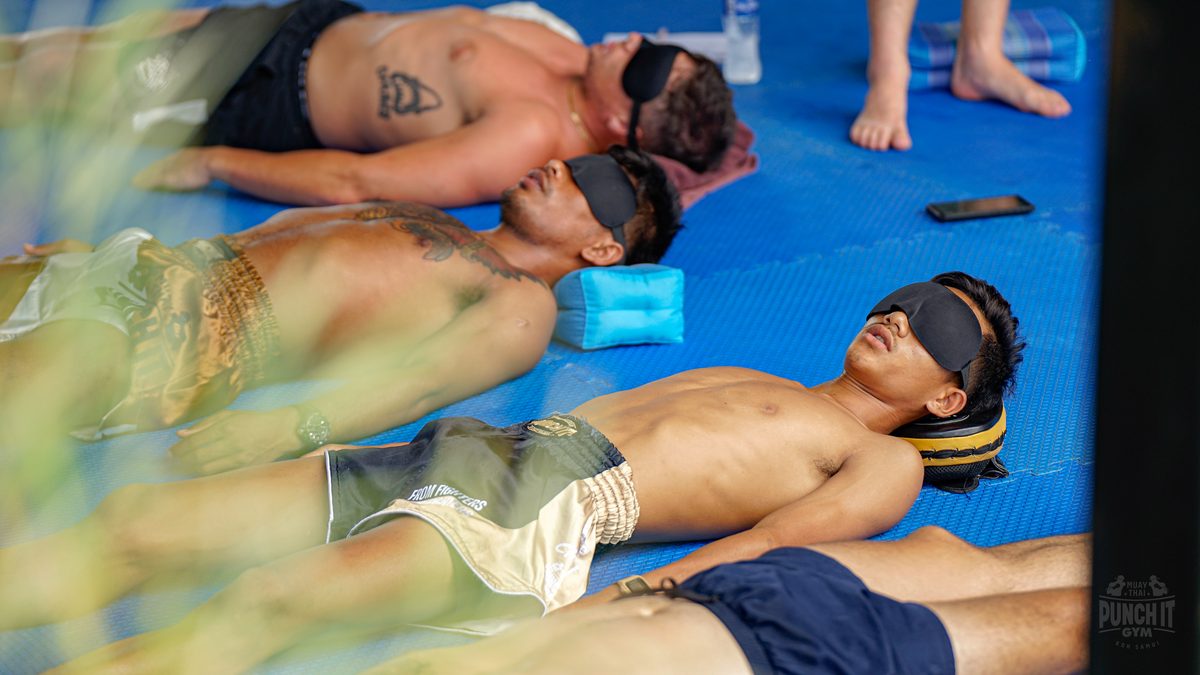
In a breathwork session, the breath becomes the practice itself. There is no movement to focus on. No posture to hold. No sequence to follow. You lie down, close your eyes, and breathe in a specific pattern for 30 to 45 minutes with a facilitator guiding you through it.
Without the physical distraction of movement, things surface that yoga class rarely touches. Emotions that live deeper than muscle tension. Patterns you did not know your nervous system was running. The stuff that stays even after the best yoga session of your life because it was never really held in your muscles. It was held in your breathing patterns, your autonomic responses, the places where your body braces without you choosing it.
Breathwork accesses the autonomic nervous system directly. It is not going through the body first. It is going through the breath, which is the one autonomic function you can also control voluntarily. That voluntary access is the doorway to the involuntary patterns underneath.
Is Pranayama the Same as Breathwork?
No. Pranayama and dedicated breathwork overlap but are not the same. Pranayama in a yoga class usually runs 5 to 10 minutes at moderate intensity, often with breath holds that keep CO2 stable. Dedicated breathwork runs 30 to 45 minutes of continuous connected breathing, which drops CO2 and shifts you into a deeper state pranayama rarely reaches.
If you practice yoga, you already do pranayama. Ujjayi breathing. Alternate nostril breathing. Kapalabhati. These are legitimate breath practices with real effects on your body and mind. They are part of the yogic tradition going back thousands of years.
But there is a difference between the pranayama practiced in most yoga classes and a dedicated breathwork session.
In class, pranayama usually takes 5 to 10 minutes. It serves as preparation for asana or as a closing practice. The intensity is moderate. The facilitator is guiding a room through postures, not holding space specifically for what the breath might bring up.
In a dedicated breathwork session, the breathing pattern runs for 30 to 45 minutes at a higher intensity. The continuous breathing creates physiological shifts that short pranayama sessions do not reach. Blood chemistry changes. The sympathetic nervous system activates and then the parasympathetic system comes through. Emotional and somatic releases happen that most people have never experienced in a yoga class, not because the yoga class is lacking, but because the container is different.
The physiology is specific. In a continuous breathing session, carbon dioxide drops as you exhale faster than normal. Blood pH shifts toward alkaline. Your brain waves move from beta, the analytical state you operate in during vinyasa, into alpha and theta, where the critical mind quiets and the body can process what has been stored below conscious access. This does not happen in pranayama, because the shorter duration and the breath holds maintain CO2 levels rather than depleting them. The continuous connected pattern produces a fundamentally different state. The breathwork vs pranayama comparison covers the technical distinction in depth.
Think of pranayama in yoga class as learning scales on a piano. Essential, foundational, and worth continuing. Dedicated breathwork is playing the full piece. You need the scales first. But the music is something else entirely.
I see this distinction land most clearly with experienced practitioners. Someone walks in who has done alternate nostril breathing for ten years, and they assume they already know what the breath can do. Then we run twenty minutes of continuous connected breathing and their hands start to tingle, their jaw lets go, and something they had no name for moves through them. The technique was never the limit. The duration and the continuity were. Pranayama keeps the system regulated and steady on purpose. Connected breathwork deliberately destabilises it for long enough that the body stops defending and starts releasing.
That is also why I do not teach connected breathwork as 'better' pranayama. It is a different tool with a different job. I still use slow nostril breathing to settle a room before we go anywhere, and I send people home with it for daily regulation. If you want to keep both in your week, a short morning breathwork routine covers the daily side, and a guided session covers the depth work you cannot easily reach alone.
The Nervous System Gap
Here is the piece that connects everything. Yoga regulates your nervous system primarily through the body: stretching releases muscular tension, inversions shift blood flow, savasana signals safety. It works. That regulation is why you feel different after class.
But for many people, the body based regulation only goes so far. If your nervous system has been in a chronic stress response for months or years, if you carry anxiety that does not come from your muscles but from deeper autonomic patterns, the physical practice can bring temporary relief without addressing the root.
Breathwork works at the root. By changing the rate, depth, and pattern of your breathing, you directly activate the vagus nerve, which is the main communication line between your brain and your body. Extended exhale breathing shifts you from sympathetic (fight or flight) to parasympathetic (rest and digest) in minutes. Active breathing patterns can release stored stress and emotion that the body has been holding for years.
This is not theoretical. You feel it happening in real time. Your hands tingle as blood chemistry shifts. Your body temperature changes. Emotions surface without a story attached to them. Tears come and go without drama. It is the nervous system reorganizing itself, and it happens faster through breath than through postures.
What Yoga Teachers Say After Their First Session
I have facilitated breathwork for yoga teachers from all over the world. Koh Samui attracts them because the island has a strong yoga community and many teachers come here for retreats, training, or just to practice. Nearly all of them have years of experience. Deep body awareness. Strong pranayama backgrounds.
And nearly all of them say the same thing after their first full breathwork session: "I had no idea breath could do that."
Not because they were ignorant about breath. They know more about breathing than most people ever will. But because a 40 minute continuous breathing journey accesses something different from what they had experienced in pranayama. The depth surprises them. The emotional release surprises them. The fact that they could feel their nervous system shifting in real time, without any physical movement, surprises them.
Some of them add breathwork to their own teaching immediately. Others come back for the facilitator training because they want to understand the mechanics deeply enough to offer it responsibly. Either way, the experience changes their relationship with breath in a way that years of pranayama alone had not.
My own path to breathwork came through freediving, not yoga. Ten years of underwater breath control taught me something about the breath that the yogic lens does not emphasize. In freediving, you learn CO2 tolerance at a visceral level. You learn the exact relationship between your breathing pattern and what is happening in your blood. That precision translates into facilitation. When I guide a session, I am reading the physiology of what is happening in each person based on their breathing pattern, their skin color, the subtle signals that indicate where they are in the process. The freediving and breathwork article goes deeper into how those disciplines connect.
How Do I Know If I Am Ready for Breathwork?
You are likely ready for breathwork if your body feels open but your mind still races, savasana is the hardest part of class, you carry stress that stretching never releases, you want to go deeper but do not know how, or you have been curious but keep putting it off. Any one of these usually means the breath is your next growth edge.
Not everyone needs breathwork right now. But if you practice yoga and recognize any of these, the breath is probably where your growth edge is.
Your body feels open but your mind still races. Your flexibility has improved. Your strength is solid. But the mental noise during practice has not quieted proportionally. Breathwork works on the mind through the nervous system, not through physical effort.
Savasana is the hardest part of class. If lying still and doing nothing creates more anxiety than a challenging flow, your nervous system is telling you something. It does not feel safe to fully let go. Breathwork teaches you to stay with that edge safely and gradually.
You carry stress that no amount of stretching seems to release. Some tension is not muscular. It lives in your breathing patterns, your jaw, your diaphragm. These are autonomic bracing patterns that yoga touches indirectly through movement but breathwork accesses directly through the vagal pathway.
You want to go deeper but do not know how. More advanced postures will not take you where you want to go. Neither will longer classes. The depth you are looking for is not physical. It is in your relationship with your own nervous system.
You have been curious about breathwork but keep putting it off. That resistance is worth paying attention to. Often the things we avoid are the things our system needs most. If the idea of lying down and just breathing for 40 minutes makes you slightly uncomfortable, that discomfort is the invitation.
What a Breathwork Session Is Like for a Yoga Practitioner
If you are used to yoga, here is how a breathwork session will feel different.
There is no movement. You lie on a mat for the entire session. If you are someone who processes everything through your body, this can feel unfamiliar at first. The stillness is part of the work. Without movement to channel your energy into, the breath moves it for you.
The breathing is active and continuous. Most techniques use a connected breath pattern where there is no pause between inhale and exhale. This is different from pranayama where breath holds and pauses are central. The continuous pattern is what creates the deeper physiological shifts.
Things will surface. Physical sensations, emotions, memories, or just intense energy moving through your body. The somatic breathwork article explains exactly why this happens physiologically. Your yoga training in staying present with what arises is exactly what you need here. You already know how to witness without reacting. That skill transfers directly.
The rest period at the end is not savasana. After the active breathing, you return to natural breathing and lie still for 10 to 15 minutes. This integration phase is where your nervous system processes what came up. It often feels deeper than savasana because your system has been through more. Here is a full walkthrough of what happens in a session.
Yoga and Breathwork in Koh Samui
Koh Samui has a strong yoga community. Studios across the island offer everything from Hatha to Vinyasa to Ashtanga. If you are here for yoga, whether as a practitioner, a teacher, or someone who came for a retreat, breathwork is the natural complement to that practice.
The UNTAMED experience is designed for exactly this kind of deepening. It is a full day that includes movement, grounding, breathwork, ice bath, and time in nature. For someone with a yoga background, the breathwork portion hits differently because you have the body awareness and breath awareness to go deeper from the start.
For yoga retreat leaders who want to offer their group something beyond the mat, private workshops bring breathwork and ice bath to your location. Two hours of guided practice that gives your retreat participants an experience they will talk about long after they leave the island. If you would rather start one-to-one, a private breathwork session is the simplest way in.
You do not need to choose between yoga and breathwork. They are different tools for the same work: learning to be present in your own body, to stay with what is uncomfortable, to let go of what you are carrying. Yoga opened that door for you. Breathwork walks through it.
Start Where You Are
If you want to explore breathwork on your own first, start with the basics. This guide for beginners walks through what to expect. A 10 minute morning routine gives you something to practice daily alongside your yoga.
But if you want the full experience, the kind that yoga teachers come to Koh Samui and say changed their understanding of breath, that happens in person with someone guiding you. Not because you cannot breathe on your own. But because when someone else holds the space, you can finally let go completely.
Keep Reading
- What Breathwork Actually Does to Your Nervous System
- What Happens in a Breathwork Session
- Breathwork for Beginners: Where to Start and What to Expect
- Breathwork vs Meditation: Which One Do You Actually Need
- Breathwork vs Pranayama: What Is the Difference
- Breathwork Retreat vs Yoga Retreat: What Reaches Deeper
- How Freediving Shaped My Approach
Frequently asked questions
What is the difference between pranayama and dedicated breathwork?
Pranayama in a yoga class usually runs 5 to 10 minutes at moderate intensity, often with breath holds that keep CO2 stable. Dedicated breathwork runs 30 to 45 minutes of continuous connected breathing, which drops CO2 and shifts you into a deeper state pranayama rarely reaches. Think of pranayama as learning scales on a piano, essential and worth continuing. Dedicated breathwork is playing the full piece. The technique was never the limit. The duration and the continuity were.
Is breathwork a replacement for yoga?
No. Breathwork is not a replacement for yoga, it is an extension of it. Everything yoga taught you is preparation for going deeper. Yoga gave you body awareness, breath awareness, and the ability to stay present with discomfort. Those three things are exactly what make a yoga practitioner the ideal person to try dedicated breathwork. You already have the foundation. Breathwork uses that foundation to access layers that postures cannot, working through the breath directly into the autonomic nervous system.
How do I know if I am ready for breathwork?
You are likely ready if your body feels open but your mind still races, if savasana is the hardest part of class, if you carry stress that stretching never releases, if you want to go deeper but do not know how, or if you have been curious but keep putting it off. Any one of these usually means the breath is your next growth edge. The depth you are looking for is not physical. It is in your relationship with your own nervous system.
How is a breathwork session different from a yoga class?
There is no movement. You lie on a mat for the entire session while the breath moves your energy for you. The breathing is active and continuous, with no pause between inhale and exhale, which is different from the holds and pauses central to pranayama. Things will surface, physical sensations, emotions, or intense energy, and your yoga training in staying present is exactly what you need. The rest period at the end is not savasana. It often feels deeper because your system has been through more.
Why do yoga teachers say breathwork surprised them?
Nearly all of them say the same thing after their first full session: I had no idea breath could do that. Not because they are ignorant about breath, they know more than most people ever will, but because a 40 minute continuous breathing journey accesses something different from short pranayama. The depth surprises them, the emotional release surprises them, and feeling their nervous system shift in real time without any movement surprises them. Some add breathwork to their teaching immediately. Others come back for the facilitator training.
Stay in the loop.
Occasional dispatches when sessions open or new writing drops. No spam.
About Diego Pauel
I have lived in Koh Samui for 15 years. I discovered breathwork through freediving, which I have trained in for over a decade. When COVID hit and the island emptied out, I started offering breathwork and ice baths for free to help the local community feel better in their bodies. I was the first to offer this work on the island. Five years later, I have facilitated countless sessions for people from all over the world. No guru energy. No mystical language. Just the work.
Full story →