A Practical Guide to Breathwork in Koh Samui (From Someone Who Lives Here)
I moved to Koh Samui 15 years ago. I discovered breathwork through freediving, spent years going deeper into the practice, and eventually became the first person to offer dedicated breathwork sessions on this island. Since then I have guided over 5,000 people through the work.
Koh Samui has a small breathwork scene, which is an advantage. The tropical heat opens your body before you start, natural outdoor settings signal safety to your nervous system, and the slow island pace protects the integration that happens in the hours after a session. I have guided over 5,000 people through breathwork here.
So when someone asks me where to do breathwork in Koh Samui, I do not give them a list of wellness spas. I give them the honest picture. What exists here. What is worth your time. What makes this particular island different from doing breathwork anywhere else. And the practical stuff you actually need to plan a trip.
What Makes Koh Samui Different for Breathwork
You can do breathwork in a studio in London. You can do it in a retreat center in Bali. You can do it in your living room with a YouTube video. The technique works regardless of location. But location changes the depth of the experience in ways that are hard to explain until you feel them.
Koh Samui has three things that matter for this work.
The Heat
When your body is warm, it relaxes faster. Muscles soften. Breathing deepens naturally. The tropical heat here acts like a passive warm up for your nervous system. You arrive to a breathwork session already partially open because your body has been in 30 to 35 degree heat all day. Compare that to walking into a studio from a cold street, still clenched from the weather and the commute. The starting point is different, and so is the depth you can reach.
The heat also makes cold exposure more powerful. When we do ice baths after breathwork, the contrast between the tropical air and the ice water is extreme. That contrast amplifies the physiological response. Your body adapts harder because the gap between warm and cold is wider.
Nature
Most of what we do happens outdoors. Morning sessions near the ocean. Breathwork with jungle sounds in the background instead of traffic. Cold exposure with the beach ten meters away. This is not decoration. Your nervous system reads its environment constantly. Natural settings activate your parasympathetic system before you even start breathing. The trees, the salt air, the sound of waves. All of it tells your body that you are safe. And safety is the prerequisite for going deep.
The Pace
Koh Samui is not Bangkok. It is not Bali. It is a small island with a rhythm that moves slowly enough for you to actually feel what is happening inside you. There is nowhere to rush to. No schedule pulling you out of the experience. When you finish a session, you can walk to the ocean and sit there for an hour without anyone expecting anything from you. That integration time matters. A lot of the shifts from breathwork happen not during the session but in the hours after, when your nervous system is processing what came up. If you immediately jump back into stimulation, you lose some of that. Here, the pace of life protects the integration naturally.
What Breathwork Options Exist on Koh Samui
I will be direct. The breathwork scene here is small compared to Bali or Chiang Mai. That is actually an advantage. You are not sorting through fifty studios trying to figure out who is qualified. Here is what is available.
Breathflow Connection (That Is Us)
I run three formats.
UNTAMED is the full day experience. Breathwork, cold exposure, honest conversation, and a full reset that most people describe as the most impactful day of their trip. It runs on a flexible schedule and can be booked individually or as a small group. Lunch and hotel pickup are included.
Private workshops are two hours. Breathwork and ice bath for groups of 4 to 16. I bring the equipment to your location anywhere on the island. Hotels, villas, retreat centers, beaches. This is what most corporate teams, friend groups, and retreat organizers book.
The 21 day facilitator course is for people who want to learn to hold space for others. It runs once or twice a year and is a full immersion training, not a weekend certification. New dates are being confirmed.
Yoga Studios With Pranayama
Several yoga studios on the island include pranayama (yogic breathing) as part of their classes. This is traditional breath practice within a yoga context. It is valuable work, though different from the kind of guided breathwork sessions I facilitate. If you are looking for something gentler as a daily practice alongside your yoga, these classes are worth attending.
Wellness Resorts
Some of the larger wellness resorts on the island offer breathwork as part of their spa or retreat packages. Quality varies. Ask who the facilitator is, what their training background is, and how many sessions they have led. These are reasonable questions that any qualified facilitator will welcome.
What to Expect From a Breathwork Session
If you have never done breathwork before, here is what actually happens. No mystical language. Just the reality.
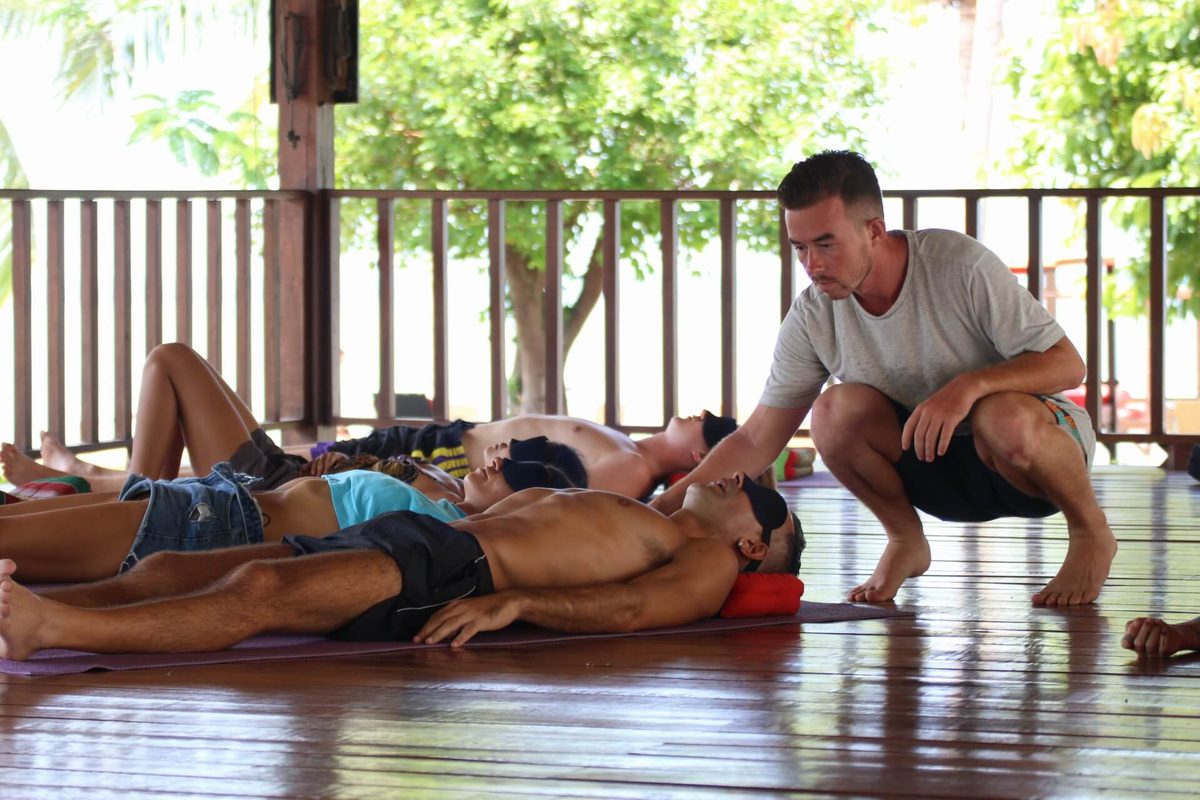
You lie down on a mat. Eyes closed. A facilitator guides you through a specific breathing pattern, usually continuous breathing through the mouth with no pause between inhale and exhale. Music plays in the background. The session lasts 30 to 45 minutes of active breathing, followed by a rest period.
Physically, you will likely feel tingling in your hands and face. Waves of warmth or cold. Lightness or heaviness. Some people experience muscle tension in the hands, which is a normal response to changes in blood chemistry and resolves on its own.
Emotionally, anything can come up. Tears. Laughter. Old memories. A sense of relief you cannot quite explain. Or nothing dramatic at all, just deep relaxation. There is no wrong experience. The breath meets each person where they are.
Afterward, most people say they feel lighter. Like something was put down that they did not realize they were carrying. Better sleep that night is almost universal. For a more detailed walkthrough, I wrote a full breakdown of what happens in a session.
Best Time to Visit Koh Samui for Breathwork
Koh Samui has a different weather pattern from mainland Thailand. The high season runs from December through April, when the weather is dry and sunny. This is also the busiest time on the island, which means more people and higher prices for accommodation.
The shoulder months of May, June, and October through November are my preferred time to recommend. The weather is still warm. Sessions happen outdoors without issue most days. Accommodation is cheaper. The island is quieter. And for something like the facilitator course, the May timing means you get the immersive feel without the peak season crowds.
July through September brings occasional rain but rarely all day. Breathwork sessions happen rain or shine since we can move to covered spaces. The tropical rain actually adds something to the atmosphere during a session. The sound of rain on a roof while you breathe has a quality that is hard to manufacture.
In short: any time of year works. If you want the best combination of weather, cost, and quiet, aim for May, June, or November.
Getting to Koh Samui
Koh Samui has its own airport (USM) with direct flights from Bangkok on Bangkok Airways. The flight takes about an hour. You can also fly into Surat Thani on the mainland and take a ferry, which takes about 90 minutes and costs significantly less.
From Bangkok, the flight is the simplest option. From other parts of Thailand, the combination of a budget flight to Surat Thani plus the ferry works well.
If you are coming from outside Thailand, most international flights route through Bangkok (Suvarnabhumi or Don Mueang) with a connecting flight to Koh Samui.
Where to Stay Near Lamai Beach
Breathflow Connection is based on Lamai Beach, the quieter side of the island. No party scene. Just ocean, jungle, and small local restaurants.
For accommodation, you have options at every price point. Budget guesthouses on Lamai run 400 to 800 Thai Baht per night. Mid range hotels and boutique places run 1,500 to 3,500 Baht. And there are a handful of upscale resorts if that is what you prefer.
My advice: stay within walking distance of Lamai Beach. Book through Agoda or Booking.com for the best rates. If you are coming for the facilitator course, I send a list of recommended places near the training venue at various price points once you register.
Lamai has everything you need. Good food, coffee shops, a local market, and enough quiet that you can actually hear yourself think. That last part matters more than people expect when they come for this kind of work.
Practical Tips
- Eat light before a breathwork session. A full stomach and deep breathing do not mix well.
- Bring a swimsuit. Ice baths and ocean swims are part of the experience.
- Hydrate. The tropical heat plus breathwork means you need more water than usual.
- Leave your schedule loose. The best sessions happen when you have nowhere to be afterward. Give yourself space to integrate.
- If you have any medical conditions, mention them before your session. A responsible facilitator will always ask, but volunteer the information regardless.
Who Comes Here for Breathwork
In five years of doing this work, I have seen every type of person walk through the door. Executives on holiday who carry their stress everywhere they go. Yoga teachers who want to add breathwork to their skills. Backpackers who heard about it from someone at a hostel. Couples looking for something to do together that goes deeper than a boat tour. Corporate teams on retreat. People going through major life transitions who felt pulled to the island without a clear reason why.
There is no single profile. The common thread is curiosity. A willingness to try something that might be uncomfortable. And an openness to the possibility that changing how you breathe can change how you feel in a way that sticks.
If that sounds like you, and you find yourself on this island, reach out. I will point you toward the right session for where you are and what you need.
Keep Reading
Frequently asked questions
What is the best breathwork retreat in Koh Samui?
Koh Samui has several wellness retreats that offer breathwork as part of a broader program, but only a few specialize in breathwork as the main practice. Breathflow Connection runs the most established dedicated breathwork and cold exposure program on the island, operating since 2020 with 155 five star reviews. For a broader yoga plus breathwork retreat, Samahita and Vikasa are both well regarded.
How long is a typical breathwork retreat on Koh Samui?
Single day experiences like UNTAMED run 6 to 8 hours. Weekend retreats are 2 to 3 days. Full immersions including facilitator certification are 21 days. Most first time visitors start with a single day to see if the work lands for them, then return for longer programs.
What is included in UNTAMED?
Hotel pickup, guided breathwork session, ice bath, waterfall hike, honest conversation, lunch, and return transport. 3,500 THB per person, roughly 100 USD. Runs every week. Small groups of up to 8 people per session.
Do I need previous breathwork experience to join a retreat?
No. Most people who join UNTAMED have never done a formal breathwork session. The facilitator guides you through the breath pattern in real time, so previous experience is not required. What helps more than experience is arriving with an open mind and being willing to be uncomfortable for short periods.
What is the best time of year for a breathwork retreat in Koh Samui?
December through March is the dry high season, which is ideal for outdoor sessions and waterfall hikes. April and May are hot but quieter. July through October has more rain but lower prices and fewer tourists. Breathflow Connection runs year round. The indoor breathwork component is unaffected by weather.
How do I book a breathwork retreat on Koh Samui?
For Breathflow Connection, book UNTAMED online at breathflowconnection.com/untamed with Stripe or Omise, or message Diego on WhatsApp at +66 65 557 1148. For longer immersions or facilitator training, start with a WhatsApp conversation to check dates and fit before booking.
Stay in the loop.
Occasional dispatches when sessions open or new writing drops. No spam.
About Diego Pauel
I have lived in Koh Samui for 15 years. I discovered breathwork through freediving, which I have trained in for over a decade. When COVID hit and the island emptied out, I started offering breathwork and ice baths for free to help the local community feel better in their bodies. I was the first to offer this work on the island. Five years later, I have facilitated countless sessions for people from all over the world. No guru energy. No mystical language. Just the work.
Full story →Want to experience the work?
See the ProgramsContinue Reading
All Koh Samui Wellness →